The Ultimate Guide to Door to Door Shipping from China to Mexico (2026 Updated)
Are you struggling with delayed shipments, hidden customs fees, or the sheer complexity of importing goods across the globe? In today's fast-paced global market, finding a reliable Door to Door Shipping from China to Mexico solution is critical for maintaining your supply chain efficiency and protecting your profit margins. Navigating international trade can be overwhelming, especially when dealing with language barriers, complex customs regulations, and unpredictable transit times that threaten to derail your inventory forecasting.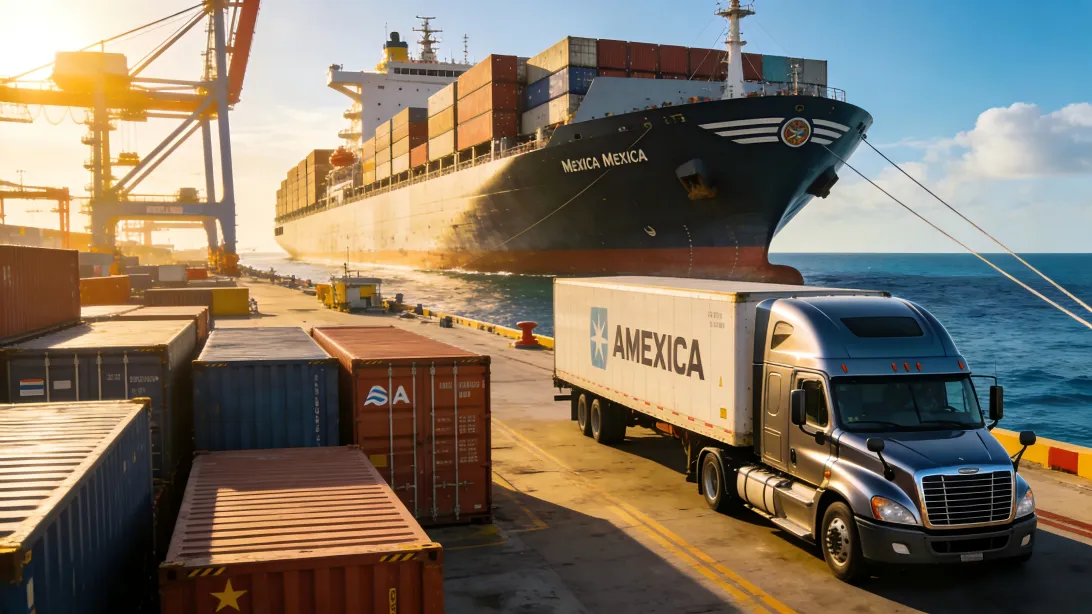
This comprehensive guide will walk you through the entire logistics process from start to finish, leaving no stone unturned. We will deeply compare various shipping methods including ocean, air, and express services, break down the latest transit times and costs for the 2026 market, and explain the critical differences between DDP and DDU shipping terms. Whether you are a seasoned importer managing large FCL shipments or a growing e-commerce business relying on fast delivery, you will learn actionable strategies to ensure a seamless, hassle-free delivery directly to your final destination in Mexico. Let’s dive into the details and optimize your international shipping strategy to outpace your competitors.
What is Door to Door Shipping?
At its core, door to door shipping is a comprehensive, end-to-end logistics service where a single Freight Forwarder takes full responsibility for moving your cargo from the supplier's factory or warehouse in China directly to your designated address in Mexico. Unlike traditional port-to-port shipping, where you must coordinate with multiple local trucking companies, customs brokers, and ocean carriers in a fragmented supply chain, a door-to-door solution centralizes the entire operation. This means the forwarder handles the initial pickup, export customs clearance in China, the main international transit (via ocean or air), import customs clearance in Mexico, and the final inland delivery.
This method drastically simplifies the importing process. Instead of managing a half-dozen different vendors and dealing with a mountain of paperwork from various entities, you have a single point of contact. This centralized approach reduces the likelihood of miscommunication, prevents your cargo from being delayed at transfer points, and allows you to focus your time and energy on growing your core business rather than micromanaging logistics.
DDP vs. DDU Explained
One of the most critical decisions you will make when arranging this service is choosing between two primary Incoterms: DDP and DDU (often referred to as DAP in modern terms). Understanding the nuances between these two agreements is the key to managing your cash flow and avoiding surprise expenses when your goods arrive at the Mexican border.
DDP (Delivered Duty Paid) represents the ultimate hands-off experience for the buyer. Under a DDP agreement, the Freight Forwarder or seller assumes all risks and costs associated with the transport from origin to destination. Crucially, this includes paying all Mexican import duties, taxes (such as the IVA, or Value Added Tax, typically 16%), and handling the entire customs clearance process. For importers who want maximum convenience and predictable pricing without the headache of unexpected government fees, DDP is the superior choice. You pay one upfront price, and the goods arrive at your door ready to be sold or used. In our experience, DDP is the safest route for new e-commerce sellers entering the Mexican market, as it bypasses the steep learning curve of SAT regulations.
On the other hand, DDU (Delivered Duty Unpaid) means the forwarder will transport the cargo to your doorstep, but you, the buyer, are legally responsible for paying the import duties and taxes upon the cargo's arrival in Mexico. You must also manage the final customs clearance procedures, which often requires hiring a local Mexican customs broker (Agente Aduanal). While DDU might appear slightly cheaper on the initial quote because the taxes are not included, it carries the risk of unforeseen local charges, storage fees, and clearance delays if your paperwork is not perfectly aligned or if you lack experience dealing with the Mexican Tax Administration Service (SAT).
Why It Matters
Opting for a comprehensive door to door service fundamentally eliminates the need for multiple intermediaries. This drastically reduces the risk of miscommunication, prevents hidden fees from third-party handlers, and ensures that your cargo remains under the watchful eye of a single, accountable logistics partner from origin to destination. In a trade lane as complex as China to Mexico, where regulatory environments are constantly shifting, having a reliable partner manage the end-to-end process is an invaluable asset.
Shipping Methods: Sea, Air, and Express
When importing goods from China to Mexico, selecting the right mode of transportation is paramount. Your choice will depend heavily on your budget, the physical volume and weight of your cargo, and how urgently you need the inventory to arrive.
Sea Freight (Ocean Freight)
Sea Freight remains the backbone of international trade and is the undisputed most cost-effective method for shipping large volumes of goods over long distances. For the China-Mexico route, Sea Freight from China to Mexico crosses the Pacific Ocean and typically arrives at major ports on Mexico's West Coast. Because it is highly economical, the vast majority of consumer goods, machinery, electronics, and raw materials are transported via this method.
Within Sea Freight, you have two main options:
FCL (Full Container Load): If you are purchasing goods in bulk, booking an entire 20-foot or 40-foot container is the most secure and economical route. Because the container is sealed at the factory in China and remains unopened until it reaches your warehouse in Mexico, FCL minimizes the risk of damage, loss, and theft. It also offers a lower cost per unit for high-volume shipments. Furthermore, FCL shipments generally experience faster transit times through ports because they do not require deconsolidation upon arrival.
LCL (Less than Container Load): If your cargo is not large enough to fill a full container, LCL is the perfect solution. Your goods will be consolidated (shared) in a single container with shipments from other buyers. You are priced per CBM (Cubic Meter), making it a highly flexible option. While LCL is cost-effective for smaller loads, it generally takes a few days longer than FCL due to the time required for consolidation at the origin port in China and deconsolidation at the destination port in Mexico.
Air Freight
When time is of the essence, Air Freight is the premium choice. While it commands a significantly higher price tag than ocean freight, air transport reduces transit times from several weeks to just a matter of days. Air Freight is particularly advantageous for high-value merchandise (like consumer electronics or luxury fashion), perishable items, or urgent inventory replenishments needed to avoid costly stockouts.
However, due to strict airline regulations, you must be mindful of weight and size restrictions. Heavy or oversized cargo becomes prohibitively expensive to fly. Additionally, hazardous materials (including lithium batteries commonly found in electronics) are subject to rigorous safety checks and may incur additional fees or require specialized handling procedures.
Express Courier
For small parcels, product samples, or lightweight e-commerce orders, Express Courier services provided by global giants like DHL, FedEx, and UPS are unmatched. This is inherently a door-to-door service that offers the fastest possible transit times (often 2 to 5 days). Express shipping provides premium real-time tracking, highly streamlined customs clearance (especially for low-value goods under the de minimis threshold), and supreme reliability.
However, express courier is the most expensive method per kilogram, making it economically unviable for heavy or bulky commercial shipments. It is best reserved for urgent documents, prototypes from new Chinese suppliers, or direct-to-consumer dropshipping models.
Transit Times and Costs: China to Mexico
Understanding the timeline and financial investment required for your shipments is crucial for accurate inventory forecasting, managing cash flow, and setting realistic expectations with your own customers. It is important to note that shipping rates and transit times are dynamic. They fluctuate based on seasonal demand (such as the massive rush before the Chinese New Year or the Q4 holiday season), global fuel surcharges, port congestion, and available carrier capacity.
Below is a detailed breakdown of estimated transit times based on the transportation method chosen.
| Shipping Method | Estimated Transit Time | Best Suited For |
|---|---|---|
| Sea Freight (FCL/LCL) | 20 - 40 Days | Bulk orders, heavy machinery, furniture, building materials |
| Air Freight | 5 - 8 Days | Urgent cargo, consumer electronics, medical supplies, high-value goods |
| Express Courier | 3 - 7 Days | Small parcels, product samples, urgent documents, lightweight items |
When budgeting for your import business, you must factor in the base freight rate along with potential customs duties, insurance, and inland trucking costs. Here is an overview of the average costs you can expect in the current 2026 market landscape.
| Shipping Method | Average Cost (USD) | Strategic Notes |
|---|---|---|
| 20ft Container (FCL) | Economical for medium-sized shipments and dense cargo | |
| 40ft Container (FCL) | Offers the lowest cost per CBM for large, bulky volumes | |
| LCL (Per CBM) | Highly flexible volume pricing for smaller loads under 15 CBM | |
| Air Freight (Per KG) | High cost, but guarantees rapid delivery and lower inventory holding costs |
Note: These prices are estimates and can vary significantly based on fuel prices and market demand. Always request a customized, itemized quote from your Freight Forwarder for the most accurate and up-to-date pricing.
You may be interested in the following related articles:
- Shipping from China to Mexico
- Shipping from China to Canada
- Shipping From China to Australia
- Shipping From China to UK
- Shipping from China to USA
Key Ports and Airports for China-Mexico Trade
The efficiency and speed of your door-to-door shipment heavily depend on the routing. China and Mexico boast some of the most advanced and busiest logistics hubs in the world, and selecting the optimal port pairs can shave days off your transit time.
Major Origin Ports in China
China is home to several mega-ports that handle immense export volumes to Latin America:
- Shanghai Port: The world's busiest container port, offering the most frequent sailings, the widest variety of carrier options, and highly efficient customs processing.
- Shenzhen Port & Guangzhou Port: The manufacturing powerhouses of Southern China. If you are sourcing electronics, consumer goods, or textiles from Guangdong province, these are your primary departure points.
- Ningbo-Zhoushan Port: Excellent for heavy manufacturing, automotive parts, and industrial exports originating from the Zhejiang province.
- Qingdao Port: A strategic hub for northern Chinese manufacturers, particularly for tires, machinery, and agricultural products.
Major Destination Ports in Mexico
For cargo arriving from Asia via the Pacific Ocean, Mexico relies on a few critical gateways:
- Port of Manzanillo: The undisputed king of Mexican Pacific ports. It is the primary entry point for Asian cargo, boasting extensive rail and highway connections to Mexico City, Guadalajara, and the broader industrial heartland.
- Port of Lázaro Cárdenas: A rapidly growing, deep-water port that serves as a fantastic alternative to Manzanillo. It often experiences less congestion and offers highly efficient inland rail routes, particularly for heavy industrial cargo and automotive shipments.
- Port of Veracruz & Altamira: Located on the Gulf of Mexico. While more commonly used for transatlantic trade with Europe, cargo can be routed here via the Panama Canal depending on the final destination's proximity to the eastern coast of Mexico.
Major Airports for Air Freight
For air cargo, major Chinese hubs like Beijing Capital (PEK), Guangzhou Baiyun (CAN), and Shanghai Pudong (PVG) operate direct or connecting freighter flights to Mexico City International Airport (MEX), Guadalajara (GDL) (often referred to as the Silicon Valley of Mexico), and Monterrey (MTY).
Popular Sea Freight Routes and Transit Times
| Origin Port (China) | Destination Port (Mexico) | Transit Time (Sea Freight) |
|---|---|---|
| Shenzhen | Manzanillo | 20 - 28 Days |
| Shanghai | Lázaro Cárdenas | 22 - 30 Days |
| Ningbo | Veracruz (via Panama Canal) | 30 - 40 Days |
The Step-by-Step Door to Door Shipping Process
To demystify the logistics chain and provide you with a clear roadmap, let's break down the exact sequence of events that occur when you book a door-to-door shipment from China to Mexico.
1. Cargo Pickup and Consolidation The process begins at your supplier's facility in China. Once the goods are manufactured and packaged, the Freight Forwarder dispatches a truck to pick up the cargo. If you are shipping LCL, the cargo is transported to a local warehouse for consolidation with other shipments heading to Mexico. For FCL, an empty container is brought directly to the factory, loaded by the supplier, sealed with a high-security bolt, and trucked directly to the departure port container yard.
2. Export Customs Clearance (China) Before the cargo can legally leave the country, it must clear Chinese customs. Your forwarder will prepare and submit all necessary export declarations, ensuring that the goods comply with local export laws and that all commercial licenses (if applicable) are in order. A proactive forwarder ensures this customs clearance paperwork is flawless, preventing any holds before the vessel even sets sail.
3. International Freight Transit Once cleared, the container is loaded onto the ocean vessel (or the pallets onto an aircraft). This is the longest leg of the journey. Throughout this phase, a reliable logistics partner will provide you with tracking updates so you can monitor your inventory as it crosses the Pacific Ocean, giving you peace of mind and allowing you to plan your receiving schedule. For instance, knowing exactly when a vessel clears the Panama Canal helps our team anticipate port arrival and arrange inland trucking seamlessly.
4. Import Customs Clearance (Mexico) As the cargo arrives at a Mexican port like Manzanillo or an airport like MEX, it enters the critical and notoriously strict import clearance phase. The forwarder or their designated customs broker will present the Commercial Invoice, Packing List, and other vital documents to the Mexican customs authorities. If you selected a DDP service, the forwarder will pay all applicable import duties (Arancel) and Value Added Tax (IVA) on your behalf, ensuring the cargo is released swiftly without demanding unexpected payments from you.
5. Final Inland Delivery After customs officially release the goods, they are loaded onto a domestic truck or freight train. The cargo navigates Mexico's inland infrastructure and is delivered directly to your specified address—whether that is a private commercial warehouse, a retail storefront, an industrial manufacturing plant, or an Amazon FBA fulfillment center.
Essential Documents for Smooth Customs Clearance
Documentation is the absolute lifeblood of international shipping. A single error, typo, or missing document can result in severe customs holds, expensive daily storage fees at the port, or even the confiscation of your goods. Here are the absolute must-have documents for importing into Mexico seamlessly:
- Bill of Lading (B/L) / Air Waybill (AWB): This is the most important legal document in shipping. Issued by the carrier, it serves as a receipt of the cargo, a binding contract of carriage, and a document of title. You or your forwarder cannot claim your goods at the destination without an original or telex-released copy of it.
- Commercial Invoice: This is the official bill of sale provided by the Chinese supplier to you, the buyer. It must clearly state the transaction value, detailed description of goods, unit price, and the currency used. Mexican customs uses this specific document to calculate the precise duties and taxes owed.
- Packing List: A detailed breakdown created by the supplier that lists the cargo's exact dimensions, total volume (CBM), gross and net weight, and how the items are packaged (e.g., pallets, cartons, crates). It must match the Commercial Invoice perfectly; any discrepancy will trigger a customs inspection (a "red light" at Mexican customs).
- Certificate of Origin: A formal document verifying that the goods were indeed manufactured in China. This is crucial for applying the correct tariff rates, taking advantage of any trade agreements, and complying with strict anti-dumping regulations enforced by the Mexican government.
Pro Tip on HS Codes: The Harmonized System (HS) Code is a universal numerical method of classifying traded products. Ensuring your supplier uses the 100% accurate 8-digit HS Code on all paperwork is absolutely critical. Incorrect classification can lead to invasive customs inspections, severe delivery delays, and hefty financial penalties from the Mexican Tax Administration Service (SAT). We've seen clients face thousands of dollars in fines simply because their supplier used a generic HS code for a highly specific electronic component.
Understanding Mexican Customs Requirements: The Padrón de Importadores
One critical aspect of importing into Mexico that many first-time buyers overlook is the Padrón de Importadores (Official Register of Importers). Any business or individual wishing to legally import goods into Mexico for commercial purposes must be registered with the Mexican Tax Administration Service (SAT) and listed on this national registry.
Without this active registration, your cargo will be indefinitely stuck at the port of entry, accruing massive storage fees. If you do not have an active registration, or if you are a foreign entity without a Mexican tax ID (RFC), this is where a DDP service provided by a highly capable forwarder becomes invaluable. A specialized forwarder can often leverage their own trading company's registration to clear the goods legally on your behalf, completely bypassing the bureaucratic red tape and allowing you to import smoothly.
Why Choose AllBestShipping as Your Freight Forwarder?
Navigating the complexities of trans-Pacific trade requires a partner who deeply understands the nuances of both the Chinese export market and the incredibly strict regulatory environment of Mexican customs. This is where AllBestShipping (https://allbestshipping.com/) steps in to elevate your supply chain and protect your bottom line.
- Unmatched Expertise in the LatAm Market: We possess years of specialized, hands-on experience managing the specific trade routes between China and Mexico. We know the ports, the ocean carriers, the airline schedules, and the customs protocols inside and out.
- Competitive Rates & No Hidden Fees: We pride ourselves on offering transparent, upfront pricing for both FCL and LCL shipments. With AllBestShipping, the quote you receive is the price you pay—no surprise surcharges, no hidden handling fees upon arrival.
- Hassle-Free DDP Solutions: Our comprehensive DDP services are designed specifically for your peace of mind. We handle the entire bureaucratic nightmare of customs clearance, tariffs, taxes, and the Padrón de Importadores registration requirements, allowing you to focus entirely on marketing and growing your business.
- 24/7 Dedicated Support: International shipping doesn't sleep, and neither do we. We provide real-time tracking updates, proactive communication regarding potential weather or port delays, and a dedicated account manager who is always available to answer your questions and solve problems instantly.
Frequently Asked Questions (FAQ)
How much does it cost to ship a container from China to Mexico?
The cost fluctuates based on market conditions, fuel prices, and seasonality, but generally, you can expect to pay between
Who pays the import duties on a door-to-door shipment? This depends entirely on your chosen Incoterm. If you choose a highly recommended DDP (Delivered Duty Paid) service, your freight forwarder includes the cost of all duties and taxes in your upfront quote and pays them directly to the Mexican government for you. If you choose DDU (Delivered Duty Unpaid), you are legally responsible for paying the Mexican authorities before the goods can be released from the port.
Do I need a customs broker in Mexico? If you are managing the shipment yourself or using a standard DDU service, yes, you must hire a licensed Mexican customs broker (Agente Aduanal) to file the import declaration (Pedimento). However, if you utilize a comprehensive door-to-door DDP service like AllBestShipping, we handle all brokerage requirements internally, saving you the immense hassle of finding, vetting, and hiring a reliable third party.
What items are restricted from entering Mexico? Mexico has strict regulations on importing certain goods to protect local industries, public safety, and national security. Restricted or heavily regulated items include certain industrial chemicals, pharmaceuticals, footwear, textiles, weapons, and counterfeit goods. Always consult with your forwarder before attempting to ship specialized, branded, or potentially hazardous items to ensure compliance and avoid confiscation.
Conclusion
Importing goods across the globe doesn't have to be a logistical nightmare filled with uncertainty and hidden costs. Door to door shipping remains the most efficient, secure, and stress-free way to move your inventory from China to Mexico. By understanding the critical differences between sea and air freight, grasping the vital importance of accurate documentation like the Commercial Invoice and Bill of Lading, and choosing the highly convenient DDP shipping method, you can save valuable time and minimize expensive logistics headaches.
Ready to streamline your supply chain, bypass frustrating customs delays, and drastically cut your shipping costs? Partner with the experts who know the trans-Pacific route best. Contact AllBestShipping today for a free, customized, no-obligation quote on your next shipment to Mexico, and let us deliver logistics excellence directly to your door!