How Much Does it Cost to Ship from China to Canada in 2026? A Complete Guide
Unpredictable shipping costs are constantly eating into profit margins for businesses importing goods across the Pacific. If you are struggling to balance your logistics budget, you are likely wondering: how much does it cost to ship from China to Canada right now? The answer depends heavily on your chosen freight mode, container size, seasonal market fluctuations, and hidden customs fees. In this comprehensive 2026 guide, we break down exact cost estimates, transit times, and actionable strategies to reduce your shipping expenses.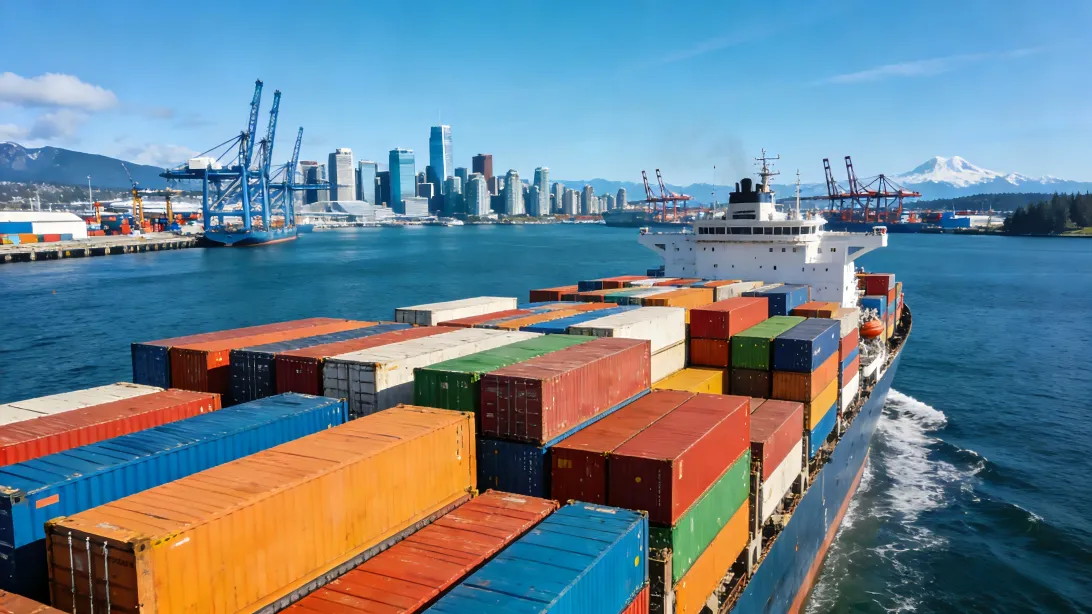
As a senior logistics expert with over a decade of experience navigating the transpacific supply chain, I have seen importers lose thousands of dollars simply because they misunderstood the pricing structure of international freight. Just last month, a new client came to our team at AllBestShipping after paying $3,000 in unexpected demurrage fees at the Port of Vancouver because their previous forwarder failed to submit the correct ISF filing on time. Whether you are an Amazon FBA seller, a medium-sized enterprise, or a large-scale distributor, understanding the intricate details of Air Freight, Sea Freight, and courier services is non-negotiable. Let’s dive deep into the current rates and uncover the hidden fees that could be draining your profitability.
Key Factors Influencing Shipping Costs from China to Canada
When calculating the final price tag for your imports, it is crucial to recognize that international freight is not a flat-rate service. The global logistics market is incredibly dynamic, with rates fluctuating based on a complex interplay of several core elements.
1. Shipping Mode: Air Freight vs. Sea Freight
The most significant determinant of your total logistics bill is the mode of transportation you select. The price gap between Air Freight and Sea Freight is dramatic. While air transport offers unparalleled speed—often delivering goods within a matter of days—it commands a premium price tag that can be up to five or six times higher than ocean transport. Conversely, ocean freight is the undisputed champion of cost-efficiency for large-volume shipments, though it requires meticulous inventory planning due to longer transit times.
2. Volume and Weight (Actual vs. Dimensional Weight)
Freight forwarders and carriers do not simply weigh your boxes on a scale. They calculate costs based on either the Actual Weight (gross weight) or the Dimensional Weight (volumetric weight), whichever is greater. Dimensional weight accounts for the amount of space a package occupies in an aircraft cargo hold or a shipping container. For example, shipping a ton of feathers will cost significantly more than shipping a ton of steel because the feathers take up vastly more cubic meters (CBM). Optimizing your packaging to reduce dead space is one of the easiest ways to lower this specific cost factor.
3. Distance and Destination Ports
Canada is a vast country, and the specific port of entry heavily impacts the final invoice. Shipping from major Chinese hubs like Shenzhen, Shanghai, or Ningbo to the West Coast of Canada (e.g., the Port of Vancouver or the Port of Prince Rupert) is generally cheaper and faster due to the shorter geographical distance. However, if your final destination is on the East Coast (e.g., Toronto or Montreal), the cargo must either transit through the Panama Canal or be transported via cross-country rail (using the CN or CPKC networks). In our experience, rail congestion in Chicago or Toronto can unexpectedly add 7-10 days to your transit time and incur extra rail ramp storage fees if not managed proactively. This additional leg of the journey naturally inflates the overall transportation cost.
4. Seasonality and Peak Season Surcharges
Timing is everything in international trade. The shipping industry operates on a predictable seasonal cycle, with rates spiking dramatically during peak periods. The lead-up to the Chinese New Year (usually January or February) and the Q4 holiday rush (September through November) see massive surges in demand. During these windows, carriers impose Peak Season Surcharges (PSS), and securing container space becomes highly competitive. Planning your inventory replenishment during off-peak seasons (like post-Chinese New Year or early summer) can result in substantial savings.
5. Fuel Surcharges and Port Fees
Global economic factors directly trickle down to your shipping invoice. Fluctuations in crude oil prices lead to varying Bunker Adjustment Factors (BAF) for ocean freight and Fuel Surcharges (FSC) for air cargo. Additionally, port congestion can lead to increased terminal handling fees and unexpected delays. For instance, recent labor strike threats at major Canadian ports and recurring disruptions in the cross-country rail networks frequently cause severe bottlenecks. When ports are congested, shipping lines often implement Congestion Surcharges to offset the cost of their vessels idling at sea. Working with a proactive freight forwarder ensures you are not blindsided by these dynamic market conditions and can route your cargo through alternative ports (such as routing through Seattle and trucking north) if necessary.
Cost Breakdown by Shipping Method (2026 Estimates)
To help you budget accurately for the year ahead, we have compiled the latest estimated costs for shipping from China to Canada. Please note that these figures are averages and can vary based on real-time market conditions.
| Shipping Method | Estimated Cost Level | Average Transit Time | Best Use Case |
|---|---|---|---|
| Express Courier (DHL/FedEx/UPS) | 3 - 7 Days | Urgent documents, high-value samples, small parcels under 100kg. | |
| Air Freight (Standard) | 7 - 12 Days | Time-sensitive goods, electronics, mid-sized shipments (100kg - 500kg). | |
| Sea Freight (LCL) | 25 - 40 Days | Medium-sized shipments that do not require a full container (1 CBM - 15 CBM). | |
| Sea Freight (FCL - 20ft) | 20 - 35 Days | High-volume, bulky goods; cost-effective for shipments over 15 CBM. | |
| Sea Freight (FCL - 40ft) | 20 - 35 Days | Maximum volume efficiency for large-scale enterprise imports. |
Sea Freight Costs (FCL vs. LCL)
Ocean freight remains the backbone of global trade, carrying the vast majority of goods from Asia to North America. When opting for sea transport, you must choose between two primary container configurations.
FCL (Full Container Load)
If your shipment volume is large enough, booking an FCL shipment is unequivocally the most cost-effective method per unit. In an FCL arrangement, you rent the entire 20-foot or 40-foot container exclusively for your goods. The flat rate applies regardless of whether the container is completely full or slightly empty. For 2026, a 20ft container from Shenzhen to Vancouver typically ranges from
LCL (Less than Container Load)
For small to medium-sized businesses whose cargo isn't large enough to justify a full container, LCL is the perfect solution. With LCL, you share container space with other importers and are charged based on the volume your cargo occupies, measured in Cubic Meters (CBM). While the per-CBM rate for LCL (around
Air Freight Costs
When speed is the ultimate priority, Air Freight is the go-to solution. While it cannot compete with ocean freight on price, it provides a vital lifeline for high-value, fragile, or highly time-sensitive cargo, such as consumer electronics, fashion apparel with short life cycles, or critical medical supplies.
Standard air freight costs typically range from
Express Courier Costs (DHL, FedEx, UPS)
For the absolute fastest and most seamless delivery experience, Express Courier services (such as DHL, FedEx, or UPS) offer premium door-to-door solutions. These services handle everything from pickup in China to final delivery in Canada, including automated customs clearance for low-value items.
However, this convenience comes at a steep price. Express courier rates generally hover between
Specialized Shipping: Amazon FBA Prep and Delivery
A significant portion of imports from China to Canada is destined for Amazon Fulfillment Centers. Amazon FBA shipping requires strict adherence to Amazon's packaging, labeling, and palletization guidelines. If your goods arrive at an FBA center without the correct ASIN labels or pallet dimensions, Amazon will reject the shipment, leading to massive return fees and lost sales. Specialized freight forwarders offer FBA prep services in China—labeling and palletizing goods before they cross the ocean—which is often much cheaper than paying for prep services in Canada. Factoring in these prep and final-mile delivery costs is essential for e-commerce sellers calculating their true landed cost.
You may be interested in the following related articles:
- Shipping from China to Egypt
- Shipping from China to Mexico
- Shipping from China to Canada
- Shipping From China to UK
- Shipping from China to USA
Hidden Costs and Additional Fees You Can't Ignore
A common pitfall for novice importers is calculating their budget based solely on the base freight rate quoted by the carrier. The reality is that international shipping involves a myriad of ancillary charges. Failing to account for these hidden fees can quickly erode your expected profit margins.
Customs Duties and Taxes
When your goods enter Canada, they fall under the jurisdiction of the Canada Border Services Agency (CBSA). You are legally responsible for paying the applicable duties and taxes. The duty rate depends on the specific HS (Harmonized System) code of your product. A common mistake we see novice importers make is intentionally "guessing" their HS code to secure a lower tariff rate. If the CBSA audits your shipment and discovers a misclassification, you will face severe financial penalties under the Administrative Monetary Penalty System (AMPS), back-taxes, and your future shipments will be flagged for intensive, time-consuming secondary inspections. Additionally, you will be required to pay the Goods and Services Tax (GST) of 5%, and potentially Harmonized Sales Tax (HST) or Provincial Sales Tax (PST) depending on the province of destination. Utilizing a licensed customs broker can help ensure your HS codes are 100% accurate, preventing costly penalties or shipment seizures.
Documentation Fees
International trade relies on a massive paper trail. You will incur administrative fees for the generation and processing of crucial documents. The most important of these is the Bill of Lading (for sea freight) or the Air Waybill (for air freight), which serves as the legal contract of carriage and receipt of goods. Other necessary documents include the Commercial Invoice, Packing List, and potentially a Certificate of Origin. Freight forwarders typically charge a standard documentation fee to manage this paperwork on your behalf.
Cargo Insurance
Never assume that the carrier is fully liable if your goods are damaged, lost, or fall overboard during transit. Carrier liability is strictly limited by international conventions and will rarely cover the full commercial value of your cargo. Purchasing comprehensive cargo insurance is a non-negotiable expense for prudent risk management. The cost is generally quite low—often a fraction of a percent of the total commercial value of the goods—but it provides invaluable peace of mind against catastrophic losses.
Origin and Destination Handling Charges
Moving cargo on and off massive vessels requires significant infrastructure and labor. You will be billed for Terminal Handling Charges (THC) at both the port of origin in China and the destination port in Canada. These fees cover the cost of lifting the containers via cranes, moving them around the terminal yard, and loading them onto trucks or rail cars. Furthermore, if you are shipping LCL, you will incur warehouse handling fees for the consolidation and deconsolidation processes.
Demurrage and Detention
These are perhaps the most easily avoidable yet brutally expensive hidden costs in logistics. Demurrage refers to the fee charged by the port or terminal if your full container sits in the port yard beyond the allotted free days (typically 3-5 days). Detention is the fee charged by the shipping line if you take the container to your warehouse for unloading but fail to return the empty equipment within the agreed timeframe. Delays in customs clearance, lack of truck chassis availability, or poor warehouse scheduling are the primary culprits for these fees, which can quickly compound into thousands of dollars (often
Incoterms 2020: How They Affect Your Final Price
The final price you pay for shipping is intrinsically linked to the trade terms you negotiate with your Chinese supplier. The International Chamber of Commerce (ICC) defines these terms, known as Incoterms (International Commercial Terms), which clearly establish where the seller's responsibility and costs end, and where the buyer's begin. Understanding these is critical to avoiding double charges or unexpected liabilities.
- FOB (Free on Board): This is the most common and highly recommended term for sea freight. Under FOB, your Chinese supplier is responsible for all costs and risks up to the point the goods are loaded onto the vessel at the origin port (e.g., Shanghai). You, the buyer, are responsible for the main ocean freight, insurance, and all destination charges in Canada. This gives you maximum control over your logistics costs and allows you to shop around for the best forwarder rates.
- EXW (Ex Works): The buyer assumes maximum responsibility. You must pay for the goods to be picked up directly from the factory floor in China, loaded onto a truck, cleared through Chinese export customs, and shipped all the way to Canada. We typically only recommend EXW for highly experienced importers who have a strong logistical presence and warehouse consolidation setups in China.
- CIF (Cost, Insurance, and Freight): The seller pays for the main ocean freight and basic insurance to transport the goods to the Canadian port. While this seems convenient, buyers often fall into the "CIF trap"—paying artificially low freight rates upfront, only to be slammed with heavily inflated destination handling charges (DTHC) by the seller's designated agent in Canada. We strongly advise against CIF for LCL shipments.
- DDP (Delivered Duty Paid): The holy grail for hands-off importing, particularly popular among Amazon FBA sellers. The supplier handles absolutely everything, including Canadian customs clearance, duties, and final delivery to your warehouse. While highly convenient, it is the most expensive option as the supplier will heavily mark up the price to cover their assumed risks.
Pro Tips to Reduce Your Shipping Costs to Canada
In an era of tight margins, optimizing your supply chain is not just a competitive advantage; it is a necessity for survival. Here are five actionable strategies used by seasoned importers to slash their freight bills.
- Optimize Packaging to Lower Dimensional Weight: Do not ship empty air. Work closely with your manufacturer to design packaging that is as compact as possible. Reducing the dimensions of your outer cartons by even a few centimeters can significantly lower your volumetric weight, translating directly into cheaper air or LCL freight costs. Furthermore, consider the structural integrity of your boxes. Using high-quality, double-walled corrugated cardboard prevents boxes from collapsing under weight. Collapsed boxes not only damage your product but can also cause pallet instability, leading to repalletization fees at the destination warehouse.
- Plan Ahead and Ship Off-Peak: Anticipate the market cycles. Whenever possible, build enough buffer in your inventory to avoid shipping during the frantic weeks leading up to the Chinese New Year or the Q4 holiday rush. Booking your shipments during the slower months of March through July can secure you much lower rates and guarantee container space.
- Consolidate Your Shipments: If you source products from multiple suppliers in China, do not ship them as separate LCL shipments. Use a freight forwarder's warehouse in China to consolidate your various orders into a single FCL container. This strategy drastically reduces per-unit costs and minimizes destination handling fees.
- Master Your Incoterms: Avoid the hidden markups associated with CIF or DDP terms if you have the logistical capability to manage the freight yourself. Negotiating FOB terms and partnering with your own forwarder ensures transparent pricing and gives you the leverage to negotiate better rates directly with carriers.
- Partner with a Reliable Freight Forwarder: The logistics industry is incredibly complex, and trying to navigate it alone is a recipe for costly mistakes. A reputable freight forwarder acts as your strategic partner. They leverage their high-volume relationships with shipping lines to secure discounted rates, handle the Byzantine customs paperwork, and proactively reroute cargo to avoid port congestion.
Why Choose AllBestShipping for Your China-Canada Route?
When importing from China to Canada, the partner you choose to handle your logistics can make or break your profitability. This is where AllBestShipping steps in as your premier, top-tier logistics partner.
With years of specialized experience in the transpacific trade lane, AllBestShipping offers highly competitive, fully transparent pricing. We believe in building long-term partnerships based on trust, which means absolutely no hidden fees or surprise invoices. Whether you need the speed of premium air freight or the cost-efficiency of ocean FCL and LCL services, we guarantee space even during the most chaotic peak seasons.
Our comprehensive service portfolio includes end-to-end cargo tracking, giving you complete visibility over your supply chain at every moment. Furthermore, our dedicated team of licensed customs brokers ensures that your goods glide through Canadian customs clearance seamlessly, eliminating the risk of costly delays or demurrage charges. When you partner with AllBestShipping, you aren't just buying freight; you are investing in peace of mind.
Frequently Asked Questions (FAQ)
What is the cheapest way to ship from China to Canada? For shipments larger than 2 CBM or heavier than 500kg, Sea Freight (specifically FCL if you have enough volume, or LCL for smaller loads) is unequivocally the cheapest method. It is vastly more economical than air transport, provided you can accommodate the longer transit time.
How long to ship from China to Canada on average? Transit times vary wildly based on the mode. Express Courier takes 3-7 days. Air Freight takes 7-12 days. Sea Freight typically takes 20-40 days, depending on whether you are shipping to the West Coast (faster) or the East Coast (slower).
Do I need to pay customs duties for personal items? Yes, even personal items are generally subject to inspection by the CBSA. While there are specific exemptions and lower thresholds for casual goods or gifts, standard duties and taxes apply to most imported items, particularly if they are high-value electronics or luxury goods.
What is the difference between Actual Weight and Dimensional Weight? Actual weight is how heavy the package is on a scale (e.g., 50kg). Dimensional weight is a theoretical weight calculated based on the package's physical size (Length x Width x Height). Carriers will always charge you based on whichever number is higher to ensure they are compensated for the space your cargo occupies.
Conclusion
Understanding exactly how much it costs to ship from China to Canada is the foundational step in building a profitable import business. As we have explored, your final freight bill is not a random number; it is a calculated total influenced by your choice of transport mode, the volume of your cargo, seasonal timing, and your mastery of Incoterms. By implementing strategic packaging, consolidating your shipments, and anticipating hidden fees like customs duties and terminal handling charges, you can significantly optimize your logistics budget.
Don't let unpredictable shipping costs eat into your hard-earned profits. Take control of your supply chain today. Reach out to the experts at AllBestShipping for a customized, no-obligation quote, and let us help you streamline your logistics from the factory floor in China straight to your door in Canada.