Understanding DAP Incoterms 2020: A Balanced Approach to Door-to-Door Shipping
When negotiating international trade contracts, finding the sweet spot between buyer control and seller responsibility is key to a smooth supply chain. The DAP Incoterms 2020 (Delivered at Place) offers a highly practical solution. It allows the seller to manage the complex main freight logistics while keeping the critical task of import customs clearance in the hands of the local buyer. Whether you are moving cargo via sea freight, air freight, or rail, understanding how DAP works can prevent unexpected border delays.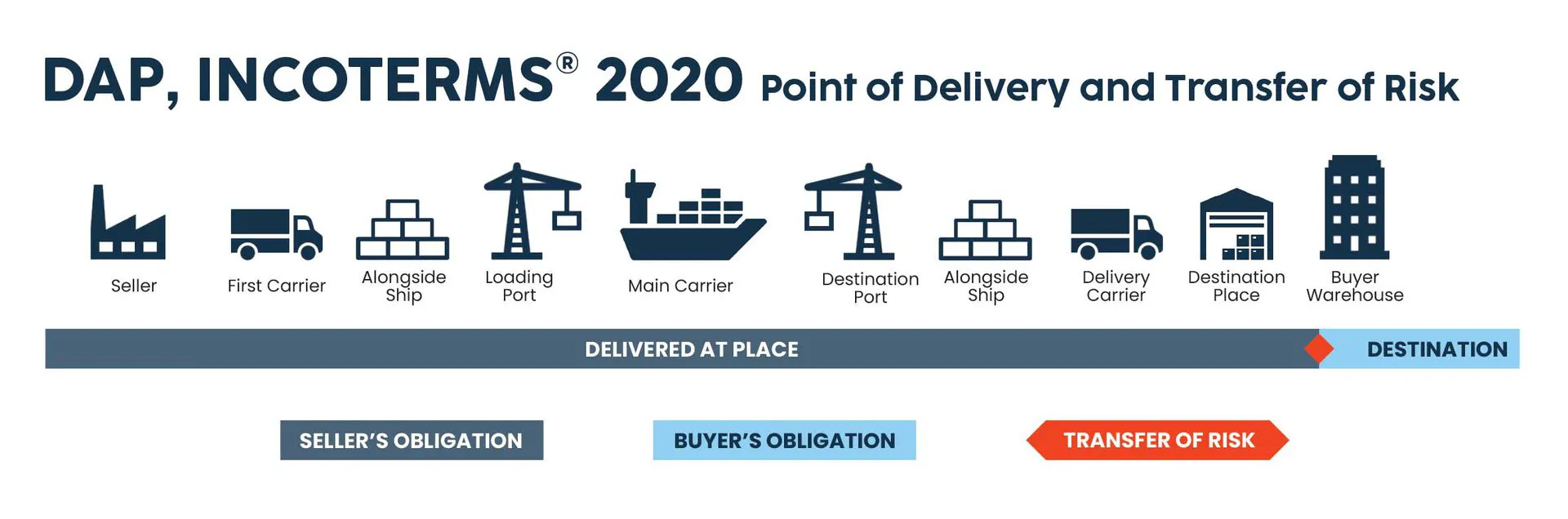 Let's explore the exact meaning of DAP, the clear division of responsibilities, and how partnering with an experienced forwarder like AllBestShipping ensures flawless execution.
What Does DAP Mean in Shipping?
DAP stands for Delivered at Place. According to the International Chamber of Commerce (ICC), under this Incoterm, the seller is responsible for coordinating and paying for the transportation of the goods to a specific, named destination agreed upon by both parties (usually the buyer's warehouse or a specific terminal).
Unlike ocean-only terms like FOB or CIF, DAP is highly versatile and can be used for any single mode of transport or a combination of them (multimodal transport). It represents a significant level of commitment from the seller, who essentially provides a door-to-door shipping service, but with one major exception: customs clearance at the destination.
The Point of Risk Transfer in DAP
The concept of risk transfer under DAP Incoterms 2020 is straightforward and occurs very late in the shipping journey.
The risk of loss or damage transfers from the seller to the buyer only when the goods are placed at the disposal of the buyer on the arriving means of transport, ready for unloading at the named place of destination.
- If the transport truck crashes on the way to the buyer's warehouse, the seller bears the financial loss.
- The buyer only assumes risk the moment they begin the physical process of unloading the goods at their facility.
Seller's Responsibilities Under DAP Incoterms 2020
In a DAP transaction, the seller acts as the primary logistics manager for almost the entire journey. Their responsibilities include:
- Packaging and Origin Transport: Preparing the goods and moving them from the factory to the port or airport of departure.
- Export Customs Clearance: Handling all export licenses, procedures, and fees in the origin country.
- Main Freight: Booking and paying for the international transport (e.g., ocean freight or air freight).
- Insurance: While not strictly mandatory under the ICC rules for DAP, the seller bears all the risk until final delivery. Therefore, it is standard practice and highly recommended for the seller to purchase comprehensive cargo insurance.
- Onward Delivery: Arranging the inland transportation from the destination port to the final agreed-upon place.
Crucially, the seller is not responsible for unloading the goods at the destination.
Buyer's Responsibilities Under DAP Incoterms 2020
While the seller handles the physical movement of the freight, the buyer's responsibilities under DAP are specifically focused on the destination country's legal requirements. The buyer must:
- Import Customs Clearance: This is the buyer's most critical duty. The buyer must act as the Importer of Record, handling all import procedures, securing necessary permits, and paying all import duties and taxes (like VAT or GST).
- Unloading: The buyer is responsible for providing the equipment (like a forklift) and labor to safely unload the goods from the arriving delivery vehicle.
- Demurrage/Detention (If Applicable): If the buyer fails to clear customs promptly, resulting in the goods being held up at the terminal, the buyer usually bears the cost of any storage or detention fees.
DAP vs. DDP: Why DAP is Often the Smarter Choice
Buyers and sellers frequently weigh DAP against DDP (Delivered Duty Paid). While both are "delivered" terms, the difference in customs clearance is massive.
| Feature / Responsibility | DAP (Delivered at Place) | DDP (Delivered Duty Paid) |
|---|---|---|
| Main Freight Paid By | Seller | Seller |
| Risk Transfer Point | At destination, ready for unloading | At destination, ready for unloading |
| Import Customs Clearance | Handled and Paid by Buyer | Handled and Paid by Seller |
| Import Duties & Taxes | Paid by Buyer | Paid by Seller |
Why choose DAP over DDP? For sellers, DDP is extremely risky because it requires them to navigate foreign tax laws and act as an importer in a country where they may not be registered. If the seller makes a mistake, the cargo gets stuck. DAP solves this by letting the local buyer handle the import clearance—a process they are usually highly familiar with. It ensures a smoother border crossing while still allowing the buyer to enjoy the convenience of the seller handling the main freight.
Common Mistakes When Using DAP
To ensure a successful DAP shipment, avoid these common pitfalls:
- Vague Destination Names: "DAP Los Angeles" is not enough. You must specify the exact address (e.g., "DAP 123 Logistics Way, Warehouse 4, Los Angeles, CA"). Ambiguity leads to delivery disputes.
- Customs Delays: Since the buyer handles import customs, any delay on their end can hold up the seller's hired truck. Buyers must have their customs broker ready before the goods arrive at the port.
- Unloading Disputes: Remember, the seller's truck driver is not responsible for unloading. Buyers must ensure they have the proper equipment ready when the truck arrives.
Simplify Your DAP Shipments with AllBestShipping
Successfully executing a DAP Incoterms 2020 shipment requires seamless coordination between the international freight movement and local customs procedures. AllBestShipping provides the perfect bridge.
- For Sellers: We offer reliable, cost-effective Ocean Freight and Air Freight solutions, ensuring your goods arrive safely at the buyer's named place. Our advanced tracking systems allow you to confidently manage your DAP delivery obligations.
- For Buyers: While your supplier handles the freight, you still need a local expert to manage the critical Import Customs Clearance. Our dedicated brokerage team ensures your goods clear customs rapidly, preventing costly terminal storage fees and ensuring the seller's delivery truck can reach your warehouse without delay.
By combining our global freight network with expert local customs knowledge, AllBestShipping makes door-to-door logistics effortless for both parties. Contact us today to learn how we can optimize your next DAP shipment.