Understanding CFR Incoterms 2020: Cost and Freight Explained for Global Trade
The CFR Incoterms 2020 (Cost and Freight) is a classic maritime trade rule that explicitly separates the financial responsibility of freight from the liability of cargo damage. Primarily used for bulk cargo and non-containerized goods, CFR offers a specific balance of power between the buyer and the seller. Let's dive into the exact meaning of CFR, analyze the critical split between cost and risk, and discover why partnering with a knowledgeable freight forwarder like AllBestShipping is vital to protect your supply chain.
What Does CFR Mean in Shipping?
CFR stands for Cost and Freight. According to the International Chamber of Commerce (ICC), under this Incoterm, the seller is responsible for clearing the goods for export, delivering them on board the vessel at the port of origin, and paying the costs and freight necessary to bring the goods to the named port of destination.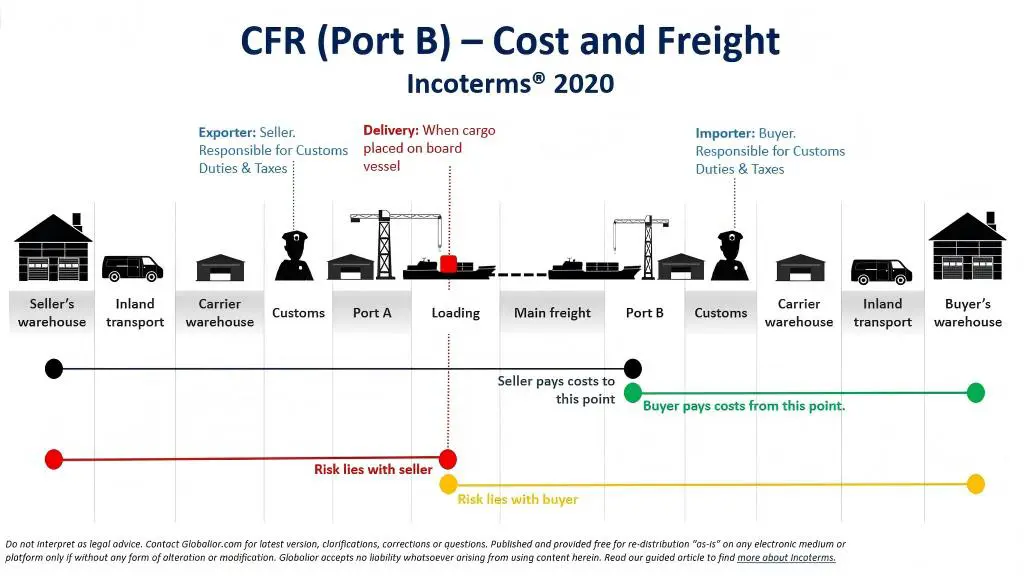
It is crucial to understand that under the CFR Incoterms 2020 rules, this term is strictly designed for sea freight or inland waterway transport. It should not be used for air freight, rail freight, or modern containerized shipping (where CPT—Carriage Paid To—is the recommended alternative).
The Crucial Separation of Cost and Risk in CFR
The most defining and often misunderstood characteristic of CFR is that the point where costs transfer is completely different from the point where risk transfers.
- Transfer of Cost: The seller pays the ocean freight costs all the way to the named destination port.
- Transfer of Risk: The risk of loss or damage to the goods shifts from the seller to the buyer much earlier—specifically, the moment the goods are safely loaded on board the vessel at the origin port.
This means if the ship sinks in the middle of the ocean, the buyer is financially responsible for the lost goods, even though the seller paid for the freight to get them there. Because the seller is not obligated to buy insurance under CFR, the buyer must be highly proactive.
Seller's Responsibilities Under CFR Incoterms 2020
In a CFR transaction, the seller handles the origin logistics and the main international freight. Their obligations include:
- Packaging and Export Clearance: Packing the goods for ocean transit and handling all export customs procedures, licenses, and duties in the origin country.
- Origin Logistics: Transporting the goods to the origin port and paying the terminal handling charges (THC) to load the cargo onto the vessel.
- Ocean Freight: Contracting the shipping line and paying the main Ocean Freight charges to transport the cargo to the agreed destination port.
- Providing Documents: Supplying the buyer with the commercial invoice and the transport document (usually a clean Bill of Lading), which serves as proof of delivery on board.
Note: The seller is under NO obligation to purchase marine insurance.
Buyer's Responsibilities Under CFR Incoterms 2020
While the seller pays for the voyage, the buyer assumes significant risk and destination responsibilities. The buyer must:
- Marine Insurance: Because the buyer bears the risk from the moment the goods are on the ship, it is highly recommended that the buyer arranges and pays for comprehensive cargo insurance.
- Destination Terminal Charges: Paying unloading costs and terminal handling charges at the destination port (unless these were specifically included in the seller's contract of carriage).
- Import Customs Clearance: Acting as the Importer of Record to handle all import procedures, pay duties, and settle destination taxes.
- Onward Transportation: Arranging the final delivery from the destination port to the final warehouse.
CFR vs. CIF: The Insurance Difference
CFR is frequently compared to CIF (Cost, Insurance, and Freight). They are nearly identical in structure, with one massive difference: Insurance.
| Feature / Responsibility | CFR (Cost and Freight) | CIF (Cost, Insurance, and Freight) |
|---|---|---|
| Ocean Freight Paid By | Seller | Seller |
| Risk Transfer Point | Goods loaded on the vessel at origin | Goods loaded on the vessel at origin |
| Marine Insurance | Buyer must arrange (Optional but vital) | Seller must arrange (Mandatory minimum coverage) |
| Control Over Coverage | High (Buyer chooses the policy) | Low (Seller provides basic Clause C coverage) |
Many experienced buyers prefer CFR over CIF. By using CFR, the buyer can negotiate their own insurance policy, ensuring they get comprehensive "All-Risk" coverage rather than the minimum, often inadequate coverage a seller might provide under CIF.
Why CFR is Not for Containerized Cargo
Just like FOB and CIF, the ICC strongly advises against using CFR for containerized freight.
When shipping containers, goods are dropped off at a container yard days before the vessel arrives. Under CFR, risk doesn't transfer until the goods are physically "on board" the ship. If the container is damaged in the port yard, it creates a complex liability dispute between buyer and seller. For containerized cargo, the rule CPT (Carriage Paid To) should be used instead, as risk transfers when the goods are handed to the carrier at the terminal.
Secure Your CFR Shipments with AllBestShipping
Buying under CFR Incoterms 2020 requires you to expertly manage the risk gap between the origin port and your final destination. AllBestShipping provides the specialized support you need to make CFR work in your favor.
- Premium Cargo Insurance: Since you bear the risk on the high seas under CFR, we offer robust, highly customizable insurance policies that provide far better protection than standard supplier-bought CIF insurance.
- Seamless Destination Services: We take the headache out of arrival. Our expert team handles the complex Import Customs Clearance, manages destination terminal fees, and coordinates the final inland trucking to your door.
- Alternative Freight Solutions: If you are tired of sellers inflating CFR freight costs, let us quote your shipment under FOB or FCA terms. We leverage our massive global network to provide unbeatable Ocean Freight rates, giving you total control and transparency over your supply chain costs.
Don't let the complexities of international trade rules leave your cargo exposed. Partner with AllBestShipping today to secure, optimize, and streamline your global logistics. Contact our team for a free consultation.