Understanding CIP Incoterms 2020: The Safest Multimodal Shipping Solution
Are you shipping high-value goods using modern containerized or multimodal transport? If you want the seller to handle the freight and provide comprehensive insurance coverage, the CIP Incoterms 2020 (Carriage and Insurance Paid To) is the gold standard. In the 2020 update of the Incoterms rules, CIP received a massive upgrade regarding mandatory insurance, making it one of the most secure terms for buyers. However, like its cousin CPT, it still features a tricky separation between cost and risk. Let's explore the exact meaning of CIP, the upgraded insurance requirements, the clear division of buyer and seller responsibilities, and how AllBestShipping can help you navigate this term flawlessly.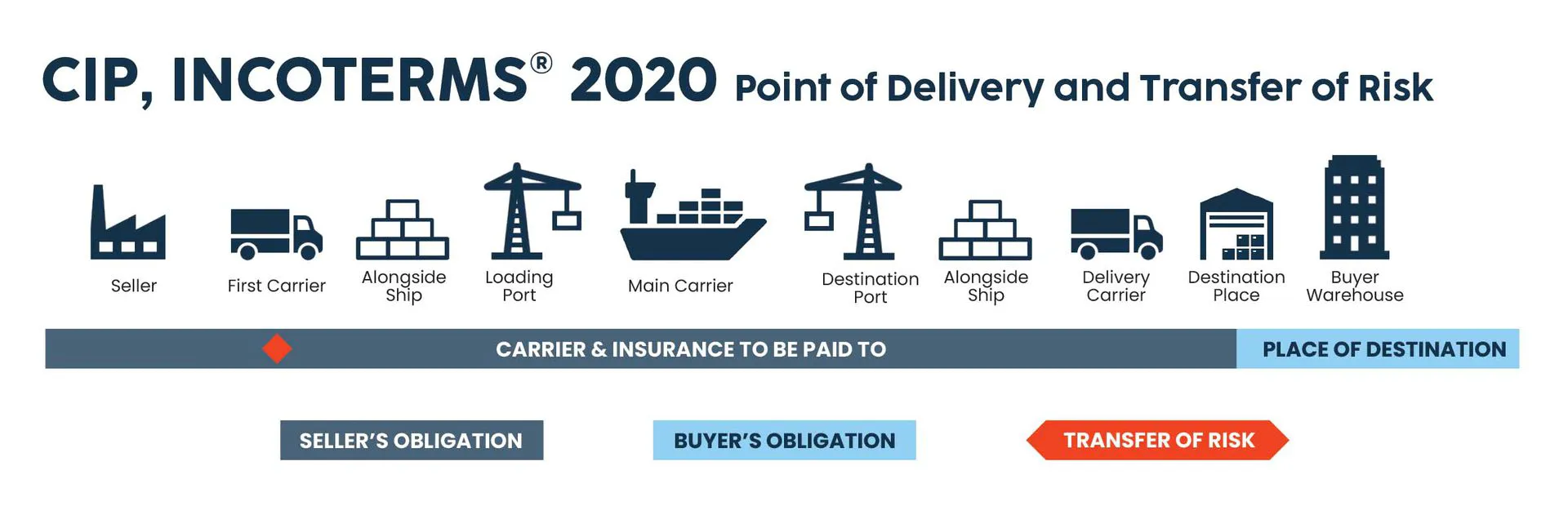
What Does CIP Mean in Shipping?
CIP stands for Carriage and Insurance Paid To. Under this rule published by the International Chamber of Commerce (ICC), the seller is responsible for clearing the goods for export, handing them over to a carrier, paying the freight costs to a named destination, and contracting for comprehensive insurance coverage against the buyer's risk of loss or damage during the carriage.
CIP is a highly versatile term designed for any mode of transport—including air freight, rail freight, road transport, sea freight, or a multimodal combination. It is the modern, container-friendly equivalent of the ocean-only CIF rule.
The Separation of Cost and Risk in CIP
Just like CPT, the CIP rule separates the point where the seller's financial responsibility ends from the point where the risk of cargo damage transfers to the buyer.
- Transfer of Cost: The seller pays for the freight and the insurance all the way to the named destination place.
- Transfer of Risk: The risk of loss or damage to the goods transfers from the seller to the buyer the moment the goods are handed over to the first carrier at the origin.
This means that while the goods are in transit (on a ship, plane, or train), the buyer bears the risk. However, because the seller is obligated to purchase insurance under CIP, the buyer is protected and can file a claim against the seller's insurance policy if damage occurs.
The 2020 Upgrade: Mandatory "All-Risk" Insurance
The most significant change in the CIP Incoterms 2020 update revolves around insurance.
Historically, sellers under CIP only had to provide minimum coverage (Institute Cargo Clauses C), which left buyers vulnerable. Under the 2020 rules, the seller MUST now purchase comprehensive "All-Risk" insurance (Institute Cargo Clauses A) covering at least 110% of the contract value. This major upgrade makes CIP significantly safer for buyers, especially those shipping high-value electronics, pharmaceuticals, or precision machinery.
Seller's Responsibilities Under CIP Incoterms 2020
In a CIP agreement, the seller takes on heavy logistical and financial burdens up to the destination point. Their duties include:
- Export Customs Clearance: Packaging the goods and handling all export procedures, licenses, and duties in the origin country.
- Contracting the Carrier: Booking and paying for the primary international transportation to the named destination.
- Providing "All-Risk" Insurance: Purchasing maximum-cover cargo insurance (Clause A) naming the buyer as the beneficiary.
- Origin Logistics: Delivering the goods to the first carrier (which is the point where risk transfers).
- Documentation: Providing the buyer with the commercial invoice, the transport document (e.g., Bill of Lading or Air Waybill), and the all-important insurance policy.
Buyer's Responsibilities Under CIP Incoterms 2020
While the seller handles the freight and insurance, the buyer must manage the destination logistics. The buyer's responsibilities include:
- Assuming Risk Early: Acknowledging that they bear the risk from the moment the first carrier receives the goods at the origin.
- Filing Insurance Claims: If the goods are damaged in transit, the buyer is responsible for filing the claim directly with the insurance company provided by the seller.
- Import Customs Clearance: Acting as the Importer of Record to handle all import duties, taxes (like VAT), and customs procedures upon arrival.
- Unloading: Paying for and executing the unloading of the goods at the named destination (unless the seller's freight contract included unloading).
- Onward Delivery: Arranging transport from the named destination terminal to the final warehouse, if applicable.
CIP vs. CIF: Why CIP is the Modern Choice
Many traders confuse CIP with CIF (Cost, Insurance, and Freight). Here is why you should likely be using CIP instead:
| Feature | CIP (Carriage and Insurance Paid To) | CIF (Cost, Insurance, and Freight) |
|---|---|---|
| Transport Modes | Any mode (Multimodal, Air, Rail, Sea) | Strictly Sea / Inland Waterway |
| Risk Transfer Point | When handed to the 1st carrier at origin | When goods pass the ship's rail (on board) |
| Mandatory Insurance Level | Maximum Coverage (Clause A - All Risk) | Minimum Coverage (Clause C) |
| Container Suitability | Highly Recommended | Not Recommended |
If you are shipping containers, CIP is the correct term. It transfers risk when the container is handed to the terminal operator, preventing the legal "grey areas" that occur with CIF. Furthermore, the upgraded Clause A insurance requirement in CIP provides vastly superior financial protection.
Optimize Your CIP Shipments with AllBestShipping
Whether you are a seller obligated to provide top-tier insurance under CIP Incoterms 2020, or a buyer needing seamless destination support, AllBestShipping is your ideal logistics partner.
- For Sellers: We provide highly competitive Sea Freight and Air Freight routing to any global destination. More importantly, our brokerage team can instantly issue the mandatory Clause A Cargo Insurance required under CIP, ensuring you are 100% compliant with the 2020 ICC rules.
- For Buyers: When your CIP cargo arrives, our local experts handle the complex Import Customs Clearance and arrange the final delivery to your warehouse, ensuring no terminal delays.
- Better Control: If you prefer to control your own insurance and freight routing rather than relying on a foreign seller, let us quote your shipment under FCA terms to give you total supply chain dominance.
Don't leave your high-value cargo to chance. Partner with AllBestShipping today for compliant, secure, and highly efficient global logistics solutions. Contact Us for a free quote.