Understanding CPT Incoterms 2020: Carriage Paid To Explained for Modern Logistics
When shipping goods internationally, particularly across multiple modes of transport, distinguishing between who pays for the freight and who bears the risk is absolutely critical. The CPT Incoterms 2020 (Carriage Paid To) is a highly flexible trade rule designed specifically for modern, multimodal logistics, including containerized freight. Like its ocean-only counterpart CFR, CPT separates the transfer of cost from the transfer of risk, but it does so in a way that better aligns with today's complex supply chains. Let's delve into the exact meaning of CPT, the distinct responsibilities of buyers and sellers, and why having an expert forwarder like AllBestShipping is essential to managing the hidden risks.
What Does CPT Mean in Shipping?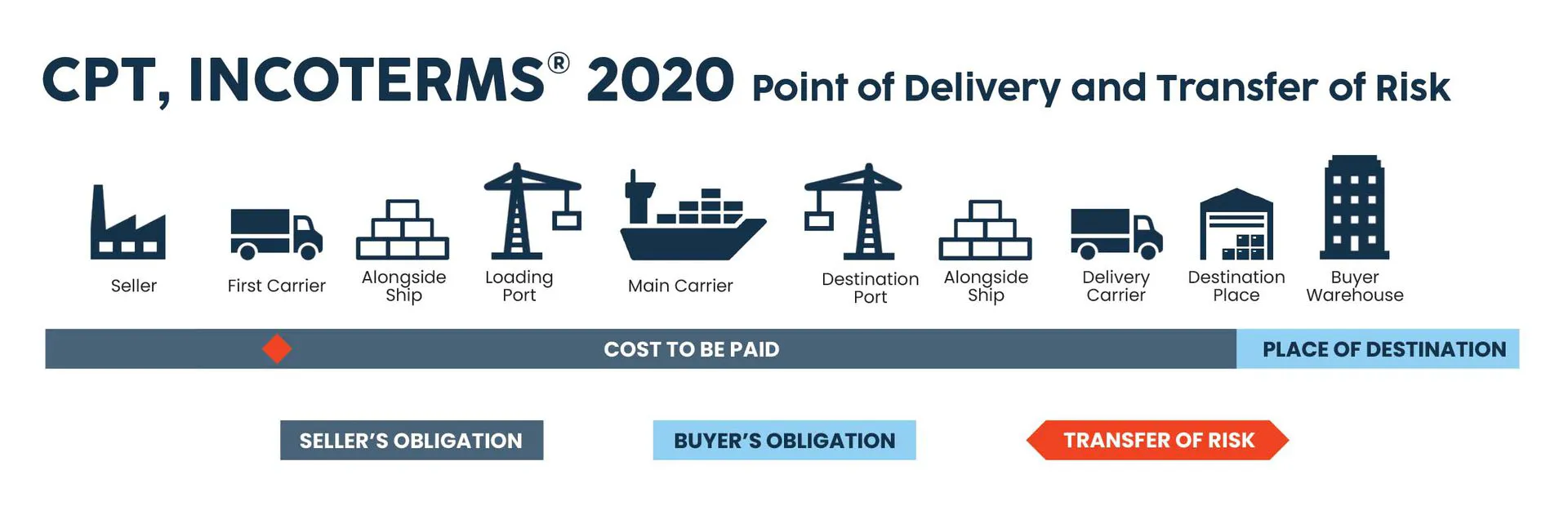
CPT stands for Carriage Paid To. Under this rule published by the International Chamber of Commerce (ICC), the seller is responsible for clearing the goods for export, handing them over to a carrier, and paying the freight costs necessary to transport the goods to a named destination agreed upon by the buyer.
The key advantage of CPT is its versatility. It can be used for any mode of transport—whether it is air freight, road transport, rail freight, or sea freight—and is highly recommended for multimodal shipments (e.g., truck to ship to train). It is the modern, container-friendly alternative to the traditional CFR rule.
The Critical Split: Cost vs. Risk Transfer in CPT
The defining characteristic of CPT is that the point of cost transfer and the point of risk transfer are entirely different. Understanding this split is vital for preventing financial disasters.
- Transfer of Cost: The seller pays the freight costs all the way to the named place of destination (e.g., "CPT Chicago Warehouse").
- Transfer of Risk: The risk of loss or damage to the goods shifts from the seller to the buyer much earlier—specifically, the moment the goods are handed over to the first carrier at the origin.
Example: A seller in China ships goods CPT to Chicago. The seller pays for the truck to the Shanghai port, the ocean freight to LA, and the rail freight to Chicago. However, the moment the seller hands the goods to the very first truck driver in China, the risk transfers to the US buyer. If the ship sinks or the train derails, the buyer is financially responsible for the lost cargo.
Seller's Responsibilities Under CPT Incoterms 2020
In a CPT transaction, the seller acts as the logistics organizer for the main journey. Their duties include:
- Packaging and Export Clearance: Preparing the goods for transport and handling all export customs procedures, licenses, and duties in the origin country.
- Contracting the Carrier: Booking the transportation (which may involve multiple carriers) to move the goods to the named destination.
- Paying the Freight: Covering all transportation costs up to the agreed-upon destination place.
- Providing Documents: Supplying the buyer with the commercial invoice and the necessary transport documents (like a Bill of Lading or Air Waybill).
Crucial Note: Under CPT, the seller is NOT obligated to purchase cargo insurance.
Buyer's Responsibilities Under CPT Incoterms 2020
Because the buyer assumes the risk of the goods very early in the journey, their responsibilities require proactive risk management. The buyer must:
- Marine/Cargo Insurance: Since the buyer bears the risk from the moment the first carrier takes the goods, it is highly recommended that the buyer arranges and pays for comprehensive cargo insurance to cover the main transit.
- Import Customs Clearance: Acting as the Importer of Record to handle all import procedures, secure necessary permits, and pay import duties and taxes (like VAT) upon arrival.
- Unloading at Destination: Unless unloading costs were explicitly included in the seller's freight contract, the buyer is responsible for unloading the goods at the destination.
- Final Delivery (if applicable): If the named CPT destination is a terminal or port, the buyer must arrange the final transport to their own facility.
CPT vs. CIP: The Insurance Factor
CPT is frequently compared to CIP (Carriage and Insurance Paid To). They function identically in terms of cost and risk transfer, with one major exception:
| Feature / Responsibility | CPT (Carriage Paid To) | CIP (Carriage and Insurance Paid To) |
|---|---|---|
| Main Freight Paid By | Seller | Seller |
| Risk Transfer Point | When handed to the first carrier at origin | When handed to the first carrier at origin |
| Cargo Insurance | Buyer must arrange (Optional but vital) | Seller must arrange (Mandatory maximum coverage) |
Many buyers prefer CPT over CIP because it allows the buyer to control their own insurance policy. Instead of relying on a foreign seller to purchase insurance (which may be difficult to claim against), the buyer can use their own trusted local insurance provider to cover the massive risk gap.
Why CPT is Better Than CFR for Containers
If you are shipping shipping containers, you should use CPT instead of CFR. Under CFR, risk transfers when goods are "on board" the vessel. However, containers are handed over at a terminal yard days before the ship arrives. If damage occurs in the yard, liability is unclear under CFR. CPT solves this by transferring risk exactly when the goods are handed to the carrier at the terminal, perfectly matching modern logistics workflows.
Master Your CPT Shipments with AllBestShipping
Buying under CPT Incoterms 2020 requires you to carefully manage the risk of cargo damage while relying on the seller's freight choices. AllBestShipping is here to protect your interests.
- Comprehensive Cargo Insurance: Because you bear the risk during transit under CPT, we offer premium, highly customizable insurance policies that give you total peace of mind, far superior to relying on foreign seller policies.
- Expert Destination Services: When your CPT cargo arrives, our dedicated customs brokers seamlessly handle the complex Import Customs Clearance, ensuring no delays or unexpected terminal storage fees.
- Better Freight Alternatives: Are your suppliers overcharging for CPT freight? Let us quote your shipment under FCA terms. By leveraging our massive global network, we provide highly competitive Ocean Freight and Air Freight rates, giving you total control over both the costs and the routing of your cargo.
Don't let the separation of cost and risk leave your business exposed. Partner with AllBestShipping today to optimize your shipping terms and safeguard your supply chain. Contact us for a comprehensive logistics consultation.