How Much Does it Cost to Ship from China to Italy? The Complete 2026 Cost Breakdown (All Modes, Real Examples & Hidden Fees)
If you are importing from China into one of Europe's largest consumer markets, you have probably asked the same question every importer asks: "How much does it cost to ship from China to Italy?" The honest answer is that no single number exists. Your final bill depends on the transport mode, cargo volume, trade terms, and — new for 2026 — how the EU's recently scrapped low-value duty exemption reshapes the cost of every parcel. Between ocean surcharges, Italian port handling fees, import duty, and VAT (IVA), the quote your forwarder gives you is rarely the whole story.
This guide breaks down real 2026 shipping costs across all four transport modes — sea, air, rail, and express courier — and walks you through four real-world scenarios so you can see exactly what you would pay. We also cover Italy-specific import duties and taxes, the 2026 EU rule change that killed duty-free small parcels, and the hidden fees most guides skip. If you want a tailored landed-cost calculation for your own cargo, the Shenzhen-based AllBestShipping team specializes in Shipping From China to Italy and will quote you transparent, all-in prices with no surprises.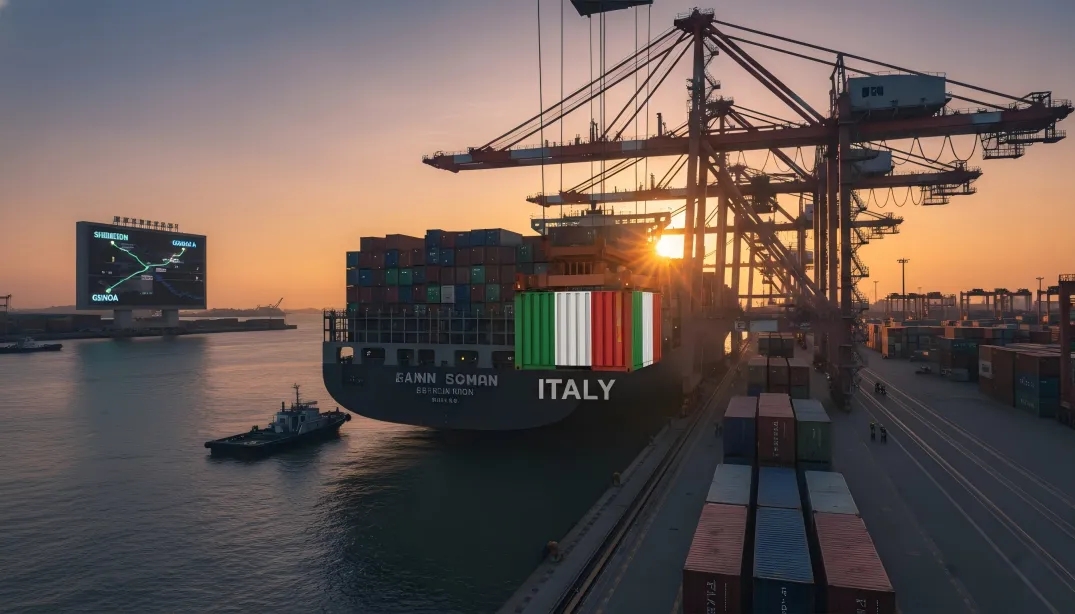
2026 Shipping Cost from China to Italy at a Glance (Quick Reference Table)
Before we dive into the details, here is a snapshot of current market rates. Use this table to get a ballpark figure, then read the sections below for the full breakdown.
| Transport Mode | Cost Range | Transit Time (Door-to-Door) | Best For |
|---|---|---|---|
| Sea Freight FCL (20ft) | $2,500 – $3,500 | 30–40 days | Bulk cargo > 15 CBM, machinery, furniture |
| Sea Freight FCL (40ft / 40HQ) | $3,300 – $5,500 | 30–40 days | Large-volume imports, full container loads |
| Sea Freight LCL | $100 – $270 / CBM | 35–45 days | Small batches 1–15 CBM, mixed SKUs |
| Air Freight | $3.50 – $10.00 / kg | 5–8 days | Urgent, high-value, electronics, samples |
| Rail Freight (FCL 40'HQ) | $8,450 – $12,500 | 18–25 days | Mid-volume, e-commerce, balanced speed & cost |
| Rail Freight (LCL) | $230 / CBM | 18–28 days | Consolidated cargo to Milan logistics hubs |
| Express Courier (DHL/UPS/FedEx) | $8 – $12 / kg | 3–7 days | Small parcels < 50 kg, samples, documents |
Important: These are 2026 Q3 reference ranges. Actual rates fluctuate weekly with capacity, fuel prices, and seasonal demand. Always request a current quote before budgeting — and confirm whether it is port-to-port or door-to-door.
Sea Freight Cost from China to Italy: FCL & LCL Rates Explained
Sea Freight from China is the backbone of China–Italy trade and nearly always delivers the lowest cost per unit. Most container traffic crosses the Suez Canal, with major carriers including MSC, Maersk, CMA CGM, and COSCO serving the route from Shanghai, Shenzhen (Yantian), and Ningbo.
FCL Rates by Port Pair (2026 Q3 Reference)
| Origin Port (China) | Destination Port (Italy) | 20ft Container | 40ft / 40HQ Container | Typical Transit |
|---|---|---|---|---|
| Shanghai | Genoa | $2,600 – $3,300 | $3,400 – $4,800 | 28–35 days |
| Shenzhen (Yantian) | Genoa | $2,700 – $3,460 | $3,500 – $5,200 | 28–36 days |
| Ningbo | La Spezia | $2,500 – $3,200 | $3,300 – $4,600 | 26–34 days |
| Shanghai | Naples | $2,600 – $3,400 | $3,400 – $4,900 | 30–40 days |
Rates are lower on direct sailings and climb during peak season (August–October and the weeks before Chinese New Year). Transshipment routes add 5 to 10 days and roughly $200 to $400 per container.
LCL Rates by Volume Tier
For shipments under 15 CBM, LCL shipping lets you pay only for the space you use.
| Volume Tier | Rate per CBM (USD) | Notes |
|---|---|---|
| 1–3 CBM | $200 – $270 | Highest per-unit cost; ideal for samples or trial orders |
| 3–8 CBM | $150 – $220 | Sweet spot for SMEs and first-time importers |
| 8–15 CBM | $100 – $180 | Approaching FCL economics — consider switching at ~13 CBM |
The FCL vs LCL Crossover Point
The decision point between FCL and LCL sits around 13 to 15 CBM. Below that, LCL is almost always cheaper per shipment. Above it, booking a FCL container becomes more cost-effective and gives you exclusive use of the container — which means faster transit and a lower risk of damage.
Hidden Fees You Must Budget For
The freight rate is just the starting point. These surcharges inflate your final invoice:
- BAF (Bunker Adjustment Factor) — Fuel surcharge adjusted monthly, typically $150–$400 per container
- DTHC (Destination Terminal Handling Charge) — Paid at Genoa or La Spezia, roughly €180–€300 per container
- Port Congestion / Port Surcharge — Around $200–$500 per container at major Italian ports
- ISPS (International Ship and Port Facility Security) — About $15–$25 per container
- Documentation Fee — Bill of lading release, $50–$100 per shipment
From Our Desk: We recently arranged 8 CBM of furniture hardware from Foshan to a warehouse near Milan — 8 CBM, 2,600 kg. LCL at $165/CBM meant a freight cost of $1,320. A 20ft FCL would have run about $3,100. The client chose LCL, saved roughly $1,780, and accepted 7 extra days of transit. If the same shipment had hit 14 CBM, the math flips — FCL wins on both price and speed. Always calculate the crossover before you commit.
Choosing the Right Italian Destination Port
Your destination port drives the final trucking cost, so pick deliberately:
- Genoa — Italy's busiest port (>2 million TEU), the natural gateway for Milan, Turin, and the northern industrial heartland
- La Spezia — A fast-growing container port with excellent rail links to northern Italy
- Naples — Best for cargo destined for southern Italy
- Trieste — A strategic gateway for central Europe and eastern Italy
- Gioia Tauro — A major transshipment hub in the south
OOG & Breakbulk: Heavy Machinery and Oversized Cargo
Heavy machinery that exceeds standard container dimensions requires a Flat Rack (over-width) or Open Top (over-height) container. Expect to pay 30 to 80 percent more than standard FCL rates, plus lashing and specialized crane handling charges at both ends. For wheeled or bulk cargo, ro-ro vessels and breakbulk solutions are the alternatives.
Air Freight Cost from China to Italy per KG: Weight Tiers & Volumetric Weight
When speed matters more than cost, Air Freight from China moves your cargo from Chinese airports (PVG, CAN, SZX) to Milan Malpensa (MXP) or Rome Fiumicino (FCO) in 3 to 7 days airport-to-airport. Door-to-door service adds 2 to 4 days for pickup, customs clearance, and final delivery.
Air Freight Rates by Weight Tier (2026 Q3 Reference)
| Weight Band | Rate per KG (USD) | Example: 300 kg Shipment |
|---|---|---|
| 45–100 kg | $5.50 – $8.00 | — |
| 100–300 kg | $4.20 – $6.50 | $1,260 – $1,950 |
| 300–500 kg | $3.80 – $5.50 | $1,140 – $1,650 |
| 500–1,000 kg | $3.50 – $5.00 | — |
| 1,000+ kg | $3.00 – $4.50 | — |
The heavier your shipment, the lower the per-kilogram rate — this is the tiered pricing model all airlines use.
The Dimensional Weight Trap
Airlines charge based on the greater of actual weight and dimensional weight (also called volumetric weight). The formula for air freight:
Dimensional Weight (kg) = (Length × Width × Height in cm) ÷ 6,000
Example: A box measuring 60 × 50 × 50 cm weighs 18 kg. Its dimensional weight is (60 × 50 × 50) ÷ 6,000 = 25 kg. You pay for 25 kg, not 18 — a 39 percent cost increase from the box dimensions alone. Express couriers use the stricter ÷ 5,000 divisor, so light-but-bulky parcels get penalized even harder. Shrinking your carton by even 10 cm on one side can save hundreds of dollars on a multi-carton air shipment.
Railway Freight Cost from China to Italy: China-Europe Rail vs Express Courier
The China-Europe Railway Express has become a strategic middle option. Trains depart from Yiwu, Xi'an, Chengdu, Chongqing, and Shenzhen, cross Kazakhstan, Russia, Belarus, Poland, and Germany, and terminate at Italy's main rail hub in Milan. Transit is roughly 18 to 25 days station-to-station.
| Mode | Cost (40ft Equivalent) | Door-to-Door Time | Cost vs Sea Freight |
|---|---|---|---|
| Sea Freight | $3,300 – $5,500 | 30–40 days | Baseline |
| Rail Freight | $8,450 – $12,500 | 25–30 days | +60% to +120% |
| Air Freight (equiv. volume) | $15,000 – $25,000+ | 5–8 days | +400% to +600% |
Rail costs about half of air freight while running roughly 40 percent faster than sea — a strong fit for seasonal fashion, e-commerce replenishment, and mid-range electronics. Note two limitations: high-value goods and dangerous goods cannot travel by rail.
Express courier services (DHL, UPS, FedEx, TNT) are the fastest door-to-door option for small shipments. At $8 to $12 per kg with customs clearance included, they are pricey per unit, but for parcels, samples, and urgent documents the 3-to-7-day service is unmatched. For full-service door-to-door pricing, a freight forwarder's DDP air freight typically lands between $5.50 and $10.50 per kg — often cheaper than paying rack rates yourself.
Real-World Scenarios: Shipping Cost from Shenzhen, Shanghai & Yiwu to Italy
Here is where we put the numbers together. Each scenario shows the all-in landed cost — not just freight, but every charge from factory pickup to your door in Italy.
Scenario A: Small Trial Order — 100 kg Electronics, Shenzhen → Milan
For importers sourcing from South China, Shipping from Shenzhen to Italy offers the most direct routing with weekly sailings from Yantian port and daily air cargo departures from Shenzhen Bao'an (SZX).
| Cost Item | Air DDP | Rail DDP |
|---|---|---|
| Factory pickup (Shenzhen) | $50 | $50 |
| Export customs clearance | $60 | $60 |
| Main freight | $520 ($5.20/kg) | $230 ($2.30/kg) |
| Import customs clearance (Italy) | $85 | $85 |
| Import duty (electronics ~4%) | $120 | $120 |
| Italian VAT (22% on CIF + duty) | $1,540 | $1,530 |
| Last-mile delivery (Milan area) | $70 | $70 |
| Total Landed Cost | $2,445 | $2,145 |
| Transit Time | 7–9 days | 25–28 days |
Verdict: Air costs $300 more but delivers three weeks faster. For a trial order where speed-to-market matters, Air DDP wins.
Scenario B: Medium Batch — 8 CBM Furniture Hardware, Foshan → Milan
| Cost Item | LCL (Sea) | FCL 20ft |
|---|---|---|
| Freight | $1,320 ($165/CBM) | $3,100 |
| Origin charges (pickup, customs, docs) | $160 | $160 |
| Destination handling (Genoa) | $220 | $280 |
| Italian VAT + duty | $1,890 | $1,890 |
| Total Landed Cost | $3,590 | $5,430 |
| Transit Time | 38–42 days | 32–35 days |
Verdict: LCL saves about $1,840 at 8 CBM. Cross the 13 CBM threshold and FCL becomes the smarter play.
Scenario C: Full Container — 20ft Auto Parts, Shanghai → Genoa (Incoterms Compared)
| Cost Item | FOB | CIF | DDP |
|---|---|---|---|
| Ocean freight (20ft) | $2,800 | $2,800 | $2,800 |
| Origin + export charges | $180 | $180 | $180 |
| Insurance | — | $90 | $90 |
| Import duty + Italian VAT | You handle | You handle | Included |
| Import clearance + trucking | You handle | You handle | Included |
| Your Out-of-Pocket Cost | Lowest, but you manage everything | Moderate, still your risk | One all-in price |
| Effort Required | High | High | Zero |
Verdict: For importers without an Italian customs broker or EORI number, DDP converts unpredictable duties and clearance work into a fixed, budgetable number.
Scenario D: E-commerce Replenishment — 300 kg Home Goods, Yiwu → Amazon FBA (MXP5)
| Cost Item | Sea + Courier (海派) | Air + Truck |
|---|---|---|
| Main freight | $900 (LCL) | $1,560 ($5.20/kg) |
| Import clearance + taxes (DDP) | Included | Included |
| Courier/last-mile to FBA | Included | $140 |
| Total Landed Cost | $900 | $1,700 |
| Transit Time | 30–35 days | 7–10 days |
Verdict: Sea + courier cuts costs nearly in half and remains the go-to for regular FBA restocking; air wins only when stock is about to run out.
Door to Door Shipping Cost from China to Italy: DDP vs FOB vs CIF vs EXW
Your chosen Incoterm decides who pays for what — and how much surprise risk you carry. For a 20ft container of $30,000 goods, here is how the terms divide responsibility:
| Term | Who Pays Main Freight | Who Pays Import Duty + VAT | Who Handles Italian Clearance | Risk Level for You |
|---|---|---|---|---|
| EXW | You | You | You | Highest — every step is your job |
| FOB | You | You | You (or your broker) | High |
| CIF | Seller (freight + insurance) | You | You | Medium |
| DDP | Seller | Seller | Seller (via EU entity EORI) | Lowest — fixed all-in price |
DDP (Delivered Duty Paid) is the hassle-free choice — our Door-to-Door Shipping service bundles pickup, export customs, main carriage, Italian import clearance, payment of duties and IVA, and final delivery into one price. It is ideal for Amazon FBA sellers and anyone without an EORI number. FOB keeps freight costs transparent if you have your own customs broker. EXW looks cheapest on paper, but the factory-to-port leg hides the most "dark pits" — storage, trucking, and export paperwork — that newcomers underestimate.
Our Industry Insight: About 80 percent of the first-time importers we onboard choose DDP for their first three shipments, then switch some volume to FOB once they have their own Italian broker and predictable volumes. The "right" term changes as you grow — there is no permanently correct answer.
Italian Import Duties & Taxes (IVA): 2026 EU New Rules & Hidden Costs
This is the section most competitors skip — and the one that can cost you real money in 2026.
The 2026 EU Rule Change: No More Duty-Free Small Parcels
On July 1, 2026, the EU abolished the €150 low-value exemption that had been in place for 34 years. Every parcel now requires a formal declaration, a €3 EU clearance handling fee, applicable duty, and Italian VAT. On October 1, 2026, Italy adds a further €2 per-parcel national processing fee.
The math that changed everything: A seller shipping €12 earrings direct from China used to clear duty-free. Today each parcel carries €3 (EU fee) + €2.64 (22% IVA on €12) + possible duty + the upcoming €2 (Italy fee) — roughly €7.60 of added cost on a €12 item. Low-value direct-mail small parcels have effectively become unprofitable. The Italian audit court estimates about 320 million parcels are affected.
Three strategies soften the blow:
- Switch to an Italian warehouse (overseas warehousing) — Ship in bulk via sea or rail, clear once, and dispatch locally. Local delivery is also faster and more trusted by buyers.
- Raise average order value — A €5 processing fee is 62.5 percent of an €8 product but only 10 percent of a €50 one. Bundles and min-order discounts help.
- Register for IOSS — The EU's Import One-Stop Shop lets you declare VAT monthly in one consolidated filing; practical for sellers shipping 500+ parcels per month.
Anti-splitting warning: Don't try to dodge the rules by splitting orders. EU customs runs anti-splitting risk models — multiple low-value parcels to the same recipient within 7 days automatically trigger manual review.
Italian Import Duty (TARIC)
Duty is calculated as a percentage of the goods' value based on the product's HS code:
| Product Category | Typical Customs Duty |
|---|---|
| Electronics | ~4% |
| Clothing | ~12% |
| Machinery | ~2.5% |
| Furniture | ~6% |
| Toys | ~4.5% |
Italian VAT (IVA) — 22% and How It Is Calculated
Italy's standard VAT rate is 22% (reduced rates of 4% and 10% apply to selected categories). The taxable base is CIF value + duty:
Italian VAT = (CIF Value + Import Duty) × 22%
Example: Electronics with a CIF value of €10,000 and 4% duty (€400) generate VAT of (€10,000 + €400) × 22% = €2,288. Add the €400 duty and your taxes total €2,688 before any freight margin.
EORI and Italian Tax Numbers
You cannot clear goods yourself in Italy without an EORI number — a free but mandatory EU registration. Businesses also need a Codice Fiscale (personal tax code) or Partita IVA (VAT number) for customs and invoicing. First-time importers can avoid all of this by shipping DDP, where the forwarder clears using its own EU entity's EORI.
Cheapest Way to Ship from China to Italy: 7 Cost Drivers & How to Control Them
- 1. Cargo attributes — Weight, volume, and product name decide the billing method and carrier restrictions
- 2. Incoterm choice — Different terms place completely different cost ranges under your control
- 3. Seasonality — Rates can jump 10–30% during Q4 (September–December) and before Chinese New Year; ship in March–April or July to save roughly 30%
- 4. Fuel surcharges (BAF/FSC) — Monthly adjustments tied to oil prices
- 5. Exchange rates — The USD/CNY/EUR triangle affects what you actually pay
- 6. Port/route selection — Direct vs transshipment, and Genoa vs La Spezia vs Naples, changes both freight and trucking
- 7. Forwarder negotiating power — A reliable forwarder with consolidated volumes can beat market rates by up to 20%; understand the difference in our Freight Forwarding vs. Consolidation Shipping guide
Action plan: consolidate multiple suppliers into one shipment; slim your packaging to cut volumetric weight; ship in the off-season; pick the Incoterm that matches your capabilities; and build a long-term partnership for volume discounts.
Amazon FBA Shipping Cost from China to Italy: MXP5/FCO1 Requirements
Italy's main Amazon FBA centers are MXP5 (near Milan) and FCO1 (near Rome). FBA shipping adds compliance work on top of cost — three mistakes cause most rejections:
- FNSKU labels — Every item must carry the correct label; mismatches are the #1 reason shipments are refused at receiving
- Carton labels — Each box needs its unique FBA shipment label; pallets need specific pallet labels
- Packing list — A detailed packing list lets your forwarder build an accurate commercial invoice for EU customs
For small and medium sellers, Sea + Courier (海派) is the professional standard for Amazon FBA Shipping from China: your LCL cargo is consolidated, shipped to a European port, deconsolidated after clearance, and handed to a local courier (DHL, DPD, GLS) that books the Amazon appointment and delivers to MXP5 or FCO1. It combines sea freight's low cost with door-delivery convenience, and a DDP FBA head-haul package covers clearance, tax, and the delivery appointment in one price.
FAQ: China to Italy Shipping Cost & Transit Time Questions Answered
Q1: How long does shipping from China to Italy take? Express: 3–7 days. Air: 5–8 days. Rail: 18–28 days. Sea LCL: 35–45 days. Sea FCL: 20–40 days.
Q2: What is the cheapest way to ship from China to Italy? Under 100 kg → express or air LCL; 100 kg–2 CBM → air freight; 2–15 CBM → sea LCL or rail; over 15 CBM → sea FCL; oversized cargo → rail or breakbulk.
Q3: How much does a 20ft / 40ft container cost from China to Italy? A 20ft FCL runs about $2,500–$3,500; a 40ft/40HQ about $3,300–$5,500, depending on port pair and season.
Q4: Do I need to pay customs duty and VAT in Italy? How are they calculated? Yes. Duty depends on the HS code (roughly 2.5–12% for common goods); Italian VAT is 22%, calculated on CIF value plus duty.
Q5: How does the EU's new 150-euro duty-free rule change affect my small parcels? Since July 1, 2026, every parcel pays a €3 EU handling fee plus VAT (and Italy adds €2 per parcel from October 1). Low-value direct-mail parcels are now largely unprofitable — use overseas warehousing or IOSS instead.
Q6: What does DDP shipping include? Is it worth the extra cost? DDP covers pickup, export customs, main carriage, Italian clearance, duty and VAT, and final delivery. The premium is worth it if you lack an EORI or want a fixed, predictable budget.
Q7: Can I ship from China to Italy without an EORI number? You cannot clear goods yourself without an EORI. Either appoint an Italian customs broker or ship DDP, where the forwarder clears using its EU entity.
Q8: How much does Amazon FBA shipping from China to Italy cost? Sea + courier to MXP5/FCO1 typically runs $3–$5/kg all-in; air runs $7–$12/kg. Volumes and DDP terms change the math.
Q9: Is shipping insurance necessary for China–Italy freight? Highly recommended — typically about 0.3% of cargo value for all-risk coverage. It is cheap relative to the replacement cost of a lost or damaged shipment.
Q10: Why do shipping quotes vary so much between freight forwarders? Quotes differ in what they include: port-to-port vs door-to-door, fuel surcharges, destination handling, customs, and taxes. Ask for an itemized all-in quote and compare like for like.
Q11: What documents do I need to ship from China to Italy? Commercial invoice, packing list, bill of lading or airway bill, and — where applicable — CE certification and certificates of origin.
Ready to ship to Italy? Contact AllBestShipping today — our Shenzhen-based team specializes in the China-to-Italy lane across sea, air, rail, and door-to-door DDP. We will calculate your total landed cost, including Italian duties and the 2026 EU rules, so you get transparent pricing — no hidden fees, no surprises.