Shipping from Shenzhen to Saudi Arabia: The Ultimate Guide (2026)
Shenzhen, often hailed as China's "Silicon Valley," is a global powerhouse for manufacturing electronics, machinery, and textiles—commodities that are in high demand in the Kingdom of Saudi Arabia (KSA). As Saudi Arabia accelerates its Vision 2030, the volume of trade between these two regions continues to surge. However, shipping from Shenzhen to Saudi Arabia involves navigating a complex web of logistics routes, strict customs regulations like the SABER system, and varying transit times.
As a freight forwarding team based in Shenzhen with over a decade of operational experience, we have helped hundreds of clients navigate these waters—from small e-commerce startups to large industrial contractors. We've seen firsthand how a single document error in the SABER system can lead to weeks of delay at Jeddah Islamic Port.
Our Related Services: Shipping from China to Saudi Arabia
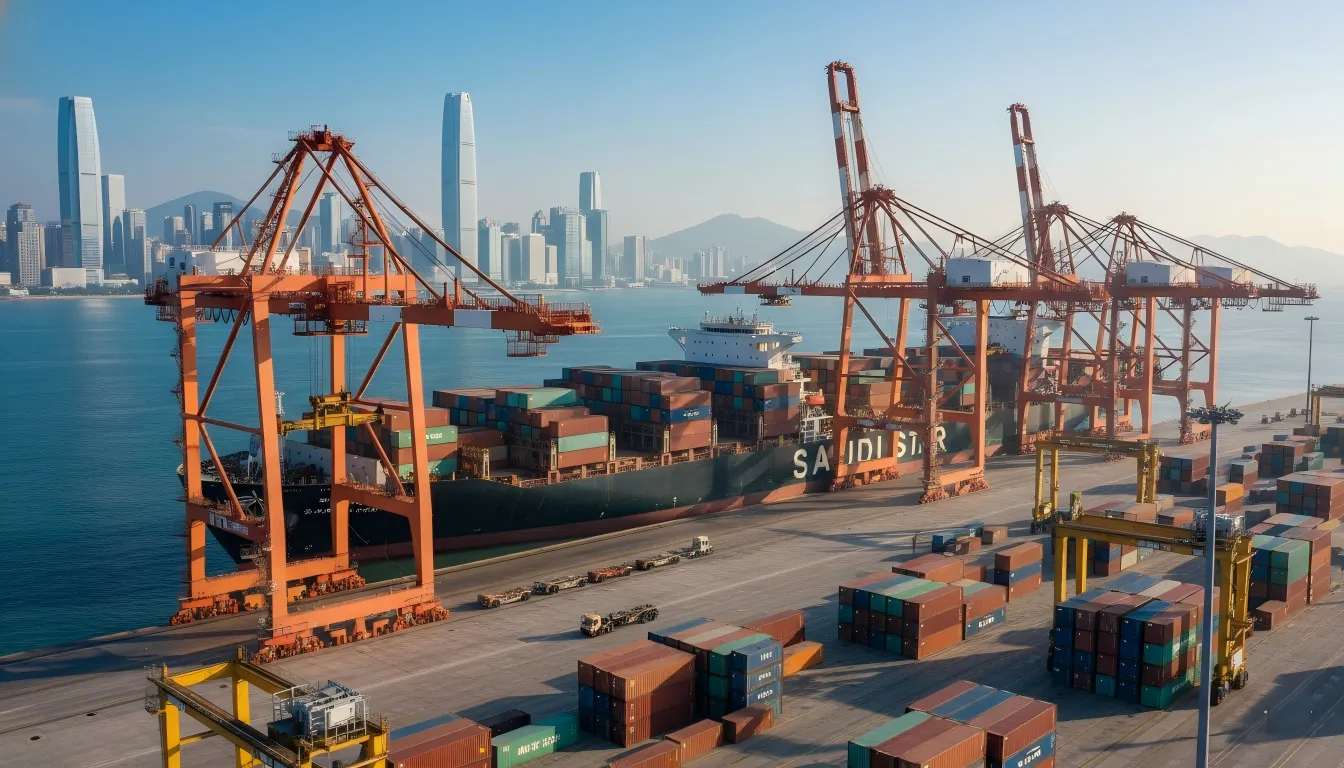
This comprehensive guide serves as your roadmap. We will walk you through everything you need to know about freight modes, costs, transit times, and compliance requirements for 2026, sharing insights that only industry insiders know.
What's changed in 2026: 2026 has been a turning point for this lane. After more than two years of Red Sea disruption, major carriers have begun a phased return to the Suez routing—Maersk, CMA CGM, Hapag-Lloyd and MSC have all restored selected Red Sea services, with MSC formally announcing a partial return on 24 August 2026. At the same time, Strait of Hormuz tensions in March 2026 pushed many shippers to favor direct Jeddah calls over Dubai transshipment, making the Shenzhen–Jeddah direct lane more reliable than ever. Meanwhile, SABER compliance has tightened further, with several new requirements taking effect this year. Below is everything you need to plan a shipment today.
1. Shipping Modes from Shenzhen to Saudi Arabia
Choosing the right shipping method depends on your budget, cargo volume, and urgency. Here is a breakdown based on our daily operations.
Sea Freight (Ocean Freight)
Sea freight is the backbone of international trade. For the Shenzhen-Saudi route, we primarily utilize the Port of Yantian (for larger vessels) and Port of Shekou. With Red Sea transits recovering, direct services to Jeddah have been restored on several strings, cutting out the Dubai transshipment leg that many shippers relied on during the crisis.
- FCL (Full Container Load): If you are shipping large volumes (usually >15 CBM), FCL is the most cost-effective and secure choice. You rent an entire container (20ft, 40ft, or 40HQ).
- Expert Insight: During the peak season (Oct-Jan), we recommend booking at least 14 days in advance to secure space on direct vessels to Jeddah—and confirm the routing (Red Sea vs. Cape) in writing before booking.
- LCL (Less than Container Load): For smaller shipments (1-15 CBM), LCL allows you to share container space.
- Note: While cheaper for small volume, LCL takes 5-7 days longer due to consolidation at the Shenzhen warehouse and deconsolidation at the destination.
Air Freight
When speed is paramount, air freight is the solution.
- Standard Air Freight: Ideal for high-value cargo >100kg. Flights depart from Shenzhen Bao'an (SZX) or via Hong Kong (HKG) for more carrier options (like Saudia Cargo or Cathay Pacific). Air capacity has tightened in 2026—August air cargo rates spiked roughly 60% month-on-month on some lanes—so book space early.
- Express Courier: For samples <45kg, carriers like DHL/FedEx offer rapid 3-5 day delivery.
Door-to-Door (DDP) Shipping
DDP (Delivered Duty Paid) is our most requested service for SMEs. Under this model, AllBestShipping handles the entire chain:
- Pickup from your supplier in Shenzhen.
- Export declaration.
- International transport (Sea/Air).
- Saudi Import Clearance (Crucial: We handle the duty/tax payments and SABER coordination).
- Final delivery to your warehouse in Riyadh, Jeddah, or Dammam.
If you are weighing DDP against other options, ask your forwarder for a side-by-side cost breakdown so you can compare like for like.
2. Transit Time: How Long Does It Take?
Transit times on the Shenzhen–Saudi lane are finally improving. During the height of the Red Sea crisis (late 2023–2025), many carriers re-routed around the Cape of Good Hope or transshipped through Dubai, adding 10–14 days and causing heavy schedule slippage. That picture has now changed: following the ceasefire framework agreed at the Sharm El-Sheikh summit in late 2025, carriers began restoring Red Sea transits service by service. MSC formally announced a partial return to Suez routing on 24 August 2026, and Maersk has confirmed that roughly one-third of its normal Red Sea traffic is back on the corridor. Direct sailings from Yantian to Jeddah are being restored, and some strings are completing in as little as 14–18 days.
Heads-up: This is a partial, reversible recovery. The Red Sea corridor is still listed as a war-risk area, and carriers reserve the right to swing back around the Cape on short notice—which can shift your ETA by up to two weeks. Always confirm your routing in writing at booking and re-verify the ETA as the vessel sails.
Estimated Transit Times (Based on Q3 2026 Data)
| Mode | Route | Estimated Time |
|---|---|---|
| Sea Freight (Port-to-Port) | Shenzhen (Yantian) -> Jeddah | 16-20 Days |
| Sea Freight (Port-to-Port) | Shenzhen (Yantian) -> Dammam | 22-28 Days |
| Air Freight (Airport-to-Airport) | SZX/HKG -> JED/RUH | 3-5 Days |
| Express Courier | Door-to-Door | 3-5 Days |
| DDP Air | Door-to-Door | 8-12 Days |
| DDP Sea | Door-to-Door | 30-40 Days |
Note: Transit times are estimates. Customs inspections (FASAH) can add 2-5 days, and schedule shifts of up to two weeks remain possible while Red Sea services are being phased back in.
3. Shipping Costs: Rates & Factors (2026 Update)
Freight rates are dynamic. While we cannot list exact daily rates here, we can provide current market ranges to help you budget.
- Sea Freight: A 40HQ container from Shenzhen to Jeddah currently ranges $3,000 - $4,500 (port-to-port, subject to GRI). Rates have softened somewhat as Red Sea capacity returns, but expect quotes to push toward the upper end during the Q3-Q4 peak season and Ramadan pre-stocking.
- LCL: Roughly $20 - $35 per CBM plus origin and destination handling charges, depending on volume and carrier.
- Air Freight: Rates hover between $4.50 - $9.00 per kg, depending on the "chargeable weight" (Actual vs. Volumetric) and same-week capacity. Air cargo prices spiked sharply in August 2026—around +60% month-on-month on some lanes—so lock in space early if you ship by air.
Hidden Costs to Watch Out For
Transparency is key to our service. Be aware of these often-overlooked fees:
- GRI (General Rate Increase): Carriers often apply this on the 1st and 15th of the month.
- SASO/SABER Fees: Registration costs for PCoC and SCoC are separate from shipping, and new MIM-related product declarations can add certification costs for affected HS codes.
- Detention & Demurrage: Free time at Saudi ports is strict (usually 7-14 days). Delays in clearance will result in heavy daily fines.
For a detailed breakdown of how quotes are built—and the five moves that actually lower your invoice—see our Cheapest Way to Ship from China to Saudi Arabia guide.
4. Major Ports & Airports
Understanding the geography of your logistics chain can help optimize routing.
Origin: Shenzhen (China)
- Port of Yantian: The preferred gateway for large container vessels heading to the Middle East. It offers extensive international connections, including the direct Jeddah strings that are being restored through the Red Sea.
- Port of Shekou: Located closer to the city center and manufacturing hubs, it is excellent for barge connections from the Pearl River Delta.
- Shenzhen Bao'an Airport (SZX): A top-tier cargo hub with direct and connecting flights to major Saudi cities.
Destination: Saudi Arabia
- Jeddah Islamic Port (JED): The largest and busiest port in KSA—handling roughly 60% of the Kingdom's container throughput—serving as the primary gateway for imports destined for the western region and the holy cities of Mecca and Medina. Its direct, non-Gulf location makes it a stable alternative to Dubai transshipment.
- King Abdulaziz Port (Dammam): The main entry point for the eastern region, servicing the oil and gas industry and major industrial cities.
- King Abdullah Port (Rabigh): A fast-growing gateway on the Red Sea coast, offering modern infrastructure and increasing direct calls from Asia.
- Riyadh Dry Port: Connected by rail from Dammam, serving the capital city.
- King Khalid Int'l Airport (RUH): The central air hub for Riyadh, complemented by King Abdulaziz Int'l Airport (JED) and King Fahd Int'l Airport (DMM).
5. Customs Clearance & Compliance: The SABER Challenge
Saudi Customs regulations are among the strictest globally, and they got stricter in 2026. The most common pitfall we see is SABER non-compliance.
What is SABER?
Managed by SASO (Saudi Standards, Metrology and Quality Organization), SABER is the electronic platform for product safety.
The Two-Stage Process:
- PCoC (Product Certificate of Conformity):
- Valid for 1 year (some product categories up to 5 years).
- Requires a lab test report (from Intertek, SGS, TÜV, etc.) proving your product meets Saudi standards.
- Pro Tip: Ensure the HS Code on the PCoC matches your commercial invoice exactly—a wrong or vague HS code is the single most common trigger for manual inspection.
- SCoC (Shipment Certificate of Conformity):
- Required for every specific shipment.
- Cannot be issued without a valid PCoC.
2026 Compliance Updates You Need to Know
- No more self-declaration: The old "Letter of Undertaking" shortcut was removed in 2025. Every regulated product now requires full PCoC/SCoC certification through SABER—no exceptions.
- Only a Saudi importer can hold the SABER account: Registration requires a valid Saudi Commercial Registration (CR). Your supplier or exporter cannot register on your behalf—so confirm your buyer's import credentials before you book.
- System-level enforcement: Saudi Customs syncs directly with SABER. If a valid PCoC is not in the system, customs will auto-block the shipment; applying after the vessel arrives is too late.
- MIM approvals expanded (18 June 2026): 135 additional product categories—paints, cement and concrete, rebar and steel products, pipes, air conditioners, control panels, elevators and more—now require a Product Declaration approved by the Ministry of Industry and Mineral Resources (MIM) before an SCoC can be issued.
- SASO 3114/2026 for ICT products: From 1 November 2026, new ICT and electronics imports must be certified to the new SASO 3114/2026 standard; legacy SASO-CITC-GEN-002 certificates become void on 31 March 2027. Re-certify affected models early.
- USB-C mandate: Since 1 April 2026, all laptops sold in KSA must feature a USB-C charging port; non-compliant devices face certificate suspension and customs rejection.
Other Key Requirements
- FASAH: The customs portal for declarations. ZATCA (the Saudi tax and customs authority) recommends submitting import declarations at least 72 hours before the vessel arrives to speed up clearance.
- Country of Origin: "Made in China" must be permanently engraved or stitched on each item, not just the packaging. Stickers are often rejected.
- Commercial Invoice & COO: The invoice should be bilingual (Arabic/English) where possible, and a legalized Certificate of Origin adds 5-7 days—don't leave it to the last minute.
6. Why Choose AllBestShipping?
We don't just move boxes; we optimize supply chains.
- SABER Guidance: Our team pre-checks your HS Codes and documentation before cargo leaves Shenzhen to prevent rejection—and we stay on top of 2026 changes like MIM product declarations and SASO 3114/2026 so your PCoC/SCoC is always valid.
- Red Sea-Ready Routing: We confirm your routing (Red Sea vs. Cape) in writing at booking and re-verify ETAs as the vessel sails, so you are never caught off guard by a mid-quarter reroute.
- Competitive Contracts: We leverage volume contracts with COSCO, MAERSK, and Saudia Cargo to offer rates below market average.
- Transparent Quotes: No hidden "destination fees." We provide clear DDP all-in quotes so you know your landed cost.
7. FAQ: Frequently Asked Questions
Q: What is the cheapest way to ship from Shenzhen to Saudi Arabia?
A: Sea freight (FCL) is the most economical for bulk. For shipments under 2 CBM, our LCL service is cost-effective.
Q: Is the Red Sea route safe again in 2026?
A: Carriers are restoring services gradually—Maersk, CMA CGM, Hapag-Lloyd and MSC have all returned to selected Red Sea strings, and MSC announced a partial return to Suez routing on 24 August 2026. However, the corridor is still listed as a war-risk area and schedules can flip back to the Cape on short notice. We confirm your routing in writing at booking and re-verify ETAs as the vessel sails.
Q: Do I need a Saudi importer to clear my own shipments?
A: Yes. Only an entity holding a valid Saudi Commercial Registration (CR) can register on SABER and hold PCoC/SCoC certificates. If you don't have a Saudi buyer with a CR, our DDP service uses a compliant import partner so your goods clear without you needing to establish an entity in KSA.
Q: My supplier doesn't have a SABER account. Can you help?
A: Yes. For DDP shipments, we can often utilize our trading partner's import license and SABER registration (depending on the product category).
Q: How do you handle battery shipments?
A: We are certified to handle DG (Dangerous Goods) cargo, including Class 9 Lithium Batteries. We ensure all MSDS and UN38.3 documents are in order for safe air/sea transport.
8. Conclusion
Shipping from Shenzhen to Saudi Arabia offers immense opportunity but requires precision—especially in a year when routes are recovering and compliance rules are tightening. By partnering with AllBestShipping, you gain more than a logistics provider—you gain a strategic partner who understands the intricacies of China-Saudi trade in 2026.
Ready to streamline your logistics? Contact us today for a free, expert consultation and quote.