Shipping from Guangzhou to South Africa: The Complete 2026 Guide (FCL, LCL & DDP)
Shipping from Guangzhou to South Africa powers one of the busiest China–Africa trade corridors, with bilateral trade exceeding $60 billion annually. A significant share of those imports originates from the Pearl River Delta — Guangzhou, Foshan, Dongguan, and Shenzhen — the same region where our team at AllBestShipping has managed freight for over a decade.
Whether you're a B2B importer restocking Johannesburg warehouses, an Amazon.co.za seller building FBA inventory, or a procurement manager sourcing machinery from a Guangzhou factory, the shipping method you choose directly impacts your margins and delivery timelines. And there's no shortage of pitfalls: sea freight vs. air cargo trade-offs, SARS clearance requirements, quotes that vary by thousands of dollars for the same container, and hidden fees that can erase your profit on a single shipment.
This guide distills our 10+ years of hands-on China–Africa logistics experience into a clear, actionable framework. You'll get the latest rates, transit times, required documents, and a practical decision matrix for FCL, LCL, air freight, and DDP door-to-door — so you can move your cargo without surprises. For routes beyond Guangzhou, see our full Shipping From China To South Africa service page.
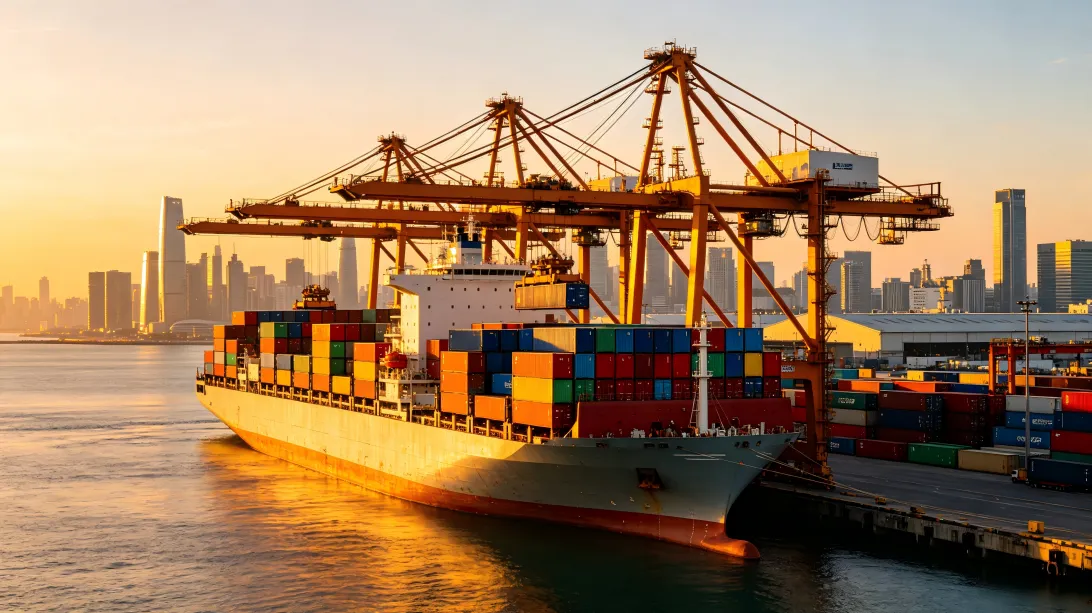
Why Guangzhou Is the Ideal Origin for South Africa–Bound Cargo
Most guides on this topic treat "China" as a single origin point. That is a mistake. If your suppliers are actually based in Guangzhou or the surrounding Pearl River Delta, your logistics strategy should reflect the unique advantages of this region.
The Pearl River Delta is the world's largest manufacturing cluster. Guangzhou, Foshan, Dongguan, and Shenzhen together produce a staggering volume of the world's electronics, textiles, furniture, machinery, and automotive parts. For South African importers, this means shorter lead times from factory to port, denser supplier networks, and more competitive pricing at the source.
Port of Guangzhou (Nansha) deserves special attention. Nansha Terminal is a modern deep-water container port that now offers regular direct vessel services to both Durban and Cape Town. Compared to routing cargo north to Shanghai or Ningbo, shipping from Nansha cuts inland trucking distance for PRD-based suppliers by hundreds of kilometers. That translates to lower pre-carriage costs, faster container availability, and reduced risk of delays from cross-country highway congestion.
For air cargo, Guangzhou Baiyun International Airport (CAN) ranks among China's top three cargo hubs. African connectivity is strong, with daily and near-daily frequencies via Ethiopian Airlines, Emirates, and Kenya Airways. If your shipment is time-sensitive and originates anywhere in South China, Baiyun is almost always the most efficient departure point.
Finally, the density of experienced freight forwarders in Guangzhou cannot be overstated. A forwarder with a physical warehouse in Guangzhou or Shenzhen can consolidate cargo from multiple suppliers, perform quality inspections, handle export customs filings in person, and resolve documentation issues on the spot. Many offer 7 to 14 days of free storage while you finalize orders — a flexibility that is harder to find when working with forwarders based solely at destination. The same Pearl River Delta advantages apply to other major destinations as well. For instance, our Shipping from Guangzhou to USA service leverages identical Nansha-Baiyun infrastructure for North American trade lanes.
Shipping Methods at a Glance
Before diving into rates and routes, it helps to see how the main shipping modes stack up against each other. The right choice depends on three variables: your cargo volume, your budget, and how quickly you need the goods.
| Method | Best For | Transit Time | Cost Level |
|---|---|---|---|
| Sea Freight (FCL) | Shipments over 15 CBM, heavy machinery, bulk inventory | 23–35 days | Most economical |
| Sea Freight (LCL) | 2–15 CBM, mixed cargo from multiple suppliers | 38–52 days | Low per CBM |
| Air Freight | Urgent, high-value, or perishable goods | 6–10 days | Premium |
| Express / DDP | Samples, e-commerce parcels under 100 kg | 5–14 days | Highest per kg |
If your top priority is budget and you are moving more than 15 cubic meters, FCL sea freight is almost always the winner. If you need inventory replenishment within two weeks, air freight or air DDP is the practical choice. And if you are a first-time importer without a South African customs broker on speed dial, DDP (Delivered Duty Paid) removes nearly all complexity by handing the entire process to your forwarder.
One more factor to consider: your final destination within South Africa. Cargo arriving at Durban can reach Johannesburg by truck in one to two days thanks to the N3 highway. Cape Town, while excellent for Western Cape deliveries, adds significant inland distance for Gauteng-bound shipments. We will cover inland logistics in detail later.
Sea Freight From Guangzhou to South Africa
For bulk inventory, heavy machinery, and general cargo, Sea Freight from China remains the workhorse of China–South Africa trade. It offers the lowest cost per unit by a wide margin, and direct sailing schedules from Nansha have become increasingly reliable.
FCL (Full Container Load)
FCL means you book an entire container exclusively for your cargo. It is the best choice when your shipment exceeds approximately 15 CBM — the point at which renting a full container becomes cheaper per cubic meter than sharing space via LCL.
| Container Type | Internal Volume | Typical Cargo |
|---|---|---|
| 20GP | 28 CBM | Small machinery, mixed inventory, dense goods |
| 40GP | 58 CBM | Bulk retail inventory, furniture, automotive parts |
| 40HQ | 68 CBM | Light but voluminous cargo, textiles, consumer goods |
From Guangzhou, the vast majority of FCL shipments depart from Nansha Port. Direct vessel services to Durban typically take 23 to 30 days, while routes to Cape Town run 28 to 35 days depending on whether the service is direct or transshipped via a hub port. Major carriers serving this lane include PIL, COSCO, Evergreen, ONE, MSC, Maersk, CMA CGM, and ZIM. For a broader look at ocean options across the continent, see our dedicated guide to Sea Freight from China to South Africa.
Durban deserves emphasis here. As South Africa's largest container port and the gateway to the economic heartland of Gauteng, Durban handles the majority of China-origin cargo. Its direct rail and highway links to Johannesburg and Pretoria make it the default choice for inland-bound shipments. Cape Town, while vital for Western Cape agriculture and manufacturing, does not offer the same inland connectivity and can experience seasonal congestion during harvest export peaks.
LCL (Less than Container Load)
LCL allows you to share container space with other shippers. It is ideal for smaller shipments between 2 and 15 CBM, or when you are ordering from multiple Guangzhou suppliers and want to combine everything into a single shipment.
At a Guangzhou consolidation warehouse, cargo from different suppliers is collected, inspected, and loaded into a shared container bound for Durban or Cape Town. Transit time is longer than FCL — typically 38 to 52 days door-to-door — because of the extra handling steps at both ends. Your cargo must be consolidated in China and then deconsolidated in South Africa before final delivery.
One practical rule of thumb: once your volume approaches 13 to 15 CBM, request an FCL quote alongside your LCL quote. For more tips on maximizing value with shared containers, read our LCL Shipping Guide. The per-CBM cost of a dedicated 20GP container often drops below LCL pricing at that threshold, and you avoid the extra handling fees that LCL carriers charge at origin and destination.
Sea Freight Documentation
Every sea shipment leaving Guangzhou requires a standard set of export documents. At minimum, you will need a Commercial Invoice, a Packing List, a Bill of Lading (B/L), and a Certificate of Origin. If your forwarder is handling export customs at Nansha, they will also prepare the Chinese customs declaration. The good news is that Nansha has streamlined pre-clearance procedures for containers that are ready before vessel cutoff, which helps avoid last-minute delays at the terminal gate.
It is also worth clarifying your Incoterms 2020 agreement with your supplier before production starts. Whether you choose EXW, FOB, CIF, or DDP determines who is responsible for inland trucking in China, export customs fees, and destination clearance. We have seen too many importers assume their supplier was handling export customs under FOB, only to discover at the last minute that the factory expected EXW terms — leaving them to scramble for a local truck to Nansha. Lock this in writing before your goods are ready to ship.
Air Freight From Guangzhou to South Africa
When speed is the priority, air freight from Guangzhou Baiyun (CAN) to Johannesburg O.R. Tambo (JNB) or Cape Town (CPT) is the clear choice. Typical door-to-door transit is 6 to 10 days, which is roughly one-third the time of sea freight.
The timeline breaks down as follows:
| Stage | Duration |
|---|---|
| Factory pickup (Guangzhou / Foshan) | 1–2 days |
| Export customs and consolidation at CAN | 1–2 days |
| Flight (CAN → JNB / CPT) | 1–2 days |
| SARS import clearance at destination | 1–3 days |
| Last-mile delivery to warehouse | 1–2 days |
| Total door-to-door | 6–10 days |
Airlines serving this route include Ethiopian Airlines (via Addis Ababa), Emirates (via Dubai), and Kenya Airways (via Nairobi). China Southern also operates seasonal direct flights from CAN to JNB, which can shave an additional day off transit for eligible shipments.
A critical concept in air freight pricing is chargeable weight. Airlines do not simply charge by the kilogram on your scale. They calculate volumetric weight using the formula: Length (cm) × Width (cm) × Height (cm) / 6000. They then charge whichever is greater — actual weight or volumetric weight. This means a large carton of lightweight clothing can cost more to ship by air than a compact box of heavy metal components. Always confirm chargeable weight with your forwarder before booking.
Express and DDP Door-to-Door Shipping
For samples, documents, or e-commerce parcels under 100 kg, express couriers like DHL, FedEx, UPS, and Aramex offer the simplest door-to-door solution. Transit times range from 5 to 14 days to major South African cities, with all-in pricing around $10 to $18 per kilogram.
Door-to-Door Shipping via DDP takes that convenience several steps further. Under a DDP arrangement, your freight forwarder handles the entire chain: pickup at your Guangzhou supplier, Chinese export customs, international transport, SARS import clearance, payment of duties and VAT, and final delivery to your door. You do not need a South African customs broker. You do not need to guess what duties will cost. You pay one predictable price and the cargo simply arrives.
| Service | Cost (2026) | Transit | Best For |
|---|---|---|---|
| Standard Express | $10–$18/kg | 5–14 days | Samples, small parcels, documents |
| Air DDP | $9.50–$15.00/kg | 6–10 days | E-commerce replenishment, urgent stock |
| Sea DDP | $160–$260/CBM | 35–50 days | Bulk inventory, hassle-free full container |
For e-commerce sellers shipping to Amazon FBA in South Africa, we typically recommend air DDP for replenishment cycles and sea DDP for bulk inventory builds. FBA labeling, bundling, and palletizing can all be completed at a Guangzhou warehouse before the goods ever leave China, saving you time and handling costs at the destination.
Guangzhou to South Africa Shipping Costs (2026)
Understanding what you will actually pay requires looking beyond the headline ocean or air rate. Here is what the market looks like as of June 2026. If you want a broader cost comparison across all Chinese origins, check out our guide to the Cheapest Way to Ship from China to South Africa.
All figures below are indicative estimates based on June 2026 market conditions. Ocean and air rates fluctuate with fuel prices, seasonal demand, carrier capacity, and currency movements. Always request a live quote with 2–3 week validity before booking.
Sea Freight Rates
| Route | 20GP (USD) | 40GP (USD) | 40HQ (USD) | LCL (USD/CBM) |
|---|---|---|---|---|
| Nansha → Durban | $2,100–$2,700 | $2,800–$3,400 | $3,000–$3,650 | $100–$150 |
| Nansha → Cape Town | $2,200–$2,800 | $2,900–$3,500 | $3,100–$3,750 | $110–$160 |
Market trend: FCL rates softened roughly 2–7% in June 2026 compared to May, creating a short window to lock in lower pricing before the traditional Q3 peak season surge. If you have visibility on upcoming orders, now is a smart time to request quotes and secure vessel space.
Watch out for hidden charges that some forwarders bury in the fine print. Common extras include THC (Terminal Handling Charge), documentation fees, BAF/CAF fuel surcharges, and demurrage at South African ports if your cargo sits too long before collection.
Air Freight Rates
| Weight Bracket | CAN → JNB (USD/kg) | CAN → CPT (USD/kg) |
|---|---|---|
| +100 kg | $5.50–$7.50 | $6.00–$8.00 |
| +300 kg | $4.80–$6.80 | $5.30–$7.30 |
| +500 kg | $4.30–$7.00 | $4.80–$7.50 |
| +1000 kg | $4.20–$6.50 | $4.70–$7.00 |
Heavier shipments unlock better per-kilogram rates through airline weight-break pricing. If your air cargo totals less than 100 kg, consider express courier instead — the all-in rate is often competitive and includes customs clearance.
South African Customs Clearance: What You Must Know
Customs clearance is where many otherwise well-planned shipments from Guangzhou get delayed. The South African Revenue Service (SARS) has tightened digital checks in 2026, and accuracy is non-negotiable. A single incorrect HS code or missing document can hold your cargo at the port for days — sometimes weeks — while you resolve the issue from abroad.
The SARS Import Process
According to the South African Revenue Service (SARS), all commercial imports must be declared through its electronic customs system. Here is exactly what happens when your shipment arrives, based on our team's weekly experience clearing cargo at Durban and Cape Town:
- Pre-arrival declaration: Your forwarder or broker submits the customs declaration through the SARS electronic system before the cargo physically arrives.
- Document review: SARS reviews your Commercial Invoice, Packing List, Bill of Lading or Air Waybill, and Certificate of Origin.
- HS code classification: A SARS officer classifies your goods by HS code and determines the applicable duty rate. This is where errors are most common — and most costly.
- Duty and VAT assessment: You pay customs duty, which varies by HS code (typically 0% to 20% or more), plus 15% VAT calculated on the CIF value plus duty.
- Inspection (if selected): Random or targeted physical inspections do occur. Accurate paperwork reduces your chances of being flagged.
- Release: Once payment is confirmed and any inspections are cleared, SARS releases the cargo for pickup or delivery.
Critical Documents Checklist
| Document | Purpose |
|---|---|
| Commercial Invoice | Proves transaction value; must list accurate HS codes |
| Packing List | Details weights, dimensions, and packaging for each item |
| Bill of Lading / AWB | Contract of carriage and title document |
| Certificate of Origin | Required for preferential duty claims under trade agreements |
| SARS Importer Code | Mandatory for all commercial imports into South Africa |
If you do not yet have a SARS Importer Code, your forwarder can often handle clearance under their own license — typically as part of a DDP service.
Pre-Shipment Checklist: Before Your Cargo Leaves Guangzhou
From our experience, the majority of customs delays are preventable. Here is the checklist we send to every client before their cargo departs:
- [ ] HS codes verified with your forwarder against the latest ITAC tariff schedule
- [ ] Commercial Invoice lists the true transaction value (no undervaluation)
- [ ] Packing List matches the invoice line for line
- [ ] Certificate of Origin is ready if claiming preferential duty
- [ ] SARS Importer Code is active, or DDP service is confirmed
- [ ] Import permit obtained for regulated goods (electronics, chemicals, pharmaceuticals)
- [ ] Incoterms 2020 agreed in writing with your supplier
- [ ] Cargo insurance arranged (standard carrier liability is rarely enough)
- [ ] Anti-dumping duty check completed if importing steel, ceramics, or solar products
Anti-Dumping Duties Warning
Certain product categories imported from China face additional anti-dumping duties in South Africa. These are separate from standard customs duty and can be substantial. The International Trade Administration Commission (ITAC) publishes the full list of affected products and applicable duty rates on its official website. Categories currently on the watch list include steel products, ceramics, chemicals, and solar panels.
Just last quarter, one of our clients importing ceramic tiles from Foshan discovered — after the shipment had already sailed — that a 35% anti-dumping duty applied to their product category. The surprise duty turned a profitable shipment into a loss. If you are importing any of these product types, verify the latest ITAC tariff schedule with your forwarder before production begins, not after the cargo is on the water.
Choosing the Right Incoterm
Your Incoterm determines who pays for freight and who handles customs at each end of the journey.
| Incoterm | Who Pays Freight | Who Handles SA Customs | Best For |
|---|---|---|---|
| EXW | Buyer | Buyer | Experienced importers with a South African broker |
| FOB | Buyer | Buyer | Cost-conscious buyers with their own logistics team |
| CIF | Seller (to port) | Buyer | Balanced risk; buyer controls destination |
| DDP | Seller | Seller (forwarder) | First-time importers, SMEs, hassle-free needs |
For most small and medium-sized importers, and certainly for anyone without a dedicated customs broker in Durban or Johannesburg, DDP removes the complexity of navigating SARS requirements on your own. You pay a single predictable price, and your forwarder manages every step.
How to Choose a Freight Forwarder for This Route
Not every forwarder truly understands the nuances of the Guangzhou–South Africa lane. If you are new to international logistics, it helps to first understand What is a Freight Forwarder and why the right partner matters. Here are the criteria we recommend our clients use when evaluating partners:
Physical presence in Guangzhou or Shenzhen. A local office or warehouse means your forwarder can coordinate directly with your suppliers, inspect cargo before it ships, and resolve documentation issues in real time. Phone calls across time zones are no substitute for someone who can walk into the warehouse.
Proven South Africa experience. Ask for shipment references on the China–South Africa corridor. Confirm whether the forwarder has partnerships with SARS-licensed customs brokers in Durban and Cape Town. Customs clearance is not an area where you want a generalist learning on the job.
Transparent, itemized quoting. Demand a breakdown that shows ocean freight, local charges, documentation, fuel surcharges, and destination fees separately. If a quote is vague, lacks a validity date, or promises an unrealistically low "all-in" price, treat it as a red flag.
Cargo insurance options. Standard carrier liability almost never covers the full value of your goods if something goes wrong. A reputable forwarder will offer comprehensive cargo insurance as an optional add-on.
At AllBestShipping, we operate consolidation facilities in Guangzhou and Shenzhen, maintain volume contracts with major ocean and air carriers, and work with trusted customs partners in Durban and Johannesburg. That combination allows us to offer competitive rates without sacrificing visibility, compliance, or accountability.
Frequently Asked Questions
How long does shipping take from Guangzhou to South Africa? Sea FCL takes 23 to 30 days to Durban and 28 to 35 days to Cape Town. Sea LCL adds roughly 10 to 15 days for consolidation and deconsolidation. Air freight door-to-door runs 6 to 10 days. Express courier services deliver in 5 to 14 days depending on the carrier and service level.
What is the cheapest shipping method from Guangzhou to South Africa? For shipments over 15 CBM, FCL sea freight is the cheapest option. For 2 to 15 CBM, LCL sea freight at roughly $100 to $150 per CBM is the most cost-effective. Under 100 kg, express courier or consolidated air freight is usually competitive.
Do I need a SARS Importer Code? Yes. All commercial imports into South Africa require a SARS Importer Code. If you do not have one, your freight forwarder can handle customs clearance under a DDP arrangement using their own licensed broker.
What is DDP shipping, and is it worth the extra cost? DDP (Delivered Duty Paid) means the forwarder handles pickup, transport, customs clearance, duties, VAT, and final delivery. It costs more upfront than FOB or CIF, but it eliminates surprises and is strongly recommended for first-time importers or anyone without a local customs broker.
Are there products I cannot ship from Guangzhou to South Africa? South Africa restricts or requires permits for certain categories, including firearms, pharmaceuticals, chemicals, and some electronics. Always confirm HS code classification and import permit requirements with your forwarder before production begins.
Can I ship Amazon FBA inventory from Guangzhou to South Africa? Yes. Air DDP is recommended for replenishment cycles, while sea DDP works well for bulk inventory builds. FBA prep — labeling, bundling, and palletizing — can be handled at a Guangzhou warehouse before departure.
Final Thoughts
Shipping from Guangzhou to South Africa does not have to be complicated. The key is matching your cargo profile to the right mode: FCL for bulk shipments over 15 CBM, LCL for mid-size loads, air freight when speed is critical, and DDP when you want a single predictable price with zero customs hassle.
Get your HS codes right from the start. Secure your SARS Importer Code if you plan to handle customs yourself. And above all, work with a forwarder who knows both the Guangzhou origin and the South African destination inside and out — because the cheapest quote means nothing if your cargo spends two extra weeks stuck in a Durban warehouse over a paperwork error.
With June 2026 FCL rates down 2 to 7% from May, now is a smart window to lock in pricing before Q3 peak season demand pushes costs back up. If you are ready to move your cargo, AllBestShipping offers transparent, itemized quotes and end-to-end handling from our Guangzhou and Shenzhen facilities. Reach out today for a live quote valid for two weeks — we will make sure your shipment arrives on time, on budget, and without customs surprises.
Disclaimer: The shipping rates, transit times, and customs regulations described in this guide are indicative estimates based on market conditions as of June 2026. Actual costs and procedures vary by cargo type, carrier, and regulatory changes. For legally binding duty rates and import requirements, consult the South African Revenue Service (SARS) and the International Trade Administration Commission (ITAC) directly, or speak with a licensed customs broker before placing your order.