Middle East Tensions: How Strait of Hormuz Disruptions Are Impacting Global Container Shipping
The geopolitical landscape in the Middle East has reached a critical boiling point. For businesses involved in global trade, the recent escalation in the Strait of Hormuz is no longer just a headline—it is a direct threat to supply chain stability. As of March 2026, the maritime industry is grappling with a wave of booking suspensions, blank sailings, and surging freight rates that echo the volatility of the pandemic era.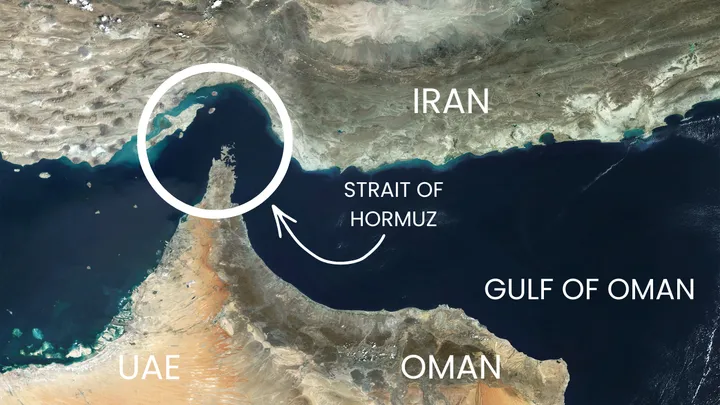
If you are a cargo owner or importer, understanding these shifts is crucial to mitigating risks. At AllBestShipping, we are monitoring these developments in real-time to provide our clients with the most reliable logistics strategies during this period of high uncertainty.
The Current Crisis: A "Choke Point" Under Pressure
The Strait of Hormuz is arguably the most vital maritime artery in the world, carrying approximately 20% of the global oil supply and a significant portion of Liquefied Natural Gas (LNG). Following recent military escalations involving the U.S., Israel, and Iran, several major shipping lines have taken the drastic step of suspending operations in the Persian Gulf.
Key Developments in March 2026:
- Booking Suspensions: Multiple carriers have paused bookings for ports in the Persian Gulf, citing "extreme security risks."
- Vessel Diversions: Similar to the Red Sea crisis, vessels are now avoiding the area entirely, often rerouting around the Cape of Good Hope. This adds 10–14 days to transit times and significantly increases fuel consumption.
- Strategic Blockades: Reports indicate that transit through the strait has become highly selective, with some authorities signaling that only certain vessels (such as those from China) may be granted safe passage.
Blank Sailings and Capacity Constraints
The disruption isn't limited to the Middle East. The ripple effects are being felt across all major trade lanes. According to the latest Drewry Cancelled Sailings Tracker, the industry is seeing a sharp uptick in blank sailings.
Over the next five weeks (Week 11 to Week 15), out of 705 scheduled sailings, 55 voyages have been cancelled, representing an 8% cancellation rate.
Where Are the Cancellations Happening?
The impact is unevenly distributed across global routes:
- Transpacific Eastbound (53%): This route is hit hardest as Chinese factories ramp up production post-Lunar New Year, but carriers struggle to reposition empty containers and maintain schedules.
- Transatlantic Westbound (27%): Growing congestion and equipment shortages are forcing carriers to skip calls.
- Asia-Europe/Mediterranean (20%): Ongoing diversions around Africa continue to drain effective capacity from this lane.
The Gemini Alliance Advantage
Interestingly, the Gemini Alliance (Maersk and Hapag-Lloyd) has shown remarkable resilience. Their blank sailing rate stands at just 3%, and their primary East-West mainline services have remained largely unaffected. This stability highlights the importance of choosing carriers with robust contingency networks—a core part of the service we provide at AllBestShipping.
Freight Rate Analysis: The WCI Trend
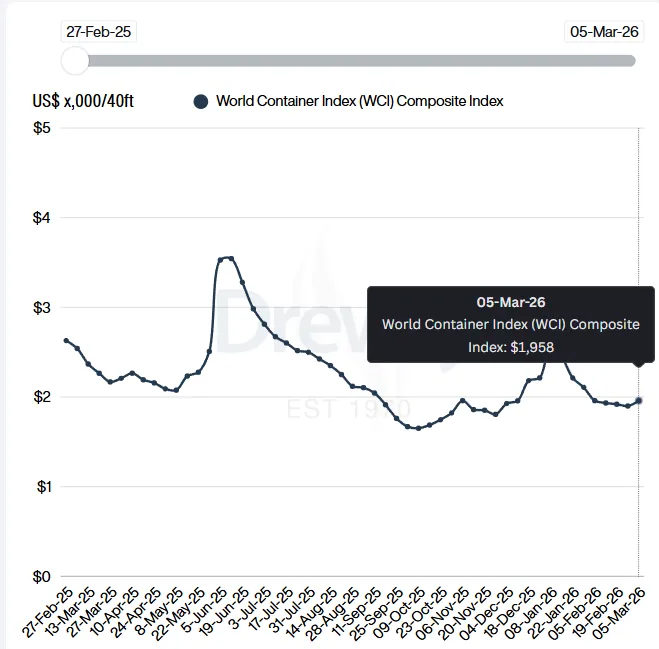
Market volatility is directly translating into higher costs for shippers. The Drewry World Container Index (WCI) recently rose by 3% to $1,958 per FEU.
| Route | Rate Change | Market Driver |
|---|---|---|
| Shanghai to Los Angeles | +8% | Strong demand & capacity constraints |
| Shanghai to New York | +5% | Congestion at East Coast ports |
| Asia to Europe | Stable | Offset by increased capacity on diversions |
| Transatlantic | -2% | Weakening demand in the Eurozone |
While overall rates remain lower than the 2021 peaks, the War Risk Surcharges and rising bunker (fuel) costs due to longer voyages are putting upward pressure on the all-in freight rate.
Expert Insights: Why This Matters for Your Supply Chain
As a senior freight forwarding expert, I cannot overstate the importance of proactive planning in this environment. The "freeze" on tanker movements in the Strait of Hormuz has already spiked crude prices. If this continues, the increased cost of VLSFO (Very Low Sulfur Fuel Oil) will inevitably be passed down to container shippers via Bunker Adjustment Factors (BAF).
Furthermore, the Bill of Lading terms are being scrutinized as carriers invoke Force Majeure clauses to bypass high-risk zones. This can lead to unexpected "on-carriage" costs if your cargo is discharged at a different port than originally planned.
How to Protect Your Business
At AllBestShipping, we recommend the following steps for our partners:
- Forecast Early: Book your space at least 4–6 weeks in advance. With an 8% blank sailing rate, "spot" space is becoming a luxury.
- Diversify Your Ports: If the Transpacific Eastbound remains congested, consider alternative entry points like the Gulf Coast or Pacific Northwest.
- Review Your Incoterms: Ensure you understand who bears the risk of "War Risk Surcharges" under your current FOB or CIF agreements. We also recommend reviewing your Cargo Insurance coverage.
- Leverage Expert Partners: Work with a freight forwarder like AllBestShipping that has direct relationships with resilient carriers like the Gemini Alliance.
The situation is evolving daily. Contact AllBestShipping today for a customized quote and a real-time assessment of your shipping lanes.
About AllBestShipping: We are a leading global freight forwarder specializing in reliable, cost-effective shipping from China to the rest of the world. Our mission is to navigate the complexities of global trade so you don't have to.