Ultimate Guide to Air Shipping from China to Saudi Arabia
Are you struggling to navigate the complexities of SABER regulations, unpredictable transit times, and fluctuating costs when importing goods? The booming trade relationship between China and the Kingdom of Saudi Arabia (KSA) demands fast, reliable logistics, making air shipping from China to Saudi Arabia a critical component for importers who cannot afford delays. Whether you are shipping high-tech electronics, urgent medical supplies, or e-commerce parcels, understanding the intricacies of customs clearance and freight costs is essential for maintaining a profitable supply chain.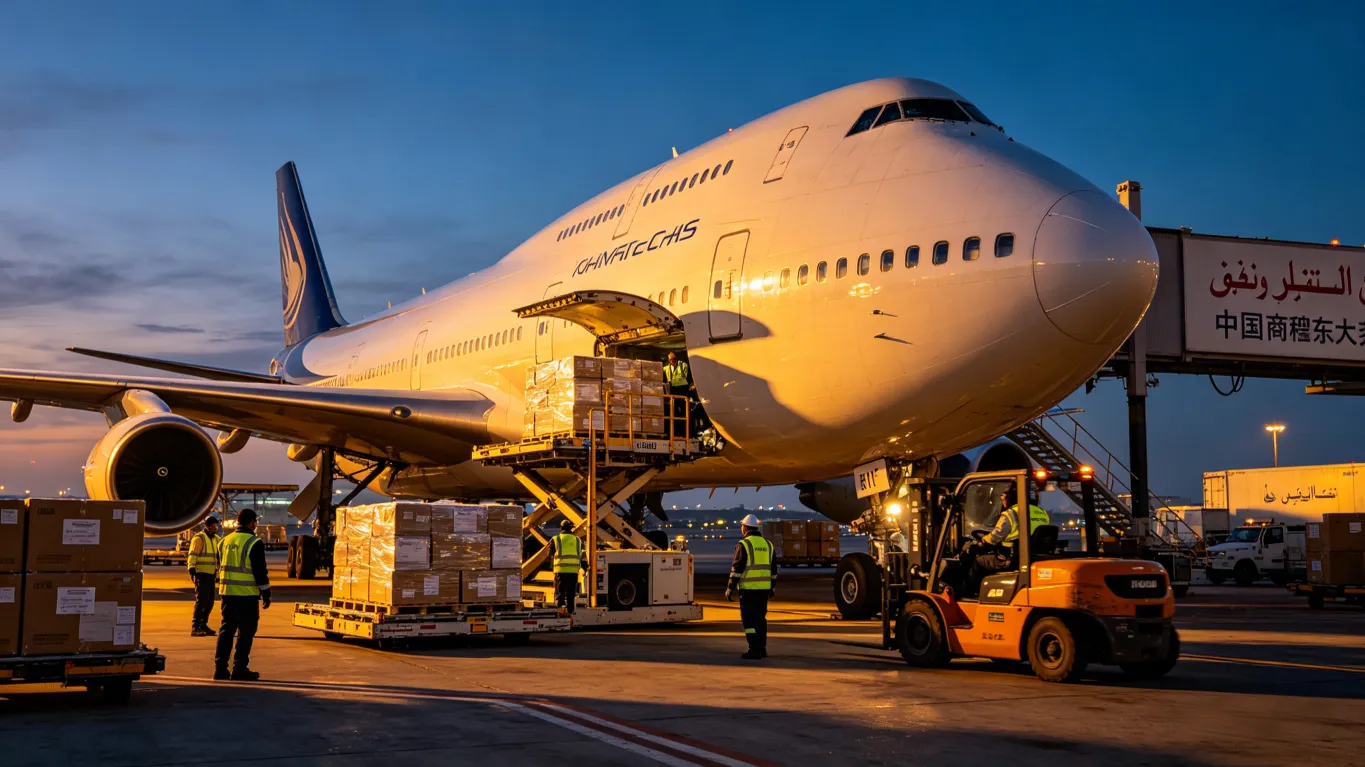
In this comprehensive guide, we will break down everything you need to know about air freight between these two economic powerhouses. At AllBestShipping, our team manages hundreds of air shipments to Riyadh, Jeddah, and Dammam every month. Drawing from our decade of real-world logistics experience, you will learn about realistic transit times, how airlines calculate chargeable weight, the essential customs documents required by Saudi authorities, and actionable tips for choosing the best freight forwarder. By the end of this article, you will be equipped with the expert knowledge needed to optimize your logistics operations, minimize unexpected fees, and ensure your cargo arrives safely and on time.
Why Choose Air Freight from China to Saudi Arabia?
When managing an international supply chain, choosing the right mode of transportation can make or break your profit margins and customer satisfaction. While Sea Freight from China to Saudi Arabia remains the go-to option for massive, bulky shipments, Air Freight offers distinct advantages that are impossible to ignore, especially for specific business models and urgent requirements.
Unmatched Speed and Efficiency
The most obvious advantage of air freight is its sheer speed. When time is of the essence, air transportation drastically reduces transit times compared to ocean freight. A cargo ship traveling from Shenzhen to Jeddah might take anywhere from 20 to 30 days, not including port congestion and customs delays. In contrast, air freight can deliver your goods in a matter of days.
For example, during the recent Q4 e-commerce peak, our team helped a Shenzhen-based electronics supplier bypass severe ocean port congestion by routing their cargo via direct flights to King Khalid International Airport, cutting their delivery time from an estimated 28 days down to just 3 days. This rapid turnaround is essential for businesses dealing with tight deadlines, seasonal trends, or urgent inventory replenishment. By utilizing direct flights or express courier services, importers can respond to market demands with agility that ocean shipping simply cannot provide.
Enhanced Security and Safety Protocols
Airports are some of the most secure facilities in the world, and the handling of air cargo reflects this high level of security. If you are shipping high-value items, sensitive electronics, or fragile goods, air freight minimizes the risk of theft, damage, and loss. The strict handling protocols enforced by airlines and airport ground staff ensure that your cargo is treated with the utmost care. Furthermore, the shorter transit time inherently reduces the window of opportunity for anything to go wrong, providing peace of mind for both the shipper and the consignee.
Predictability and Reliability
One of the biggest headaches in global logistics is dealing with delayed shipments. Ocean freight is notoriously susceptible to weather conditions, port strikes, and canal blockages. Air freight, on the other hand, operates on highly dependable flight schedules. Even if a flight is delayed or canceled, airlines typically have multiple flights departing daily, meaning your cargo can be quickly rerouted. This reliability is coupled with advanced real-time tracking capabilities, allowing you to monitor your shipment from the moment it leaves the warehouse in China until it arrives at the destination airport in Saudi Arabia.
What Products are Best Suited for Air Freight?
Because air freight is significantly more expensive than sea freight on a per-kilogram basis, it is not suitable for every type of cargo. As a general rule of thumb, goods shipped by air should have a high value-to-weight ratio or be highly time-sensitive. Here are the product categories most commonly transported via air shipping from China to Saudi Arabia:
- High-Tech Electronics and Gadgets: Smartphones, laptops, drone components, and smart home devices. These items have a short product lifecycle and high retail value, justifying the premium cost of air transport.
- E-Commerce Parcels and Fast Fashion Apparel: With the rise of online shopping in KSA, consumers expect rapid delivery. Fast fashion brands rely on air freight to get the latest trends onto Saudi shelves and directly to consumers before the season ends.
- Medical Supplies and Pharmaceuticals: Vaccines, specialized medications, and urgent medical equipment often require temperature-controlled environments (Cold Chain logistics) and rapid delivery to maintain their efficacy.
- High-Value Machinery Parts and Automotive Components: When a factory production line in Riyadh halts due to a broken machine part, the cost of downtime far exceeds the cost of air freighting the replacement part from a manufacturer in Guangzhou.
- Perishable Goods: High-end food products, fresh flowers, and certain agricultural goods that cannot survive a month-long ocean voyage.
Major Airports for the China-Saudi Arabia Route
A smooth air logistics operation heavily depends on the departure and arrival hubs. China boasts some of the busiest cargo airports in the world, while Saudi Arabia has heavily invested in its aviation infrastructure to support its Vision 2030 goals.
Top Departure Airports in China
Choosing the right departure airport often depends on where your supplier is located in China to minimize domestic trucking costs.
| Airport Name | IATA Code | Key Characteristics |
|---|---|---|
| Shanghai Pudong International Airport | PVG | The primary hub for international air cargo in China. Excellent for electronics and high-tech goods from the Yangtze River Delta. |
| Guangzhou Baiyun International Airport | CAN | The main gateway for the Pearl River Delta. Ideal for fast fashion, e-commerce, and general manufacturing goods. |
| Shenzhen Bao'an International Airport | SZX | Highly specialized in electronics, batteries, and cross-border e-commerce shipments. |
| Beijing Capital International Airport | PEK | Serves Northern China, handling a mix of industrial equipment, pharmaceuticals, and consumer goods. |
Top Arrival Airports in Saudi Arabia
The destination airport is usually dictated by the final delivery address of the consignee.
| Airport Name | IATA Code | Key Characteristics |
|---|---|---|
| King Khalid International Airport (Riyadh) | RUH | Located in the capital, handling the majority of commercial and e-commerce imports destined for the central region. |
| King Abdulaziz International Airport (Jeddah) | JED | The main gateway to the western region and the holy cities. A major hub for diverse commercial cargo. |
| King Fahd International Airport (Dammam) | DMM | Serving the eastern province, crucial for the oil and gas industry, machinery, and heavy equipment parts. |
Transit Times: How Long Does Air Freight Take?
When you pay a premium for air freight, you expect rapid results. However, "air shipping" encompasses different service levels, each with its own timeline and price point. It is crucial to understand that transit time is not just the flight duration; it includes origin handling, export customs, the flight itself, import customs in Saudi Arabia, and last-mile delivery.
| Service Level | Estimated Transit Time | Best Used For |
|---|---|---|
| Express Air Freight (Door-to-Door Shipping) | 2 – 5 Days | Highly urgent documents, small parcels, and e-commerce deliveries. Utilizes courier networks like DHL, FedEx, or UPS. |
| Standard Air Cargo (Airport-to-Airport) | 4 – 8 Days | Commercial shipments over 100kg. Requires a freight forwarder to handle booking, and the consignee handles local pickup. |
| Economy Air Freight | 7 – 12 Days | Less urgent commercial cargo. Often involves indirect flights or consolidation, offering a balance between speed and cost. |
Factors Affecting Transit Time
Several variables can impact your delivery schedule. Direct flights from major Chinese cities to Riyadh or Jeddah are the fastest but most expensive. Transit flights (e.g., routing through Dubai or Doha) take longer but can be more cost-effective. Additionally, the speed of customs clearance plays a massive role; lacking proper documentation like a valid SASO certificate can delay your shipment for weeks, negating the speed advantage of air freight. Choosing a reliable partner like AllBestShipping ensures that your documents are pre-checked, preventing costly delays upon arrival in KSA.
You may be interested in the following related shipping routes:
- Shipping from China to Egypt
- Shipping from China to Iran
- Shipping from China to Iraq
- Shipping from China to Saudi Arabia
Understanding Air Freight Costs & Rates
Calculating air freight costs is notoriously complex for beginners. Airlines do not simply charge based on the physical weight of the box; they factor in the space the cargo occupies in the aircraft's hold. This introduces the concept of Actual Weight versus Volumetric Weight (also known as Dimensional Weight).
How Rates are Calculated: The Chargeable Weight
Airlines will charge you based on whichever is greater: the Actual Gross Weight or the Volumetric Weight. The resulting figure is called the Chargeable Weight.
To calculate the Volumetric Weight, airlines use a standard formula: Length (cm) x Width (cm) x Height (cm) / 6000 = Volumetric Weight in KG
Example Calculation: Imagine you are shipping a large box of lightweight pillows. - The box dimensions are 100cm x 100cm x 100cm. - The Actual Weight of the box is 50 KG. - Volumetric Weight calculation: (100 x 100 x 100) / 6000 = 166.67 KG.
Because the Volumetric Weight (166.67 KG) is greater than the Actual Weight (50 KG), the airline will use 166.67 KG as the Chargeable Weight to apply their per-kilogram rate.
Comprehensive Cost Breakdown
Your final air freight quote will consist of more than just the base rate per kilogram. A complete quote should include: 1. Base Air Freight Rate: The core cost charged by the airline based on the Chargeable Weight. 2. Fuel Surcharges (FSC): A variable fee that fluctuates with global oil prices. 3. Security Surcharges (SSC): Fees covering the mandatory X-ray and security screening of cargo at the origin airport. 4. Terminal Handling Charges (THC): Fees paid to the airport authorities for moving the cargo from the truck to the aircraft. 5. Customs Clearance Fees: Charges from your customs broker for submitting paperwork and clearing the goods through both Chinese export and Saudi import customs. 6. Pickup and Delivery Fees: The cost of trucking the goods from the supplier to the origin airport, and from the destination airport to your warehouse.
Tips to Reduce Air Freight Costs
- Optimize Your Packaging: Since you are often charged for space, eliminate unnecessary empty space in your boxes. Work with your supplier to pack items as densely as possible.
- Book in Advance: Spot rates for air freight can skyrocket during peak seasons (like the weeks leading up to Ramadan or the Q4 holiday rush). Booking early secures better rates.
- Consolidate Shipments: If you have multiple small shipments from different suppliers in China, a freight forwarder can consolidate them into one larger shipment, allowing you to benefit from lower weight-bracket rates.
Customs Clearance in Saudi Arabia: A Critical Step
Saudi Arabian customs regulations are notoriously strict. The Saudi Food and Drug Authority (SFDA) and the Saudi Standards, Metrology and Quality Organization (SASO) rigorously enforce compliance to protect consumers and the local market. Failing to prepare for customs is the number one reason shipments get stuck.
The SABER System & SASO Certification
For the vast majority of commercial goods entering KSA, importers must use the SABER electronic platform. Mandated by the Saudi Standards, Metrology and Quality Organization (SASO), this system connects importers, certification bodies, and Saudi customs to ensure products comply with local safety standards.
- Product Certificate (PC): You must register your product on SABER to prove it meets SASO standards. This often requires testing reports from an approved laboratory in China.
- Shipment Certificate (SC): Once the PC is obtained, you must generate an SC for every single shipment you import.
Insider Tip: In our experience handling KSA customs, over 80% of clearance delays stem from mismatched HS codes. Ensure the HS code on your Commercial Invoice matches exactly with the one registered on your SABER Product Certificate. Without a valid SABER Shipment Certificate perfectly aligned with your paperwork, your cargo will not clear customs, and you will incur massive Demurrage and storage fees at the airport.
Required Documents for Import
To ensure a smooth customs process, your freight forwarder will require the following commercial documents, which must be perfectly aligned with no discrepancies: * Commercial Invoice: Must clearly state the value of the goods, currency, and HS codes. Often requires stamping by the Chamber of Commerce. * Packing List: A detailed breakdown of the weight, dimensions, and contents of each carton. * Air Waybill (AWB): The official contract of carriage issued by the airline. It serves as a receipt of goods and evidence of the contract. * Certificate of Origin (CO): Proves where the goods were manufactured. * Importer Record (CR): The Saudi consignee must have a valid Commercial Registration that matches the type of goods being imported.
Taxes and Duties in KSA
Importers must be prepared to pay taxes upon arrival. Saudi Arabia currently applies a Value Added Tax (VAT) of 15% on most imported goods. Additionally, customs duties vary depending on the HS code of the product, typically ranging from 0% to 15%, though some protective tariffs on items that compete with local industries can be much higher.
Prohibited and Restricted Items in Saudi Arabia
Saudi Arabia strictly enforces Islamic law (Sharia) and conservative cultural norms. Shipping prohibited items will result in immediate confiscation, heavy fines, and potential legal action against the consignee.
Strictly Prohibited Goods Include: * Alcoholic beverages and any items containing alcohol extracts. * Pork and pork by-products. * Narcotics and unauthorized medications. * Materials, books, or media contrary to Islamic beliefs or public morals. * Counterfeit goods and fake brands. * Used clothing or used auto parts (without extreme special permission).
Restricted Goods Requiring Special Permits: * Chemicals and Hazardous Materials: Require extensive safety data sheets (MSDS) and approvals from the Ministry of Interior. * Pharmaceuticals and Cosmetics: Must be registered with and approved by the SFDA prior to shipping. * Telecommunications Equipment: Drones, specialized radios, and certain IT equipment require approval from the Communications and Information Technology Commission (CITC).
Always consult with a logistics expert before attempting to ship any questionable items to KSA.
Incoterms for Air Freight to KSA
Incoterms (International Commercial Terms) define the responsibilities, risks, and costs between the buyer and the seller. Choosing the correct term is vital for protecting your financial interests.
- EXW (Ex Works): The buyer assumes all responsibility and costs from the moment the goods leave the seller's factory in China. This gives the buyer maximum control but requires a robust logistics partner to handle Chinese export procedures.
- FOB (Free On Board): The seller handles the costs and risks of getting the goods to the departure airport in China and clearing export customs. The buyer takes over from the flight onwards. This is highly common for commercial air freight.
- DAP (Delivered at Place): The seller is responsible for delivering the goods to the buyer's address in Saudi Arabia, but the buyer is responsible for paying Saudi customs duties and taxes.
- DDP (Delivered Duty Paid): The ultimate hassle-free option. The seller (or their freight forwarder) handles everything: export, air freight, import clearance, and paying all Saudi taxes and duties. DDP is incredibly popular for e-commerce sellers and small businesses who want a seamless, door-to-door experience without dealing with SABER or Saudi customs directly. While we offer all Incoterms, our team highly recommends DDP for first-time or e-commerce importers to Saudi Arabia to avoid surprising the buyer with unexpected 15% VAT and clearance fees upon delivery.
How to Choose the Right Freight Forwarder
Not all freight forwarders are created equal, and the China-to-Saudi route requires specialized expertise. When selecting a logistics partner, consider the following criteria:
- Experience in the Middle East: Do they understand the nuances of the SABER system and SASO compliance? A forwarder without KSA experience is a liability.
- Strong Airline Network: Can they offer flexible routing options and secure space during peak seasons?
- Transparent Pricing: Beware of forwarders offering incredibly low base rates, only to hit you with hidden "destination fees" later. Demand an all-inclusive quote.
- Robust Customs Expertise: They should offer in-house customs brokerage to proactively review your documents before the cargo even leaves China.
Why Choose AllBestShipping?
If you are looking for a partner that ticks all these boxes, look no further than AllBestShipping. With years of dedicated experience managing the China-to-Middle East trade lane, AllBestShipping offers highly competitive air freight rates and guaranteed space allocations with premium airlines. Whether you need standard airport-to-airport service or a comprehensive DDP door-to-door solution, their team of experts handles the complexities of Saudi customs, SABER compliance, and final-mile delivery seamlessly. By partnering with AllBestShipping, you gain a strategic ally dedicated to optimizing your supply chain and ensuring your cargo arrives safely, compliantly, and on time.
Frequently Asked Questions (FAQ)
What is the cheapest way to ship by air to Saudi Arabia?
The cheapest air freight option is usually standard "Economy Air Freight" (Airport-to-Airport) using indirect flights. Furthermore, consolidating your cargo with other shipments and optimizing your packaging to reduce Volumetric Weight will significantly lower your costs.
Can I track my air freight shipment from China to Saudi Arabia?
Yes, absolutely. Once your cargo is booked, you will receive an Air Waybill (AWB) number. You can use this number on the airline's cargo tracking website, or utilize the advanced tracking portals provided by top-tier forwarders like AllBestShipping for real-time, end-to-end visibility.
What is the difference between courier express and standard air freight?
Courier express (like DHL or FedEx) is a complete door-to-door service designed for small, lightweight parcels (usually under 100kg); it is fast but very expensive per kilo. Standard air freight is designed for heavier commercial cargo, is generally cheaper per kilo, but typically requires a customs broker and freight forwarder to handle the airport-to-airport logistics.
Do I need a SABER certificate for all products imported into KSA?
The vast majority of commercial consumer goods and industrial products require SABER registration and a Shipment Certificate. However, personal effects, very specific raw materials, or diplomatic cargo might be exempt. It is highly advised to check your product's HS code against the SABER platform before shipping.
Conclusion
Mastering air shipping from China to Saudi Arabia requires more than just booking a flight; it demands a strategic understanding of volumetric weight, meticulous preparation for KSA's strict customs regulations, and the foresight to choose the right Incoterms. While air freight represents a premium investment compared to ocean logistics, the unparalleled speed, security, and reliability it offers are indispensable for businesses looking to thrive in the competitive Saudi market.
Don't let customs delays or hidden fees erode your profit margins. Partner with a trusted expert who understands the nuances of Middle Eastern logistics. Contact AllBestShipping today for a free, customized quote, and let their team of seasoned professionals build a tailored air freight solution that accelerates your business growth.