Air Shipping from China to Mexico: The Ultimate 2026 Guide for Importers
Are you struggling with unpredictable transit times, hidden fees, and the sheer complexity of Mexican customs when importing high-value goods? As nearshoring trends and the e-commerce boom continue to reshape global trade, the demand for fast, reliable logistics has never been higher. Navigating air shipping from China to Mexico is often the make-or-break factor for businesses looking to maintain a competitive edge. This comprehensive 2026 guide will walk you through everything from current costs and transit times to the intricacies of Mexican customs clearance (including RFC and NOMs). Read on to discover how to streamline your supply chain and avoid costly delays.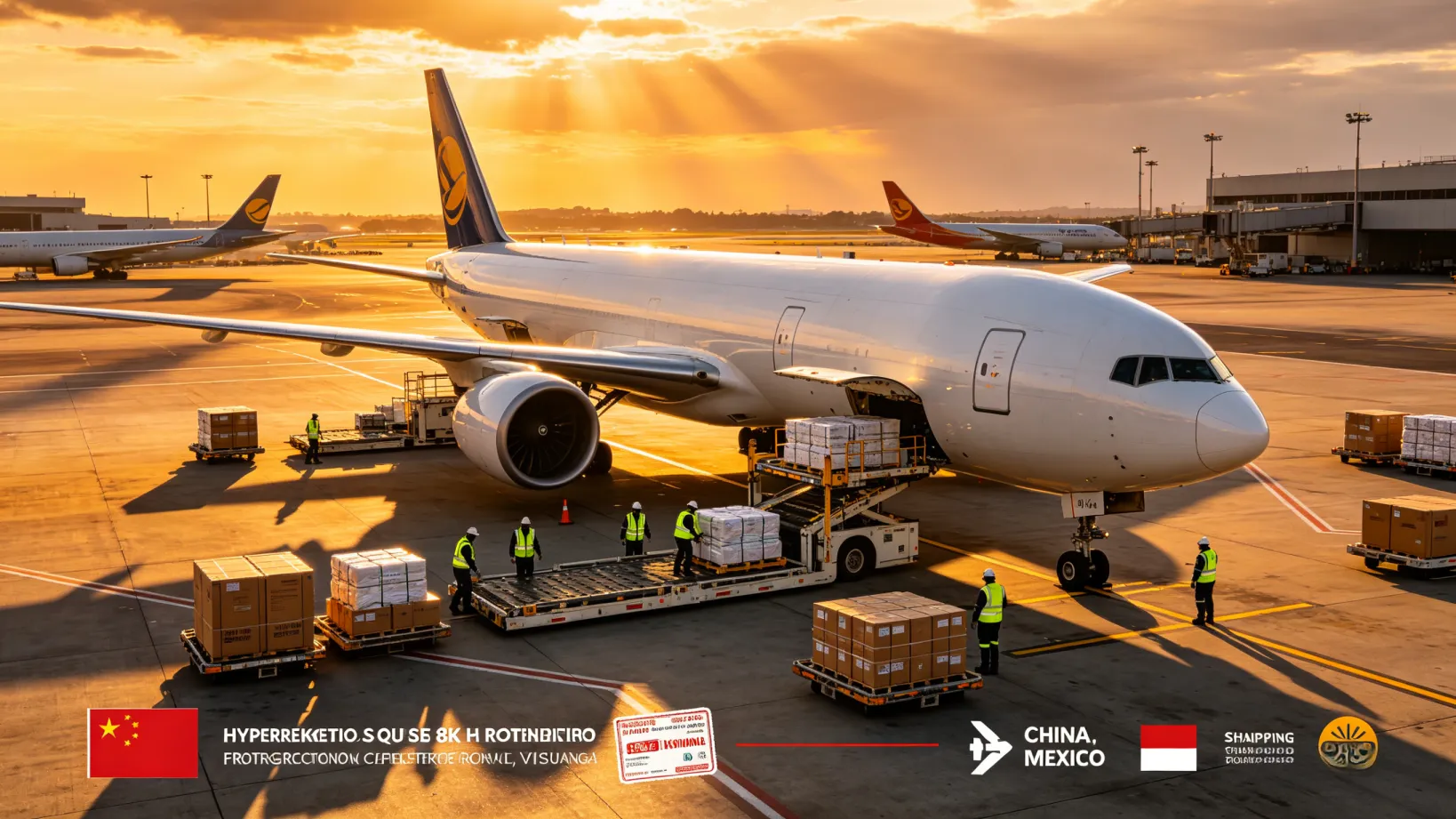
When Should You Choose Air Freight Over Sea Freight?
Choosing the right mode of transportation is the foundational step in optimizing your international supply chain. While sea freight from China to Mexico is the undisputed champion of cost-effective bulk shipping, air freight offers unparalleled advantages in specific scenarios. Importers must weigh the higher cost of air transport against the tangible benefits of speed and security.
Speed and Unmatched Urgency
In the fast-paced world of international trade, time is literally money. Air freight is the ideal solution for tight deadlines, product launches, or seasonal peaks such as the Q4 holiday rush. When a crucial manufacturing component breaks down, or an e-commerce store experiences a sudden viral spike in sales, waiting 30 to 40 days for an ocean vessel is simply not an option. In our experience managing cross-border supply chains, we've seen automotive plants in Monterrey save millions in potential downtime by flying in specialized parts from Shenzhen overnight. Air freight reduces transit times from weeks to mere days, ensuring that your inventory is replenished before stockouts damage your brand reputation or halt your production lines.
High-Value and Fragile Goods
Not all cargo is created equal. High-value commodities such as consumer electronics, pharmaceuticals, fashion apparel, and precision automotive parts require a higher level of security and gentler handling. Ocean freight involves multiple loading and unloading stages, increasing the risk of damage, moisture exposure, and pilferage. In contrast, air freight offers a highly controlled environment. The stringent security measures at airports and the reduced physical handling of cargo mean your fragile or expensive items are significantly safer. For example, when shipping high-end smartwatches or sensitive medical equipment, the reduced vibration and strict temperature controls of air freight easily justify the higher transportation cost.
The Cost-to-Benefit Ratio and Weight Thresholds
A common misconception is that air freight is always prohibitively expensive. However, when calculating the total landed cost—including inventory holding costs, insurance, and the opportunity cost of delayed sales—air freight can sometimes be the more economical choice for specific shipments. Generally, the "sweet spot" for standard air freight lies between 100kg and 500kg. For shipments below 100kg, international express couriers usually offer the most cost-effective and streamlined solution. Conversely, once a shipment exceeds 1000kg or a volume of 2 cubic meters, the cost of air freight scales dramatically, making sea freight the more logical choice unless the urgency is absolute.
Air Freight Options: Standard vs. Express Courier
When utilizing air transportation, importers must choose between two primary service models: Standard Air Freight and Express Courier. Understanding the nuances of each will help you align your shipping strategy with your budget and timeline.
Standard Air Freight (Airport-to-Airport)
Standard air freight involves booking cargo space on commercial passenger airlines or dedicated freighter aircraft. This service is typically "airport-to-airport," meaning your freight forwarder will arrange for the goods to be flown from a major Chinese hub (like Shanghai or Hong Kong) to a Mexican airport (like Mexico City).
This option is best suited for larger, commercial shipments weighing over 100kg. It requires more logistical coordination, as you or your forwarder must handle the local pickup in China, export customs, and, crucially, the import customs clearance in Mexico. You will need a licensed Customs Broker (Agente Aduanal) to clear the goods upon arrival. While standard air freight requires more hands-on management, it offers significantly lower per-kilogram rates for heavier shipments compared to express services.
Express Courier (Door-to-Door)
Express courier services are provided by global logistics giants such as DHL, FedEx, and UPS. This is a premium, "door-to-door shipping" service. The courier company handles the entire process: picking up the parcel from the supplier in China, flying it across the globe, clearing it through customs clearance, and delivering it directly to your warehouse or office in Mexico.
This method is incredibly fast and requires minimal effort from the importer. It is the perfect choice for small parcels, product samples, urgent documents, or low-volume e-commerce orders weighing under 100kg. However, this convenience and speed come at a premium; the cost per kilogram is substantially higher than standard air freight.
Comparison Table: Standard Air Freight vs. Express Courier
| Feature | Standard Air Freight | Express Courier |
|---|---|---|
| Ideal Weight Range | 100kg - 1000kg+ | 1kg - 100kg |
| Service Level | Airport-to-Airport (mostly) | Door-to-Door |
| Transit Time | 4-7 Days (Door-to-Door total) | 2-4 Days (Door-to-Door total) |
| Cost per KG | Medium ($5.00 - $9.00) | High ($10.00 - $25.00) |
| Customs Handling | Handled by your designated broker | Handled by courier (usually) |
| Best Used For | Commercial bulk, heavy electronics | Samples, urgent parts, documents |
Main Airports for China-Mexico Trade
The efficiency of your air freight routing depends heavily on the departure and arrival airports. China boasts a massive infrastructure of global aviation hubs, while Mexico has strategically developed its airports to handle the influx of Asian imports.
Top Departure Airports in China
- Shanghai Pudong International Airport (PVG): As the largest air cargo hub in the Asia-Pacific region, PVG offers the highest frequency of direct and connecting flights to the Americas. It is the primary gateway for goods manufactured in the Yangtze River Delta.
- Hong Kong International Airport (HKG): Hong Kong operates as a free trade port with world-class global connectivity. It is particularly crucial for the export of electronics and products containing lithium batteries, as its regulations and handling facilities for dangerous goods are highly streamlined.
- Shenzhen Bao'an (SZX) & Guangzhou Baiyun (CAN): Located in the heart of China's manufacturing powerhouse (the Pearl River Delta), these airports provide excellent proximity to suppliers of tech gadgets, apparel, and machinery, reducing inland trucking time and costs.
Top Arrival Airports in Mexico
- Mexico City International Airport (MEX): This is the undisputed primary cargo hub for the country. MEX features comprehensive, 24/7 customs operations and robust infrastructure. Most international flights from Asia will land here before goods are trucked to other parts of the country.
- Guadalajara International Airport (GDL): Often referred to as Mexico's "Silicon Valley," Guadalajara is a critical gateway for the technology, electronics, and automotive sectors located in central and western Mexico.
- Monterrey International Airport (MTY): Situated in Nuevo León, Monterrey is an industrial powerhouse with close proximity to the United States border. It is a vital hub for nearshoring operations and heavy manufacturing imports.
You may be interested in the following related ship routing:
- Shipping From China to Italy
- Shipping from China to Mexico
- Shipping from China to Canada
- Shipping From China to UK
- Shipping from China to USA
How Much Does Air Shipping from China to Mexico Cost?
Cost is naturally a primary concern for any importer. Air freight pricing is dynamic, fluctuating based on fuel prices, seasonal demand, and available airline capacity.
Understanding Chargeable Weight
Airlines charge based on "chargeable weight," which is the greater of the actual gross weight or the volumetric (dimensional) weight. Volumetric weight is calculated because an airplane's cargo hold has limited space; a massive box of feathers might weigh very little but takes up space that could otherwise hold heavier, more profitable cargo. The standard formula for standard air freight is: Length (cm) x Width (cm) x Height (cm) / 6000 = Volumetric Weight in KG. (Note: For express couriers like DHL/FedEx, the divisor is usually 5000).
Current Market Rates (2026 Estimates)
While rates vary based on fuel prices and global capacity, here are the estimated benchmarks for Q2 2026:
- Standard Air Freight: Expect to pay approximately $5.00 to $9.00 per kilogram for shipments over 100kg. Rates typically drop by
1.00/kg as you hit higher weight break tiers (e.g., 300kg+, 500kg+, 1000kg+). - Express Courier: Due to the premium door-to-door service, express rates generally range from
25.00 per kilogram, making it cost-prohibitive for large commercial volumes.
Additional Costs to Consider
The per-kilogram freight rate is not the final cost. Importers must account for:
- Fuel Surcharges and Security Fees: Levied by the airlines.
- Terminal Handling Charges (THC): Fees for processing cargo at both the origin and destination airports.
- Customs Brokerage Fees: Paid to your Mexican customs agent for processing the import declaration.
- Local Delivery: Inland trucking from the Mexican airport to your final destination.
Pro Tip: Working with an expert freight forwarder like AllBestShipping is the most effective way to manage these costs. By leveraging our massive shipping volumes, we consolidate cargo and secure heavily negotiated airline rates that individual importers cannot access. We provide transparent, all-inclusive quotes so you never encounter hidden fees.
Transit Times: How Long Does It Take?
When evaluating air freight, it is vital to distinguish between "flight time" and "total transit time." An airplane might cross the Pacific in 18 hours, but the end-to-end logistics process takes several days.
The End-to-End Timeline
The total transit time includes cargo pickup in China, export customs clearance, waiting for airline space (booking), the actual flight, import customs clearance in Mexico, and final mile delivery.
Transit Time Table
| Route / Service Type | Estimated Flight Time | Total Door-to-Door Transit Time |
|---|---|---|
| Express Courier (e.g., Shenzhen to MEX) | 1-2 Days | 2-4 Days |
| Standard Air (Direct: PVG to MEX) | 16-20 Hours | 4-7 Days |
| Standard Air (Transshipment via US/EU) | 20-30 Hours | 6-10 Days |
Influencing Factors
Several variables can impact these timelines:
- Peak Seasons: During the Q4 holiday rush (Black Friday, Christmas) or the weeks leading up to Chinese New Year, cargo space becomes scarce. Backlogs at origin airports can add days to the transit time.
- Customs Clearance Delays: If your documentation is incorrect or your goods require physical inspection by Mexican customs, your shipment will be held at the airport.
- Weather Disruptions: Severe weather events, such as typhoons in Asia or storms in North America, can ground flights and disrupt schedules.
Navigating Mexican Customs (Aduanas) & Duties
Mexican customs regulations are notoriously complex and strictly enforced. A minor documentation error can result in severe delays, heavy fines, or even the confiscation of your cargo. Understanding the requirements is non-negotiable.
Importer Registration (Padrón de Importadores)
To legally import commercial goods into Mexico, the receiving company or individual must be registered in the Official Register of Importers (Padrón de Importadores). To obtain this registration, you must have an active RFC (Registro Federal de Contribuyentes), which is the Mexican Tax Identification Number. Without an active RFC and importer registration, your goods cannot clear customs and will accrue heavy storage fees (demurrage) at the airport. If you do not have an RFC, you must use a trading company (Comercializadora) to import on your behalf—a service many experienced forwarders offer.
Required Documentation
Your paperwork must be flawless. A simple typo between the invoice and the physical packing label can trigger a "Red Light" (Semáforo Rojo) physical inspection. The essential documents include:
- Commercial Invoice (Factura Comercial): Must detail the buyer, seller, accurate value, and description of the goods.
- Packing List: A detailed breakdown of the shipment's contents, weights, and dimensions.
- Air Waybill (AWB): The contract of carriage and receipt for the goods issued by the airline.
- Certificate of Origin: Required to prove where the goods were manufactured, which is essential for determining if any preferential trade agreements or anti-dumping duties apply. (Also note if you ever ship by sea, you would need a Bill of Lading instead of an AWB).
NOM Certifications
Mexico strictly enforces its Official Mexican Standards, known as NOM (Normas Oficiales Mexicanas). These are technical regulations governing product safety, energy efficiency, and commercial labeling. Products such as electronics, textiles, toys, and household appliances frequently require NOM certification before they can clear customs. You must verify NOM requirements for your specific HS code before shipping from China.
Taxes & Duties Calculation
Import taxes are calculated based on the CIF (Cost, Insurance, and Freight) value of the goods.
- Value Added Tax (IVA): The standard rate is 16%, applied to the sum of the CIF value and the import duty.
- Import Duty (Ad Valorem/DTA): This percentage varies wildly depending on the specific HS code (Harmonized System code) of your product. Some goods enter duty-free, while others (like certain textiles or footwear) face high tariffs to protect domestic industries.
Step-by-Step: The Air Freight Process
Understanding the workflow helps importers anticipate requirements and prevent bottlenecks. Here is the standard 6-step air freight process from China to Mexico:
- Quote & Booking: The process begins by providing your freight forwarder with exact cargo details—actual weight, dimensions, commodity description, and pickup/delivery addresses. Based on this, you receive a quote and confirm the booking.
- Pickup & Warehousing: Your forwarder arranges to collect the goods under FOB (Free on Board) or EXW (Ex Works) terms from your Chinese supplier. The cargo is brought to a warehouse near the departure airport for weighing, measuring, and consolidation.
- Export Clearance: The forwarder’s team handles the Chinese export customs declaration, ensuring the goods legally leave the country.
- Air Transit: The cargo is loaded onto the aircraft. You will receive the Air Waybill tracking number to monitor the flight's progress across the Pacific.
- Import Clearance in Mexico: Upon landing at MEX or GDL, the cargo is moved to a bonded warehouse. Your Mexican Customs Broker presents the Commercial Invoice, packing list, and NOM certificates to the Aduanas to pay duties and clear the shipment.
- Final Delivery: Once released by customs, the cargo is loaded onto a local truck for last-mile delivery to your warehouse, retail store, or Amazon FBA fulfillment center.
Why Choose AllBestShipping for Your Mexico Air Cargo?
Managing international air logistics requires precision, local knowledge, and global leverage. Here is why partnering with AllBestShipping is the smartest choice for your China-to-Mexico supply chain:
- Expertise in LatAm Routes: We possess a deep, specialized understanding of the Latin American trade lanes. We know the nuances of Mexican customs, the best routing strategies, and how to avoid common pitfalls that trap inexperienced importers.
- Competitive Rates via Direct Contracts: We hold direct space agreements with top-tier airlines, including Aeromexico, China Southern, and Cathay Pacific. This allows us to offer you highly competitive per-kilogram rates and guaranteed space, even during peak seasons.
- Comprehensive End-to-End Solutions: We handle everything. From coordinating directly with your factory in Shenzhen to offering full DDP (Delivered Duty Paid) options where we manage all Mexican customs and taxes on your behalf, we simplify your logistics.
- Bilingual & Responsive Support: Time-zone differences and language barriers can cripple supply chains. Our dedicated, bilingual teams facilitate smooth, real-time communication between your Chinese suppliers and your Mexican operations team.
Frequently Asked Questions (FAQ)
What is the maximum weight for air freight to Mexico? Technically, there is no strict maximum weight, provided the cargo fits within the aircraft's cargo hold doors and weight limits. Commercial freighters (like the Boeing 747F) can carry over 100 tons. However, for standard passenger aircraft bellies, individual pallets should generally not exceed 160cm in height or 4000kg. Oversized cargo requires specialized charter flights.
Can I ship batteries or electronics by air to Mexico? Yes, but with strict conditions. Lithium batteries are classified as Dangerous Goods (DG). You must provide a valid MSDS (Material Safety Data Sheet) and an UN38.3 test report. Because regulations are complex, routing these shipments through Hong Kong (HKG) is often the most efficient strategy, as their DG handling processes are highly optimized.
What is the difference between actual weight and volumetric weight? Actual weight is the physical weight of the cargo on a scale (e.g., 200kg). Volumetric weight is a calculation based on the cargo's dimensions (Length x Width x Height / 6000). Airlines charge based on whichever number is higher, ensuring they are fairly compensated for light but bulky items that take up excessive space.
How can I track my air shipment? Once your cargo is booked on a flight, your forwarder will issue an Air Waybill (AWB) number. You can enter this 11-digit number on the specific airline's cargo tracking website or use your forwarder's integrated tracking portal for real-time updates on departure, arrival, and customs status.
Conclusion
Air shipping from China to Mexico is a powerful tool for modern importers. While it requires a higher financial investment than sea freight, the unmatched speed, enhanced security, and supply chain agility it provides are often invaluable—especially for high-value goods, electronics, and urgent inventory replenishments. Success in this trade lane requires more than just booking a flight; it demands meticulous documentation, a thorough understanding of Mexican customs, and strategic routing.
Stop guessing with your supply chain and risking your profit margins on unpredictable logistics. Partner with a proven expert. Contact AllBestShipping today for a free, customized air freight quote, and let our specialists optimize your logistics strategy from origin to destination.