Shipping from Shenzhen to Canada: Complete Guide for 2026
Shenzhen is undeniably the world's premier manufacturing hub for electronics, high-tech components, and consumer goods. From our central warehouse in Bao'an, AllBestShipping oversees the departure of thousands of TEUs annually destined for Vancouver and Toronto. For Canadian businesses—from established retailers in Toronto to Amazon FBA sellers in Vancouver—sourcing products from this dynamic city is a strategic necessity. However, the logistics of shipping from Shenzhen to Canada can often feel like navigating a minefield of complex routes, fluctuating freight rates, and stringent customs regulations enforced by the Canada Border Services Agency (CBSA).
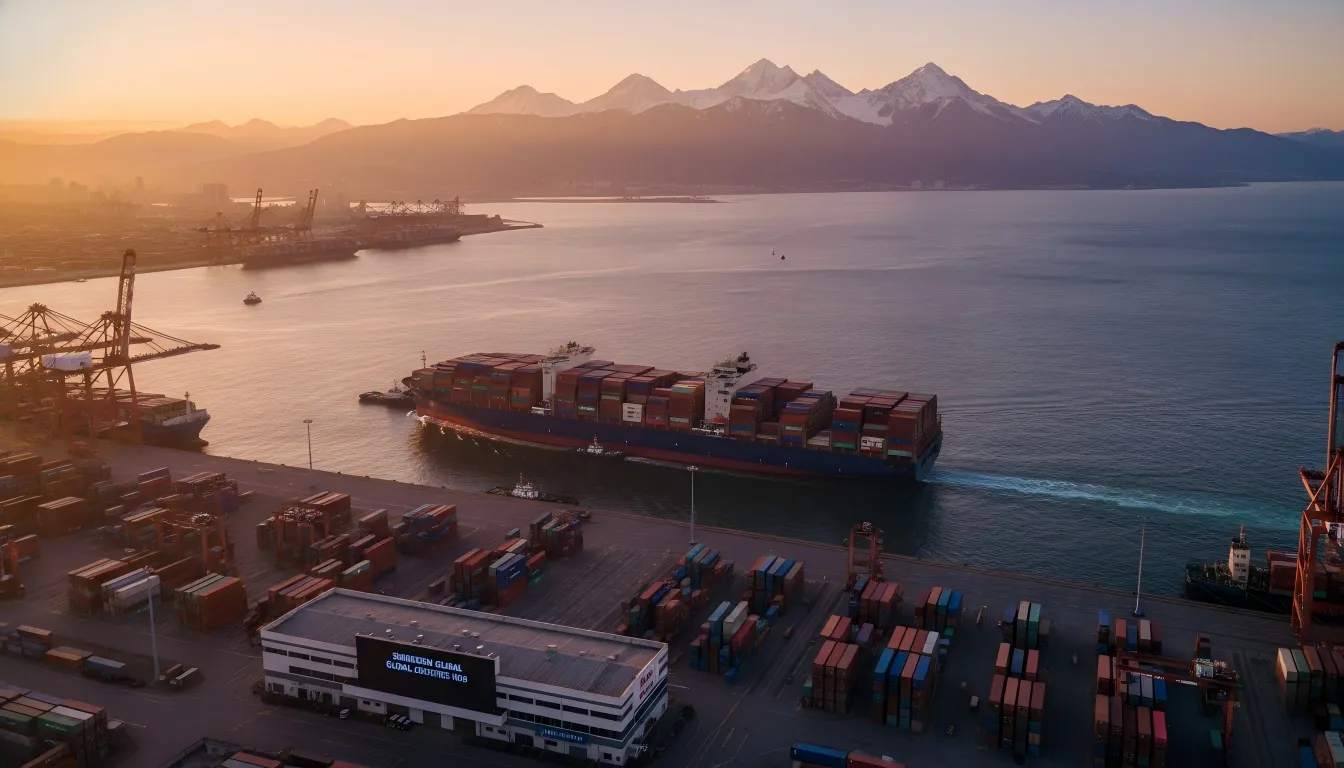
Whether you are shipping a single pallet of smartphone accessories or forty containers of furniture, choosing the right logistics strategy is the bridge between a profitable product launch and a supply chain nightmare. This comprehensive guide, written by industry experts with over a decade of operational experience, details the best shipping methods, current costs, transit times, and actionable strategies for 2026.
Best Shipping Methods from Shenzhen to Canada
When planning your logistics, there is no "one-size-fits-all" solution. The optimal method depends entirely on your budget, cargo volume, and urgency. Here is a detailed breakdown of the primary shipping modes available for moving goods from Shenzhen to Canada.
1. Sea Freight (Ocean Freight)
Sea freight is the backbone of international trade, accounting for over 90% of cargo volume. It is the most cost-effective method for large shipments but requires longer lead times.
FCL (Full Container Load): This option is ideal if you have enough goods to fill a container. You pay a flat rate for the entire container, regardless of how full it is.
- 20GP (General Purpose): Holds about 28-29 CBM. Suitable for heavy cargo like machinery.
- 40GP: Holds about 58 CBM. Good for general merchandise.
- 40HQ (High Cube): Holds about 68 CBM. The gold standard for light, bulky goods like textiles or electronics.
- Advantages: Lower risk of damage (your goods aren't mixed with others), faster transit than LCL (no consolidation time), and the cheapest cost per unit for large volumes.
LCL (Less than Container Load): If your shipment is between 1 CBM and 15 CBM, you don't need to rent a whole container. LCL allows you to share container space with other shippers.
- How it works: Your freight forwarder consolidates your cargo at a Shenzhen warehouse (usually in Yantian or Shekou).
- Pricing: You are charged per CBM (Cubic Meter).
- Note: While the ocean freight rate might look low, destination charges (stripping, handling, CISF) in Canada can be higher than FCL. Pro Tip: Be wary of "0 freight" or "negative freight" offers. In our experience, these often hide exorbitant destination fees that you, the consignee, must pay upon arrival. Always ask for a "Door to Door" all-in quote to avoid surprises.
Key Ports:
Origin: Shenzhen (Yantian is the primary deep-water port for big vessels; Shekou and Chiwan serve intra-Asia and some long-haul routes).
Destination:
- Vancouver (Port of Metro Vancouver): The primary gateway for Asian goods entering Canada. It handles the bulk of West Coast traffic.
- Prince Rupert: A strategic alternative north of Vancouver, offering the shortest Pacific crossing and faster rail connections to the Midwest and Eastern Canada.
- Montreal & Toronto: Reached via "Mini Land Bridge" (ocean to Vancouver + rail to the east) or all-water service via the Panama Canal (slower but sometimes cheaper). Toronto has no deep-sea port—its cargo arrives via Vancouver or Montreal and continues inland.
2. Air Freight
When speed is paramount, air freight is the answer. It bridges the distance between Shenzhen and Canada in a matter of days, not weeks.
Standard Air Freight: Your cargo is loaded onto dedicated cargo planes or the belly of passenger aircraft.
- Routes: Direct or connecting flights from SZX (Shenzhen Bao'an International Airport) or via Hong Kong (HKG) to major Canadian hubs like YVR (Vancouver), YYZ (Toronto Pearson), and YUL (Montreal).
- Hong Kong Advantage: Often, goods are trucked from Shenzhen to Hong Kong to take advantage of HKG's massive capacity and more lenient regulations on batteries/electronics.
- Best For: High-value electronics, fashion samples, seasonal goods, or emergency stock replenishment.
Chargeable Weight: Air freight isn't just charged by dead weight. Airlines use a "volumetric weight" formula (Length x Width x Height in cm / 6000). You are charged based on whichever is greater: actual weight or volumetric weight.
3. Express Shipping (Courier)
For shipments under 100kg, documents, or samples, express couriers offer a seamless "door-to-door" experience.
- Carriers: DHL, FedEx, UPS.
- Speed: 2-5 business days.
- Convenience: They handle customs clearance (though you still pay the duties) and delivery to your office.
- Cost: Highest per kg, but cheapest for very small shipments due to the lack of minimum freight charges.
4. DDP Shipping (Door to Door)
Door to Door Shipping from China to Canada (DDP) is rapidly becoming the favorite choice for small-to-medium businesses and e-commerce sellers.
- Definition: The seller (or your freight forwarder, like AllBestShipping) takes full responsibility. We pick up the goods in Shenzhen, handle export customs, ship via sea or air, clear customs in Canada, pay all duties and taxes (GST/HST), and deliver directly to your warehouse or Amazon FBA center.
- Why it wins: You don't need to hire a separate customs broker, register for a Canadian Business Number, or worry about surprise fees. The price you are quoted is the final price you pay. In a post-CARM regulatory environment, a single accountable DDP partner is the safest way to move goods without a local entity.
Transit Time: How Long to Ship from China to Canada?
Time is money. Understanding the realistic transit times helps you manage inventory and customer expectations. Note that "Port to Port" is different from "Door to Door."
| Shipping Mode | Route | Port-to-Port Time | Door-to-Door (Est.) |
|---|---|---|---|
| Sea Freight | Shenzhen to Vancouver | 14 - 18 Days | 25 - 30 Days |
| Sea Freight | Shenzhen to Toronto (via Rail) | 22 - 28 Days | 35 - 45 Days |
| Sea Freight | Shenzhen to Montreal | 25 - 35 Days | 40 - 50 Days |
| Standard Air | SZX/HKG to YVR/YYZ | 1 - 3 Days | 4 - 7 Days |
| Express | Shenzhen to Any City | N/A | 3 - 5 Days |
| DDP Sea | Shenzhen to West Coast | N/A | 25 - 35 Days |
| DDP Sea | Shenzhen to East Coast | N/A | 40 - 50 Days |
Factors Influencing Time:
- Rail Congestion: Cargo landing in Vancouver destined for Toronto often faces delays transferring to CN or CP rail lines.
- Peak Season: Before Chinese New Year (Jan/Feb) and the Holiday Season (Oct-Dec), space is tight, and congestion increases.
- Customs: Random inspections by CBSA can add 3-10 days to the process.
Shipping Costs from Shenzhen to Canada (August 2026 Insights)
Freight rates are volatile, influenced by fuel prices, geopolitical events, and supply-demand dynamics. Trans-Pacific rates saw a sharp month-over-month decline (~23%) in August 2026 as the peak season passed, but equipment remained tight. The ranges below are indicative—always request a live quote for your exact cargo, dates, and delivery address.
Sea Freight Costs
- FCL: As of August 2026, a 40HQ container from Shenzhen/Yantian to Vancouver typically falls between $3,000 and $4,800 (port-to-port). Shipping to Toronto/Montreal adds the rail or all-water leg, bringing the range to roughly $3,800 - $5,800. A 20GP generally runs $2,000 - $3,200 to the West Coast. Note that Peak Season Surcharges (PSS) can add $600 - $2,000 per FEU in the busiest months.
- LCL: Rates are often quoted around $90 - $160 per CBM (exclusive of destination fees). However, be wary of "negative freight" or extremely low LCL rates, as they often come with inflated destination fees (CISF, terminal handling, stripping) that the consignee must pay upon arrival.
Air Freight Costs
Standard Rates: Typically range from $7.00 to $9.50 USD per kg for shipments around 500kg+ (gateway-to-gateway). Rates ease as weight increases—a +1000kg booking is meaningfully cheaper per kg than a +100kg one.
- Example: A 500kg shipment of phone cases might cost around ~$8.00/kg.
- Express: For urgent door-to-door parcels under 100kg, expect $14 - $17 per kg with DHL/FedEx/UPS.
Additional Landed Costs
Don't forget to budget for:
- Destination Charges: Terminal handling (THC), drayage, and CISF at the Canadian port—the hidden cost that makes a "cheap" ocean rate expensive.
- Inland Trucking: Delivery from the Canadian port/airport to your door.
- Insurance: Usually 0.1% - 0.3% of the cargo value (highly recommended).
- Customs Duties & Taxes: The biggest variable in your landed cost.
Customs Clearance & Duties in Canada (2026 Requirements)
Navigating the Canada Border Services Agency (CBSA) requirements is critical to avoiding seized goods or border holds.
1. Taxes (GST/PST/HST)
Unlike the US, Canada imposes sales tax on almost all imports.
GST (Goods and Services Tax): 5% federal tax applies to most imports.
PST (Provincial Sales Tax): Some provinces charge this on top of GST.
HST (Harmonized Sales Tax): Many provinces combine GST and PST into a single rate.
- Ontario: 13% HST.
- British Columbia: 5% GST + 7% PST.
- Quebec: 5% GST + 9.975% QST.
- Alberta: 5% GST only (no provincial tax).
2. Duties
Duties depend on the commodity and the country of origin.
- HS Code: You must classify your goods correctly using the 6-digit Harmonized System. An incorrect code triggers AMPS penalties and retroactive duty assessments.
- MFN (Most Favoured Nation): China usually falls under MFN tariff treatment. Most consumer goods fall in the 0 - 18% duty range.
- Example: Clothing might attract 16-18% duty, while computer parts might be duty-free.
- Good to know: Unlike the US, Canada does not apply a blanket Section 301-style surcharge on Chinese goods. However, anti-dumping duties do apply to specific categories (e.g., steel, some textiles and furniture)—confirm before quoting.
3. CARM & Section 17 Liability (Updated for 2026)
Canada's customs accounting is now fully digital. CARM (CBSA Assessment and Revenue Management) became the permanent platform on October 21, 2024, completely retiring the legacy B3 paper form, with all transition measures ending December 31, 2025. This is not optional: every commercial importer must register for a CARM Client Portal account linked to a Canadian Business Number (BN) and an RM import account. Even if you use a broker, you must delegate authority to them via the portal.
- Release Prior to Payment (RPP): To clear goods before paying duties, you must be enrolled and post financial security in the CARM portal. Without CCP registration and posted security, your shipment can be held at the border.
- Section 17 liability (effective January 1, 2026): Amendments to the Customs Act make the entity named as the Importer of Record (IOR) on the Commercial Accounting Declaration jointly and severally liable for all duties, taxes, and reassessed amounts. If you don't have a Canadian entity, a DDP forwarder acting as your IOR is your safest shield.
- Low-value enforcement: CARM now requires explicit 6-digit HS classification, the consignee's Business Number, and itemized value per line even for low-value courier shipments that once cleared with minimal detail. CBSA is auditing low-value e-commerce manifests closely.
4. De Minimis Thresholds & the End of US Duty-Free Parcels
Canada's de minimis limits are among the lowest in the developed world: CAD $20 for duty and CAD $40 for GST/HST. Goods above those thresholds must be formally reported. Meanwhile, the US $800 de minimis exemption has been revoked (finalized by the courts in 2026), so routing small Chinese parcels through US carriers no longer offers a duty-free workaround. This means more e-commerce volume is now clearing directly into Canada—making correct CBSA classification and a compliant IOR more important than ever.
Necessary Documents for Shipping
Documentation errors are the #1 cause of delays. Ensure your supplier in Shenzhen provides:
Commercial Invoice: Must clearly state the buyer, seller, description of goods, HS code, unit value, and total value. Tip: Do not undervalue goods to save taxes; CBSA audits are strict and AMPS penalties can far exceed the duties saved.
Packing List: Details the gross weight, net weight, dimensions, and contents of each carton.
Bill of Lading (B/L): The official transport document.
- Sea: Ocean Bill of Lading.
- Air: Airway Bill (AWB).
Certificate of Origin: Required to prove where the goods were made, potentially impacting tariff treatments or CUSMA/CPTPP preference claims.
Shipping to Amazon FBA Canada
For Amazon sellers, shipping from Shenzhen to FBA centers (like YVR3, YYZ4) requires specific adherence to Amazon's strict receiving standards.
- Labeling: Every unit needs an FNSKU label. Cartons must have FBA shipment labels.
- Palletizing: If you are shipping LCL or FCL directly, goods must be palletized according to Amazon's specs (standard 48x40 wooden pallets, correct height limits).
- Appointment: Carriers must book a delivery slot via Amazon's Carrier Central. Our local Canadian trucking partners have standing appointments at major centers like YVR3 (Delta, BC) and YYZ4 (Brampton, ON), ensuring your stock doesn't sit in a holding yard.
- Importer of Record (IOR): Amazon will not act as the IOR. You or your freight forwarder must handle customs. This is why DDP shipping is the preferred method for FBA sellers—AllBestShipping acts as the IOR and logistics partner to ensure duties are paid before the truck arrives at Amazon's dock.
Why Choose AllBestShipping?
Navigating the route from Shenzhen to Canada requires a partner who understands both the chaotic energy of Chinese manufacturing and the strict regulations of Canadian customs.
- Shenzhen Local Expert: We are headquartered in Shenzhen. We speak your supplier's language, can inspect goods before they leave, and have direct contracts with carriers like COSCO, OOCL, and Matson.
- Cost-Effective Consolidation: We combine smaller shipments from multiple clients to unlock lower bulk rates, passing the savings on to you.
- Transparent Tracking: From the moment we pick up your cargo in Bao'an to the minute it's delivered in Mississauga, you have full visibility.
- One-Stop Solution: We handle the trucking, the ocean freight, the customs brokerage, CARM filing, and the final mile delivery. You get one invoice and zero headaches.
- Compliance-first: We manage CARM registration, RPP financial security, and Section 17 liability so you don't need a Canadian entity to import.
FAQ
Q: What is the cheapest way to ship from Shenzhen to Canada? A: Sea Freight LCL is generally the cheapest for small shipments (1-15 CBM). For larger shipments (+15 CBM), Sea Freight FCL offers the best per-unit cost.
Q: Can you ship batteries or power banks from Shenzhen? A: Yes, but they are considered "Dangerous Goods." We need the MSDS (Material Safety Data Sheet) and UN38.3 test report. We have specialized channels in Hong Kong to handle battery shipments safely and legally.
Q: How do I calculate chargeable weight for air freight? A: Measure your carton in centimeters (L x W x H) and divide by 6000. Compare this number to the actual weight in kg. The airline charges based on the higher number. Example: A large, light box of pillows will be charged by volume, not weight.
Q: Does the shipping cost include customs duties? A: Standard quotes (FOB, CIF, DAP) do not include duties. Only DDP (Delivered Duty Paid) quotes include customs duties and taxes.
Q: Do I need a Canadian company to import? A: Not necessarily. With CARM now permanent and Section 17 making the IOR jointly liable, many overseas sellers use a DDP forwarder as their Importer of Record. AllBestShipping holds the necessary Canadian registration so you can ship without a local entity.
Q: How long does customs clearance take in Canada? A: If your documentation (Commercial Invoice, HS codes, CARM registration) is in order, electronic clearance often happens before the vessel even docks, or within 24 hours of arrival. Physical inspections, however, can take 1-2 weeks.
Shipping from Shenzhen to Canada is a vital artery for your business. Don't let logistics be the bottleneck. Contact AllBestShipping today for a free quote and let us streamline your supply chain for 2026 and beyond.