Sea Freight Forwarding Industry Forecast and Company Analysis Report 2025-2033
Are you ready to navigate the future of global logistics? As a team that has managed thousands of shipments through the turbulent waters of global trade—from the post-pandemic container shortages to the recent Red Sea diversions—we at AllBestShipping know that staying ahead of market trends isn't just about reading reports; it's about survival and growth.
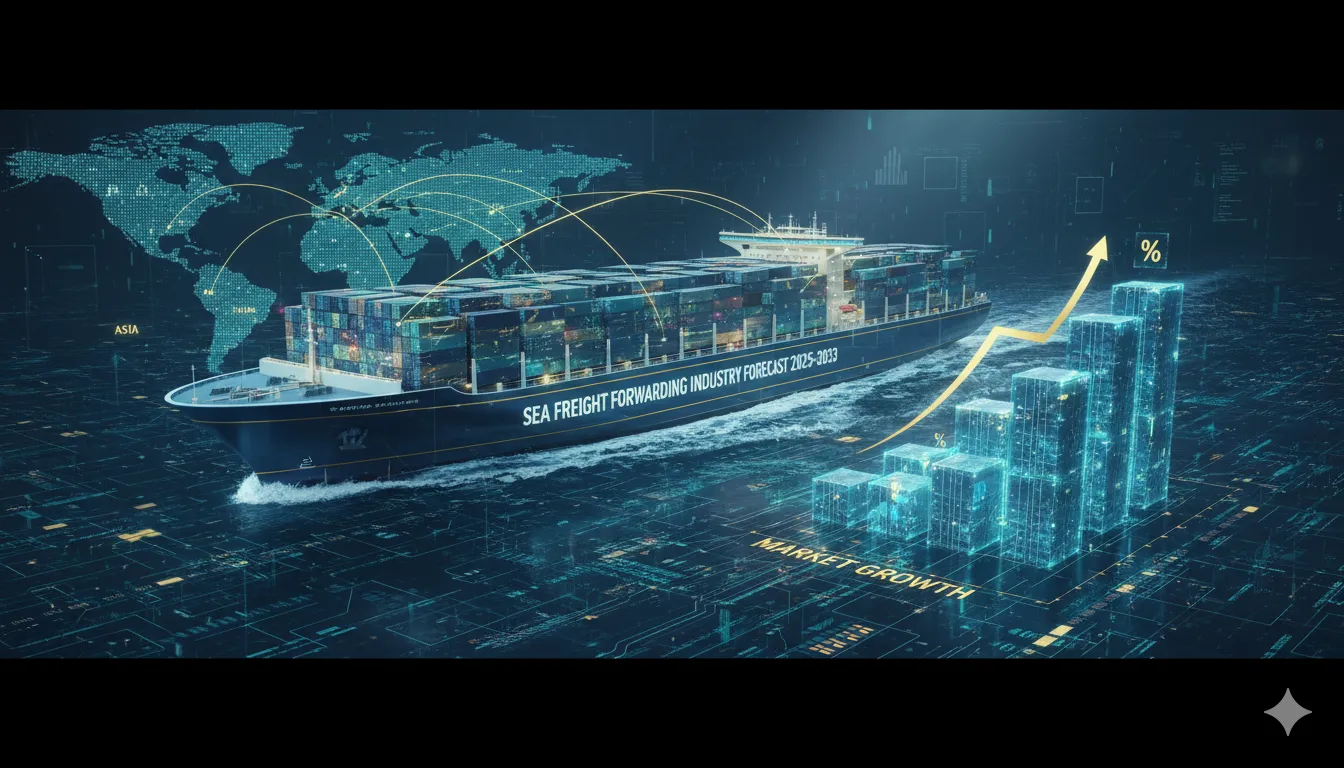
The latest Sea Freight Forwarding Industry Forecast (Source: Research and Markets) reveals a dynamic horizon, with the market projected to surge from $75.56 billion in 2024 to $123.60 billion by 2033. This robust growth, driven by a Compound Annual Growth Rate (CAGR) of 5.62%, highlights the critical role of ocean transport. But what do these numbers actually mean for your supply chain?
In this comprehensive analysis, we combine industry data with our 10+ years of on-the-ground experience to interpret the key drivers, emerging challenges like CBAM and ICS2, and the major players shaping the landscape. Whether you are Shipping from China or managing a global distribution network, this report provides the insider insights you need.
Global Sea Freight Forwarding Market Overview (2025-2033)
The sea freight forwarding sector remains the backbone of global trade. The projected growth to $123.60 billion by 2033 underscores the resilience of maritime logistics. However, in our daily operations, we are seeing a shift not just in volume, but in complexity.
Key Market Statistics
- 2024 Market Size: $75.56 Billion
- 2033 Projected Size: $123.60 Billion
- CAGR (2025-2033): 5.62%
The real story here is the evolution of Full Container Load (FCL) and Less-Than Container Load (LCL) services. We've noticed a significant uptick in LCL consolidation requests from our SME clients who want to maintain leaner inventories to avoid storage costs in destination ports like Los Angeles or Hamburg.
| Year | Market Size (USD Billion) | Growth Rate |
|---|---|---|
| 2024 | 75.56 | - |
| 2025 (Est.) | 79.80 | 5.6% |
| 2029 (Est.) | 99.50 | 5.6% |
| 2033 (Proj.) | 123.60 | 5.62% |
Key Growth Drivers: An Insider's View
What is fueling this expansion? It's not just "global trade" generally; specific operational shifts are driving demand.
1. The E-commerce "Micro-Fulfillment" Boom
The explosive growth of cross-border e-commerce is forcing forwarders to innovate.
- Our Experience: We are seeing more inquiries for "fast boat" services (like Matson to the US West Coast) from Amazon FBA sellers who need speed comparable to air freight but at Sea Freight prices.
- Impact: Increased demand for flexible LCL solutions and rapid port turnaround.
2. Infrastructure & Port Modernization
Nations are investing heavily in port modernization. India's blue economy maritime roadmap is a prime example.
- Operational Note: For our clients, upgraded ports mean fewer delays in container release. Automated terminals in places like Rotterdam allow us to clear cargo faster, reducing Demurrage risks.
3. Cost-Efficiency vs. Air Freight
With air freight rates remaining volatile, sea freight is the stable anchor.
- Strategic Advice: We often advise clients shipping heavy machinery or bulk textiles to stick to ocean freight. While slower, the cost savings can be 10-15x compared to air, directly impacting your bottom line.
Major Industry Challenges & How to Mitigate Them
The forecast is positive, but the risks are real. Here is how we handle them for our clients.
Port Congestion & Demurrage:
- The Issue: Congestion isn't just about time; it's about money. Demurrage (fees for containers inside the port) and Detention (fees for keeping the container too long outside) can kill profit margins.
- Our Solution: We prioritize pre-clearance of customs documents and use truckers with appointment reliability to pull containers the moment they become available.
Environmental Regulations (CBAM & EU ETS):
- The Issue: The EU's Carbon Border Adjustment Mechanism (CBAM) and Emissions Trading System (ETS) are pushing costs up.
- Our Insight: Shippers to Europe must now account for carbon reporting. We are actively helping clients classify their goods with the correct HS Codes to ensure compliance and avoid penalties.
Geopolitical Instability:
- The Reality: Trade wars and route diversions (like avoiding the Suez Canal) increase transit times. We now factor in an extra 10-14 days for Asia-Europe shipments to manage expectation and inventory planning.
Top Company Analysis: Giants vs. Specialists
The market is dominated by established giants, but size isn't everything.
- Kuehne + Nagel & DHL Global Forwarding: The "Big Two." Excellent for massive, standard contracts but can be impersonal for smaller shippers.
- DSV Panalpina & DB Schenker: Strong European networks.
- Expeditors International: Known for their tech stack.
- C.H. Robinson: Dominant in US trucking and transpacific lanes.
Why Choose AllBestShipping? (The Agile Advantage)
While the giants dominate the global volume, navigating their automated phone systems can be a nightmare when your container is stuck at customs. This is where AllBestShipping shines.
We provide the same global reach but with a personal touch.
- Radical Transparency: We tell you upfront about GRI (General Rate Increases) and BAF (Bunker Adjustment Factor). No hidden fees.
- Expert Handling: From complex Customs Clearance to seamless Door-to-Door Shipping, we handle the "boring" paperwork so you don't have to.
- Risk Management: We explicitly recommend Cargo Insurance because, in our experience, "General Average" declarations happen more often than you think.
Regional Market Insights
Asia-Pacific: The World's Factory Floor
China remains the central hub.
- Trend: We are observing a "China Plus One" strategy where clients source components from China but assemble in Vietnam. This requires complex multi-country consolidation, a service we specialize in.
North America & Europe
- Focus: Sustainability and compliance. If you are shipping to Germany or France, be prepared for strict packaging regulations and wood treatment documentation (ISPM 15).
Future Trends: Digitalization and Sustainability
The future is data-driven.
- Smart Containers: We are testing trackers that monitor temperature and humidity in real-time—crucial for our perishable food clients.
- Blockchain: Slowly but surely reducing the reliance on physical Bills of Lading, speeding up the release of cargo.
Frequently Asked Questions (FAQs)
1. What is the projected growth rate of the Sea Freight Forwarding Market?
The market is expected to grow at a CAGR of 5.62% from 2025 to 2033, reaching a value of $123.60 billion. This growth is driven by the expansion of e-commerce and infrastructure developments in emerging markets.
2. How does the "China Plus One" strategy affect sea freight?
This strategy increases the complexity of logistics as companies source from multiple countries (e.g., China and Vietnam). It requires sophisticated consolidation services, where goods from different origins are combined into a single shipment to save costs—a specialty of AllBestShipping.
3. What are the main risks in sea freight for 2025-2026?
The primary risks include port congestion, geopolitical instability (like Red Sea diversions), and regulatory changes like CBAM in Europe. We mitigate these by planning longer lead times and ensuring strict compliance with documentation.
4. Why should I choose AllBestShipping over a large multinational forwarder?
While large forwarders offer scale, they often lack flexibility and personalized support for SMEs. AllBestShipping offers competitive rates comparable to the giants but provides dedicated account managers, transparent pricing (no hidden GRI/BAF fees), and faster response times during crises.
5. Is Cargo Insurance necessary for sea freight?
Yes, absolutely. Under maritime law ("General Average"), if a ship is in distress and cargo is sacrificed to save the vessel, all cargo owners share the cost. Without Cargo Insurance, you could be liable for thousands of dollars even if your goods are safe.
Conclusion
The Sea Freight Forwarding Market is growing to $123.60 billion by 2033, but it's also becoming more regulated and complex. Success requires more than just booking a slot on a ship; it requires a partner who understands Incoterms, customs nuances, and the reality of port operations.
At AllBestShipping, we don't just move boxes; we optimize supply chains.
Ready to secure your shipments? Contact AllBestShipping today for a transparent quote and experience the peace of mind that comes with working with true logistics experts.