How Long to Ship from China to South Africa: Complete Transit Time Guide (2026)
How long to ship from China to South Africa is one of the most consequential questions any importer faces when building a supply chain across the Indian Ocean. Get the timeline wrong, and you are left with empty shelves, missed sales windows, and customers who have already found another supplier. Get it right, and you can plan inventory with confidence, negotiate better terms with your Chinese factory, and sleep soundly knowing your cargo is on schedule.
At AllBestShipping, we have managed thousands of shipments from Shenzhen, Guangzhou, Shanghai, Ningbo, and Qingdao to Durban, Cape Town, and Johannesburg over the past decade. We have seen containers arrive three days early because the paperwork was flawless. We have also seen shipments sit at Durban for two weeks because of a single incorrect HS code. We once had a client save eight days on a Johannesburg delivery simply by switching from a transshipment route via Singapore to a direct Shenzhen–Durban sailing — the container bypassed the hub entirely and cleared SARS before the connecting vessel even left Asia.
This guide distills everything we have learned into a clear, actionable framework. You will get exact transit times for every shipping method, port-to-port breakdowns, a visual door-to-door timeline, and ten proven tactics to shave days off your delivery.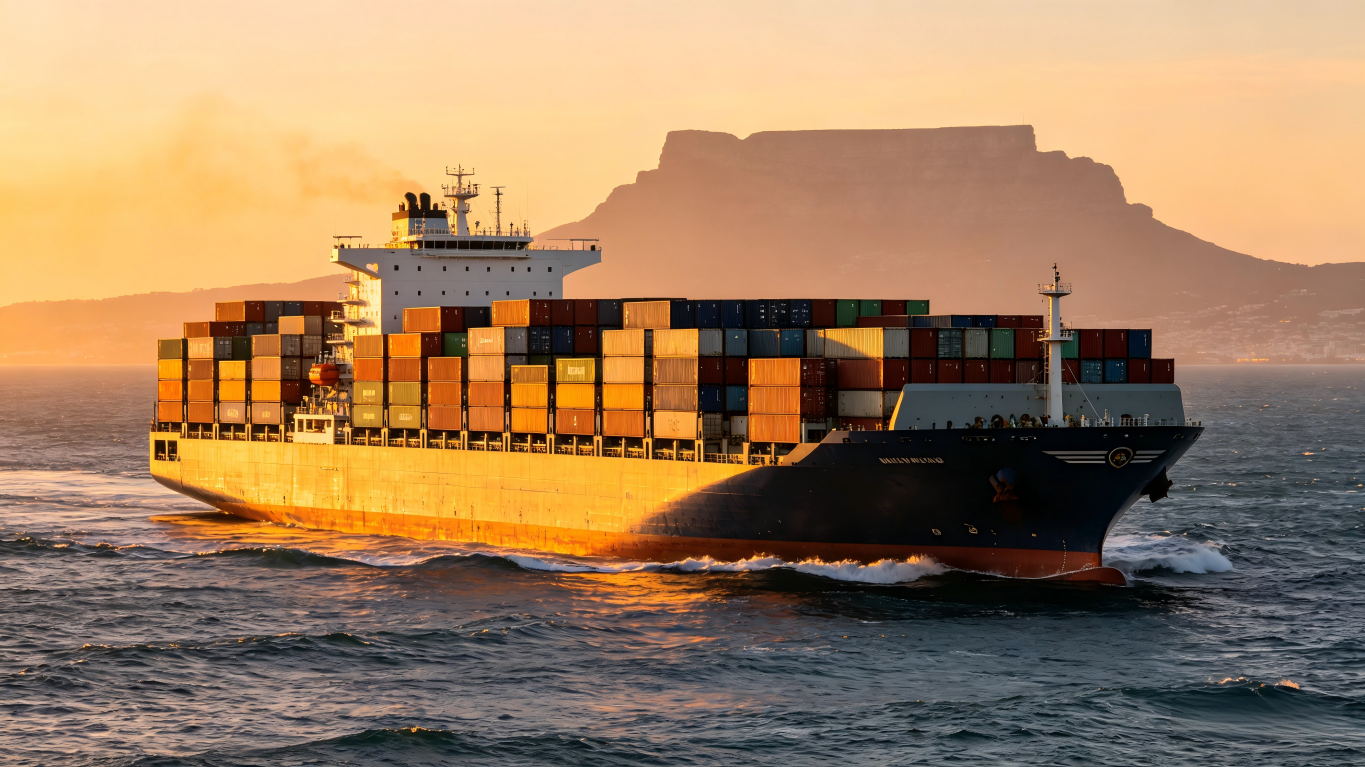
Sea Freight Transit Times: FCL vs LCL, Port by Port
For most China–South Africa trade, sea freight is the default choice. It is the most economical way to move large volumes, and direct vessel services from major Chinese ports to Durban and Cape Town have become increasingly reliable. But not all sea freight is the same. The transit time you experience depends heavily on whether you book a Full Container Load (FCL) or a Less than Container Load (LCL), which ports you choose, and whether your cargo travels on a direct service or transshipment route.
For a broader look at ocean options across the continent, see our dedicated guide to Sea Freight from China to South Africa. If you are also exploring other African markets, our Shipping From China To Kenya and Shipping From China To Tanzania service pages cover transit times and routes for East African trade lanes.
FCL Transit Times (Port-to-Port)
FCL means your cargo occupies an entire container — typically a 20GP, 40GP, or 40HQ. Because your goods are sealed at the factory and remain untouched until they reach the destination port, FCL is faster, safer, and more predictable than LCL.
Here is what you can expect from the major Chinese ports to South Africa's two primary container terminals:
| Origin Port (China) | Destination Port (South Africa) | FCL Transit Time | Service Type |
|---|---|---|---|
| Shanghai | Durban | 24–30 days | Direct / Transshipment |
| Shenzhen (Yantian/Shekou) | Durban | 22–28 days | Direct |
| Shenzhen (Yantian/Shekou) | Cape Town | 22–28 days | Direct |
| Ningbo | Durban | 25–30 days | Direct / Transshipment |
| Guangzhou (Nansha) | Durban | 25–33 days | Direct |
| Guangzhou (Nansha) | Cape Town | 28–35 days | Transshipment |
| Qingdao | Durban | 28–35 days | Transshipment |
| Qingdao | Cape Town | 30–36 days | Transshipment |
A few patterns stand out. Routes from South China — Shenzhen, Guangzhou, and to a lesser extent Ningbo — tend to be faster than routes from North China because the sailing distance through the South China Sea and across the Indian Ocean is shorter. Durban, as the largest container port in Sub-Saharan Africa, receives more frequent direct services than Cape Town, which often requires a transshipment stop at Singapore, Port Klang, or Colombo.
Direct service vs transshipment is a critical distinction. A direct vessel sails straight from the origin port to the destination port. A transshipment service unloads your container at an intermediate hub, waits for a connecting vessel, and reloads it. That handoff typically adds 3 to 7 days to the total transit time. If speed matters, always ask your forwarder for the direct sailing schedule. In our experience, roughly 40% of first-time importers unknowingly book transshipment services because they are quoted a lower rate without being told about the time penalty.
LCL Transit Times (Port-to-Port)
LCL is designed for shipments that do not fill an entire container — usually under 15 CBM. Your cargo is consolidated with other shippers' goods at a warehouse in China, loaded into a shared container, and then deconsolidated at a warehouse in South Africa before final delivery.
That extra handling adds time at both ends:
| Origin Port (China) | Destination Port (South Africa) | LCL Transit Time | FCL vs LCL Difference |
|---|---|---|---|
| Shanghai | Durban | 30–40 days | +6–10 days |
| Shenzhen | Durban | 28–36 days | +6–8 days |
| Shenzhen | Cape Town | 30–38 days | +8–10 days |
| Ningbo | Durban | 30–38 days | +5–8 days |
| Guangzhou | Durban | 30–38 days | +5–8 days |
The consolidation process at origin typically takes 3 to 5 days as the forwarder waits for enough cargo to fill the container. Deconsolidation at destination adds another 2 to 4 days as the warehouse sorts and releases individual consignments. If your volume is approaching 13 to 15 CBM, request an FCL quote alongside your LCL quote. At that threshold, the per-CBM cost of a dedicated container often drops below LCL pricing, and you avoid the handling delays entirely. We regularly see importers stuck in LCL for months because they never ask their forwarder to run the FCL comparison.
Door-to-Door Sea Freight: The Full Picture
The port-to-port numbers above tell only part of the story. For most importers, the relevant metric is door-to-door delivery time — from the moment your supplier hands over the cargo to the moment it arrives at your warehouse in South Africa.
Add these stages to the port-to-port transit:
| Stage | Duration | Notes |
|---|---|---|
| Factory pickup to port warehouse | 1–2 days | Shorter if your supplier is near the port |
| Export customs clearance (China) | 1–2 days | Faster with pre-declaration and accurate documents |
| Port waiting / loading | 2–4 days | Depends on vessel schedule and cut-off time |
| Ocean transit (port-to-port) | 22–35 days | See FCL/LCL tables above |
| Import customs clearance (SARS) | 2–7 days | Standard is 2–5 days; inspections extend this |
| Last-mile delivery to warehouse | 2–5 days | Durban→Johannesburg ~1–2 days; Cape Town→inland ~3–5 days |
| Total door-to-door (FCL) | 30–45 days | Best-case scenario with smooth clearance |
| Total door-to-door (LCL) | 35–50 days | Includes consolidation and deconsolidation |
Key terms to know: Your Bill of Lading (B/L) is the contract of carriage and title document for sea freight. The cut-off time is the deadline by which your cargo must be delivered to the port terminal to make the scheduled sailing. Missing it by even one day means waiting for the next vessel, which can add a full week to your timeline. Your ETA (Estimated Time of Arrival) is the date the carrier projects your container will reach the destination port — but it does not include customs clearance or inland delivery.
Insider tip: We always advise clients to build a 48-hour buffer before the cut-off. Factory delays are the single most common reason importers miss their sailing — and once you miss it, you are not waiting hours. You are waiting for the next weekly service.
Air Freight Transit Times: When Speed Matters Most
When inventory is running low, a customer order is urgent, or your cargo is high-value and time-sensitive, air freight becomes the practical choice. The trade-off is cost — air freight is typically 5 to 10 times more expensive per kilogram than sea freight — but for the right shipment, the speed pays for itself.
If you are comparing air options across Africa, our Air Shipping from China to Kenya guide provides detailed transit times and rates for East African routes.
Standard Air Freight (Door-to-Door)
Standard air freight uses scheduled commercial flights or cargo freighters. The typical door-to-door timeline from major Chinese airports to South Africa is 8 to 12 days.
| Origin Airport (China) | Destination Airport (South Africa) | Transit Time | Notes |
|---|---|---|---|
| Shanghai Pudong (PVG) | Johannesburg O.R. Tambo (JNB) | 8–10 days | Daily frequencies via Ethiopian, Emirates |
| Guangzhou Baiyun (CAN) | Johannesburg (JNB) | 8–10 days | Strong African connectivity; near-daily flights |
| Shenzhen (SZX) | Johannesburg (JNB) | 9–11 days | Via connecting hub (Hong Kong, Singapore, Dubai) |
| Beijing Capital (PEK) | Cape Town (CPT) | 10–12 days | Limited direct options; mostly via Middle East |
The timeline breaks down as follows:
| Stage | Duration |
|---|---|
| Factory pickup to airport | 1–2 days |
| Export customs and security screening | 1–2 days |
| Flight transit (airport-to-airport) | 1–3 days |
| Import customs clearance (SARS) | 1–3 days |
| Last-mile delivery | 1–2 days |
| Total door-to-door | 8–12 days |
Airport-to-airport vs door-to-door is a distinction many first-time importers miss. The flight itself might take 12 to 18 hours, but the total door-to-door time includes pickup, export customs, security screening, cargo handling, import clearance, and delivery. That is where the extra 7 to 10 days come from.
Express Courier Services
For small parcels, samples, and documents under 70 kg, express couriers offer the fastest option with full tracking and door-to-door service.
| Courier | Transit Time | Max Weight | Best For |
|---|---|---|---|
| DHL Express | 3–5 days | 70 kg | Small parcels, urgent samples |
| FedEx International Priority | 4–6 days | 68 kg | Documents, electronics |
| UPS Worldwide Express | 4–6 days | 70 kg | Apparel, spare parts |
| Aramex | 6–10 days | 70 kg | Cost-conscious express option |
Express services include customs clearance in the quoted price, which removes the uncertainty of unexpected duties. However, for shipments above 70 kg, standard air freight is usually more cost-effective.
When Air Freight Pays Off
Air freight is not for every shipment. It is the right choice when:
- You are shipping electronics, fashion, or accessories with high margins and fast turnover
- You need urgent samples for a product launch or quality approval
- Your cargo is perishable (certain food products, pharmaceuticals)
- The goods are high-value enough that the cost of stockout exceeds the freight premium
- Your shipment is under 500 kg and time-sensitive
Key terms: Your Airway Bill (AWB) is the air freight equivalent of a Bill of Lading. Chargeable weight is the metric airlines use to price your cargo — it is the greater of actual weight or volumetric weight (Length × Width × Height in cm / 6000). A large carton of lightweight clothing can cost more to ship by air than a compact box of heavy metal parts. Always confirm chargeable weight with your forwarder before booking.
Expert note: We have seen importers pay double what they expected because they quoted actual weight (12 kg) while the airline billed chargeable weight (28 kg) for a bulky carton of foam packaging. Always ask your forwarder for both numbers before you commit.
Door-to-Door Shipping Timeline: From Factory Floor to Your Doorstep
Understanding how long each stage takes is the key to realistic planning. Below is a visual breakdown of the full door-to-door chain for a typical sea freight shipment.
Figure: Typical FCL sea freight door-to-door timeline from Shenzhen to Durban, showing each stage from factory pickup through last-mile delivery. The fastest scenario completes in ~24 days; the slowest can exceed 60 days.
The Full Chain Explained
| Stage | Fastest | Average | Slowest | What Can Go Wrong |
|---|---|---|---|---|
| Factory pickup to forwarder warehouse | 1 day | 1–2 days | 3 days | Supplier delays, missed pickup window |
| Export customs clearance (China) | 1 day | 1–2 days | 3 days | Incorrect HS codes, missing certificates |
| Port waiting / vessel loading | 2 days | 2–4 days | 7 days | Missed cut-off, port congestion |
| Ocean transit (port-to-port) | 18 days | 22–28 days | 35 days | Transshipment delays, weather, route changes |
| Import customs clearance (SARS) | 1 day | 2–5 days | 14+ days | Inspections, documentation errors, duty disputes |
| Last-mile delivery | 1 day | 2–3 days | 5 days | Inland trucking shortages, remote destination |
| Total door-to-door | 24 days | 30–42 days | 60+ days |
The fastest scenario (around 24 days) requires a direct FCL service from Shenzhen to Durban, pre-cleared export documentation, green-channel customs clearance in South Africa, and a destination warehouse within the Durban metro area. The slowest scenario (60+ days) might involve LCL consolidation from Qingdao, transshipment via Singapore, a random SARS inspection, and inland delivery to a remote location in the Northern Cape.
DDP (Delivered Duty Paid): What the Forwarder Handles
Under DDP (Delivered Duty Paid) terms, your freight forwarder manages the entire chain: pickup at the supplier, Chinese export customs, international transport, SARS import clearance, payment of duties and VAT, and final delivery to your door. You pay one predictable price and the cargo simply arrives.
For a complete overview of our all-inclusive service, visit our Shipping From China To South Africa service page, which covers rates, routes, and customs guidance for every shipping method.
| DDP Mode | Transit Time | What Is Included |
|---|---|---|
| DDP Air Freight | 10–14 days | Pickup, air cargo, customs both ends, duties, last-mile delivery |
| DDP Sea Freight (FCL) | 35–50 days | Pickup, ocean freight, customs both ends, duties, last-mile delivery |
| DDP Sea Freight (LCL) | 40–55 days | Pickup, LCL consolidation, ocean freight, deconsolidation, customs, duties, delivery |
DDP is strongly recommended for first-time importers, SMEs without a dedicated customs broker, and anyone who prefers certainty over managing multiple vendors. The trade-off is a higher upfront cost, but it eliminates the risk of surprise duties, storage fees, and clearance delays. That said, DDP is not always the cheapest option per kilogram. If you have an established customs broker in South Africa and are comfortable managing Incoterms yourself, FOB or CIF can reduce your total landed cost — though they require more coordination on your end.
What Really Slows Down Your Shipment (and How to Fix It)
Even with perfect planning, delays happen. The difference between an on-time shipment and a delayed one often comes down to how well you anticipate and mitigate these five risk factors.
SARS Customs Clearance
The South African Revenue Service (SARS) processes all commercial imports through its electronic customs system. Under normal circumstances, clearance takes 2 to 5 days. But several triggers can extend this to two weeks or more:
- Incorrect HS codes: A mismatch between your declared HS code and SARS's classification database flags the shipment for manual review. According to SARS customs guidelines, correct classification is the importer's legal responsibility.
- Undervaluation: If the declared value looks inconsistent with market prices, SARS may order a valuation inspection.
- Random inspections: SARS conducts both random and risk-targeted physical inspections. Accurate paperwork reduces your chances of being selected.
- Missing permits: Regulated goods — electronics, chemicals, pharmaceuticals, certain textiles — require pre-approved import permits from agencies like NRCS (National Regulator for Compulsory Specifications) or ITAC (International Trade Administration Commission).
How to fix it: Verify your HS codes with your forwarder before production starts. Submit a pre-arrival declaration through SARS's electronic system. Ensure your Commercial Invoice, Packing List, and Certificate of Origin are 100% accurate and consistent with each other.
From our operations desk: The most common SARS delay we see is not fraud — it is simple inconsistency. The invoice says 500 units, the packing list says 480, and the supplier's internal record says 520. SARS officers notice these discrepancies immediately. We run a three-way match (invoice, packing list, supplier confirmation) before every shipment leaves the factory. It takes 10 minutes and prevents days of delay.
Port Congestion
Durban Port handles roughly 60% of South Africa's container traffic. During peak seasons — pre-Christmas retail rush, agricultural export peaks, and post-holiday restocking — vessel waiting times can stretch to 7 to 14 days before a ship can berth. Cape Town experiences similar but less severe congestion during the Western Cape harvest season.
How to fix it: Book vessel space 3 to 4 weeks ahead during Q4 and post-Chinese New Year periods. Ask your forwarder about alternative ports — Ngqura (Port Elizabeth) sometimes offers faster berthing when Durban is backed up.
Peak Season Impact
Chinese and South African holidays create predictable but significant disruptions:
| Period | Sea Freight Impact | Air Freight Impact | Mitigation |
|---|---|---|---|
| Chinese New Year (Jan–Feb) | +7–14 days | +2–4 days | Book 4+ weeks ahead; factories close for 2–3 weeks |
| Golden Week (early Oct) | +3–7 days | +1–3 days | Book 2+ weeks ahead |
| Q4 Peak (Nov–Dec) | +5–10 days | +3–5 days | Book 3+ weeks ahead; expect higher rates |
| Post-CNY Restocking (Mar) | +3–5 days | +1–2 days | Book 2+ weeks ahead |
Documentation Errors
One incorrect date on a Certificate of Origin, one mismatched weight on a Packing List, or one missing signature on a Commercial Invoice can hold your cargo for days. SARS officers review every document line by line. Inconsistencies trigger manual reviews, which trigger inspections, which trigger delays.
How to fix it: Use a pre-shipment documentation checklist. Have your forwarder review all documents before the cargo leaves the factory. Never rely on the supplier to prepare customs-facing paperwork without oversight.
Cargo-Specific Delays
Certain product categories face additional scrutiny:
| Product Type | Common Delay Cause | Prevention |
|---|---|---|
| Electronics | NRCS approval, SABS certification | Obtain NRCS LOA (Letter of Authority) before shipping |
| Batteries / Dangerous Goods | Special handling, MSDS requirements | Declare correctly; use DG-certified packaging |
| Textiles / Clothing | ITAC permit, anti-dumping checks | Verify HS code and ITAC status with forwarder |
| Solar Panels | Anti-dumping duties, SABS certification | Check latest ITAC tariff schedule |
| Food / Pharmaceuticals | Health permits, cold chain compliance | Use reefers or temperature-controlled air freight |
Speed vs Cost: How to Choose the Right Shipping Method
The right shipping method is not the fastest or the cheapest — it is the one that aligns your cargo profile, budget, and delivery deadline. Here is a practical decision framework based on real-world scenarios we handle at AllBestShipping.
If you are weighing cost against speed, our Cheapest Way to Ship from China to South Africa guide breaks down the most economical options for every cargo size.
Scenario-Based Decision Matrix
| Your Situation | Recommended Method | Transit Time | Cost Reference (2026) | Why This Works |
|---|---|---|---|---|
| Urgent sample (< 50 kg) | Express Courier (DHL/FedEx) | 3–5 days | $8–$12 / kg | Door-to-door, customs included, full tracking |
| Time-sensitive batch (< 500 kg) | Standard Air Freight | 8–12 days | $4–$7 / kg | Faster than sea, cheaper than express for bulk |
| Balanced budget (< 15 CBM) | LCL Sea Freight | 30–40 days | $80–$120 / CBM | Cost-effective for mid-size without FCL volume |
| Bulk economy (15+ CBM) | FCL Sea Freight | 24–35 days | $2,200–$4,000 / 20ft | Lowest per-unit cost, fastest sea option |
| Hassle-free all-in | DDP Sea Freight | 35–50 days | All-inclusive fixed rate | Zero customs complexity, predictable total cost |
| Mid-urgency, mid-budget | Sea-Air Multimodal | 12–18 days | $2–$4 / kg equivalent | Sea to Middle East hub, then air to South Africa |
How Incoterms Shift Time and Cost Responsibility
Your Incoterms 2020 agreement with your supplier determines who is responsible for freight, insurance, and customs at each stage. This directly affects both your timeline and your total cost.
| Incoterm | Who Pays Freight | Who Handles SA Customs | Time Impact |
|---|---|---|---|
| EXW (Ex Works) | Buyer | Buyer | Slowest — you coordinate everything from factory pickup |
| FOB (Free on Board) | Buyer (from port) | Buyer | Standard — supplier delivers to port; you manage ocean + destination |
| CIF (Cost, Insurance, Freight) | Seller (to port) | Buyer | Standard — same as FOB for timeline; seller arranges ocean freight |
| DDP (Delivered Duty Paid) | Seller / Forwarder | Forwarder | Fastest for the importer — single point of contact, no customs surprises |
Under EXW, you are responsible for inland trucking in China, export customs, ocean freight, import customs, and last-mile delivery. That is four to six separate vendors to coordinate, and any one of them can cause a delay. Under DDP, your forwarder handles everything. The timeline is often shorter because the forwarder controls the entire chain and can optimize handoffs.
The Sea-Air Multimodal Option
For shipments that are too urgent for pure sea freight but too large for cost-effective air freight, sea-air multimodal offers a middle ground. Cargo travels by sea to a hub in the Middle East (typically Dubai or Jebel Ali), then transfers to air freight for the final leg to Johannesburg or Cape Town.
- Transit time: 12 to 18 days door-to-door
- Cost: Roughly 30 to 50% of pure air freight
- Best for: Mid-urgency inventory replenishment, seasonal stock builds, or shipments in the 500 kg to 2,000 kg range
Not every forwarder offers this service, and it requires tight coordination at the transshipment hub. But when the timing is right, it can be the optimal balance of speed and cost. We typically reserve sea-air for clients who need inventory replenishment within two to three weeks but cannot absorb the cost of pure air freight for shipments above 500 kg.
10 Proven Ways to Shorten Your Shipping Time
After a decade of managing China–South Africa freight, these are the tactics that consistently deliver the biggest time savings for our clients.
1. Choose direct service over transshipment. A direct vessel from Shenzhen to Durban saves 3 to 7 days compared to a transshipment route via Singapore. Always ask your forwarder for the direct sailing schedule first.
2. Book 2 to 3 weeks ahead during normal periods, 4+ weeks before Chinese New Year and Q4. The earlier you book, the better your choice of vessel, schedule, and rate. Last-minute bookings often mean accepting slower transshipment routes at premium prices.
3. Consolidate cargo near major South China ports. If your suppliers are spread across inland China, consider using a forwarder's warehouse in Shenzhen or Guangzhou to consolidate everything before export. This avoids the delays of routing multiple small shipments from different origins.
4. Verify HS codes and SARS importer code before cargo moves. A single incorrect HS code can trigger a SARS inspection that adds 5 to 14 days. Confirm classification with your forwarder before production starts, not after the goods are packed.
5. Pre-submit customs documentation to enable green-channel clearance. SARS offers expedited clearance for importers with a clean compliance record and accurate pre-arrival declarations. Work with a forwarder who knows how to access this channel.
6. Use a freight forwarder with AEO (Authorized Economic Operator) status. AEO-certified forwarders receive priority treatment at Chinese customs and are less likely to face random inspections. That can shave 1 to 2 days off export clearance. AllBestShipping holds AEO certification, which means our clients' cargo moves through Chinese export customs with fewer holds and faster release.
7. Match container size to cargo volume. Shipping 12 CBM in a 20GP container is inefficient. But shipping 12 CBM via LCL when a 20GP would cost less per CBM is also a mistake — and LCL adds 5 to 10 days. Run the numbers for both FCL and LCL at every shipment.
8. Plan around cut-off times. Every vessel has a hard cut-off — the last moment cargo can enter the terminal before sailing. Missing it by one day means waiting for the next vessel, which is typically 7 days later. Build a 24 to 48 hour buffer into your factory delivery schedule.
9. Consider sea-air multimodal for mid-urgency shipments. At 12 to 18 days, sea-air sits neatly between pure sea (30+ days) and pure air (8–12 days). It is ideal for inventory replenishment when you need stock faster than ocean but cannot justify air freight costs.
10. Track proactively with real-time alerts. Do not wait for your customer to tell you the shipment is late. Use a forwarder that provides real-time container tracking, port status updates, and customs clearance notifications. Early warning lets you reroute, escalate, or adjust inventory before a delay becomes a crisis.
FAQ: Your Top Shipping Time Questions Answered
How long does sea freight take from China to South Africa? Sea freight from China to South Africa typically takes 24 to 35 days port-to-port for FCL and 28 to 40 days for LCL. Door-to-door adds 7 to 15 days for pickup, customs, and last-mile delivery.
How fast is air cargo from China to South Africa? Standard air freight takes 8 to 12 days door-to-door. Express courier services like DHL deliver in 3 to 5 days.
What is the fastest shipping method to South Africa? Express courier (DHL, FedEx, UPS) is the fastest at 3 to 5 days door-to-door. Priority air freight is next at 4 to 7 days.
How long does DDP door-to-door shipping take? DDP air freight takes 10 to 14 days. DDP sea freight takes 35 to 50 days for FCL and 40 to 55 days for LCL.
Why is my shipment delayed at Durban port? Common causes include port congestion during peak season, vessel bunching, customs inspections, incorrect documentation, or missing import permits. A professional forwarder can identify the specific cause and escalate resolution.
How does Chinese New Year affect shipping times? Factories close for 2 to 3 weeks, and port operations slow significantly. Sea freight transit times extend by 7 to 14 days, while air freight sees 2 to 4 days of additional delay. Book 4+ weeks ahead.
Can I track my container in real time? Yes. Major carriers and forwarders offer online tracking via container number or Bill of Lading reference. AllBestShipping provides real-time tracking with automated alerts at every milestone.
What is the difference between port-to-port and door-to-door time? Port-to-port measures only the ocean or air transit between origin and destination ports. Door-to-door includes factory pickup, export customs, port handling, import customs, and final delivery. The gap is typically 7 to 15 days.
How long does SARS customs clearance usually take? Standard clearance is 2 to 5 days for shipments with accurate documentation. Inspections, HS code disputes, or missing permits can extend this to 10 to 14 days or more.
Is LCL always slower than FCL? Yes. LCL adds 5 to 10 days due to consolidation at origin and deconsolidation at destination. Once your cargo approaches 13 to 15 CBM, FCL is usually both faster and cheaper per unit.
Conclusion: Plan Smarter, Ship Faster
Shipping from China to South Africa is not about distance — it is about planning. A well-prepared FCL shipment on a direct service from Shenzhen to Durban can reach your warehouse in 30 days. A poorly planned LCL shipment with documentation errors can take 60 days or more.
The numbers are clear: sea freight delivers in 24 to 40 days, air freight in 8 to 12 days, and express courier in 3 to 6 days. But the real variable is not the mode — it is the quality of your preparation. Accurate HS codes, pre-submitted customs declarations, early booking, and a forwarder who knows the China–South Africa lane inside out are what separate on-time deliveries from costly delays.
At AllBestShipping, we have spent over a decade refining every stage of this journey — from pickup at factories in Guangzhou and Shenzhen to final delivery in Johannesburg, Durban, and Cape Town. We are a professional freight forwarder based in Shenzhen, China, with a dedicated team that speaks both Mandarin and English, giving you direct access to your suppliers and real-time visibility into every shipment. We offer transparent, itemized quotes with exact transit times for your specific route, real-time tracking, and door-to-door shipping that removes the guesswork from international logistics.
Ready to get a precise timeline for your next shipment? Contact AllBestShipping today for a live quote with real-time sailing schedules — and let us make sure your cargo arrives on time, on budget, and without customs surprises.
Disclaimer: The shipping rates, transit times, and customs regulations described in this guide are indicative estimates based on market conditions as of June 2026. Actual costs and procedures vary by cargo type, carrier, and regulatory changes. For legally binding duty rates and import requirements, consult the South African Revenue Service (SARS) and the International Trade Administration Commission (ITAC) directly, or speak with a licensed customs broker before placing your order.