Cheapest Way to Ship from China to Australia: The Ultimate 2026 Cost-Saving Guide (FCL, LCL & DDP)
Australian importers and cross-border e-commerce sellers frequently face a common challenge: their profit margins are eaten away by high and unpredictable logistics costs. While you might find a freight quote that looks incredibly low on paper, hidden fees at the destination port—such as customs clearance charges, Destination Terminal Handling Charges (DTHC), and unexpected taxes—can cause your true landed cost to skyrocket. Choosing the most cost-effective shipping method requires optimizing the entire supply chain from major Chinese hubs like Shenzhen to key Australian ports like Sydney. In this comprehensive guide, we will uncover the cheapest way to ship from China to Australia in 2026, break down real shipping costs, expose hidden fees, and provide actionable cost-saving strategies tailored for Amazon FBA sellers and SMEs.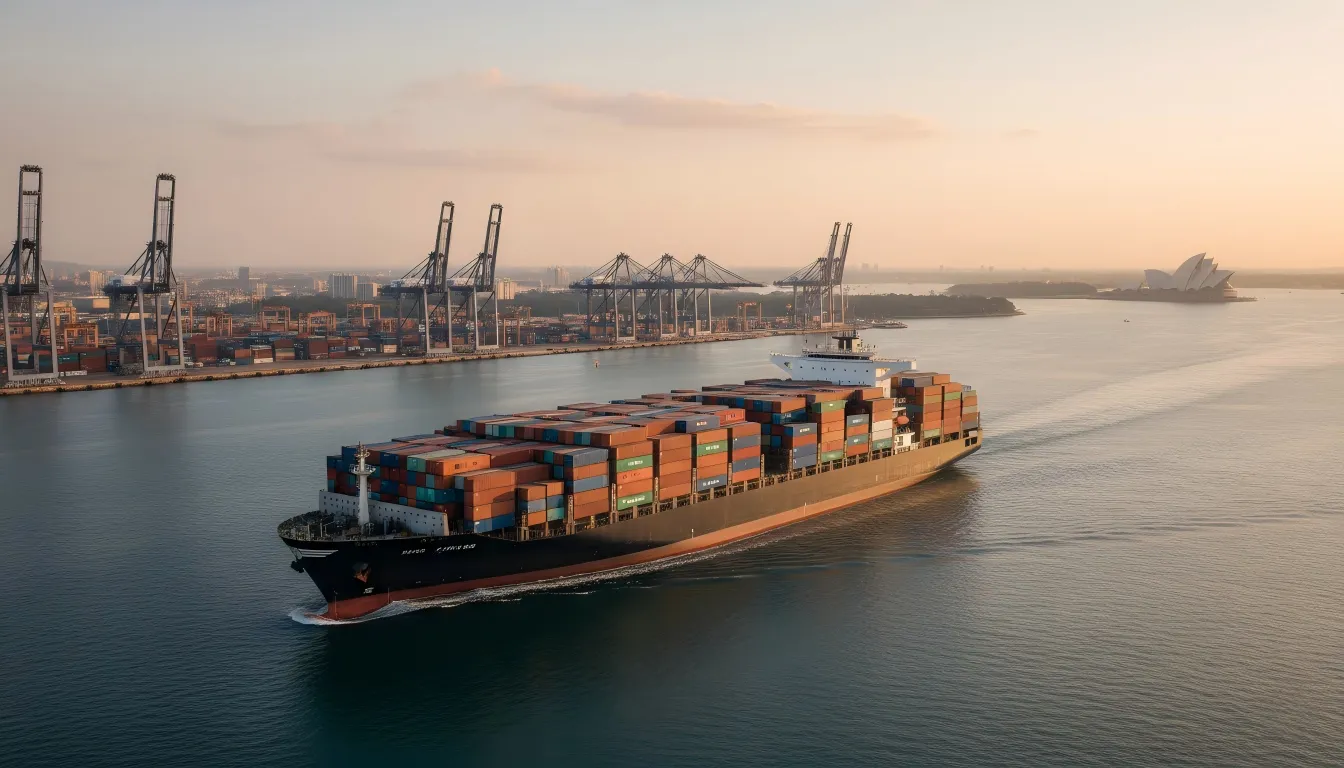
1. Sea Freight vs Air Freight Australia: Cost and Transit Time Comparison
When evaluating your shipping options, understanding the delicate balance between cost and transit time is crucial. The most cost-effective method is fundamentally determined by the volume (measured in Cubic Meters, or CBM) and the actual weight of your cargo. Making the wrong choice here can either result in unnecessary premium freight charges or costly delays that disrupt your sales cycle.
Air Freight: Speed at a Premium
For urgent inventory replenishment, product launches, or high-value electronics, Air Freight from China is unmatched in speed. However, this speed comes at a significant premium, making it the most expensive mode of transport for bulk goods.
- Estimated Cost: $4 – $8 per kg. It is important to note that air freight rates are highly volatile. They fluctuate frequently based on global fuel surcharges, airline capacity, and peak shipping seasons (such as the weeks leading up to Christmas or the Chinese New Year).
- Transit Time: 3 – 7 days from major Chinese airports (like Shenzhen Bao'an International Airport or Guangzhou Baiyun International Airport) to Australian hubs like Sydney Kingsford Smith Airport or Melbourne Airport.
- Best For: Time-sensitive shipments, lightweight parcels, samples, or high-value goods where the cost of a potential stock-out or lost sales heavily outweighs the premium paid for air transport.
- Cost Calculation Nuance: Air freight is billed based on "Chargeable Weight," which is the greater of the actual weight or the volumetric weight. A common formula used is Length (cm) x Width (cm) x Height (cm) / 6000. This means shipping large, lightweight items (like pillows) via air can be unexpectedly expensive.
Sea Freight: The Champion of Volume and Cost Efficiency
For the vast majority of commercial imports and heavy goods, Sea Freight from China remains the undisputed champion of cost-effective shipping. While it requires longer lead times, the savings are substantial, especially for regular inventory restocking.
- LCL shipping from China to Australia cost (Less than Container Load): If you are shipping smaller volumes—typically between 2 and 15 CBM—LCL is your go-to option. With LCL, you share a shipping container with other importers and only pay for the exact volume your cargo occupies. Current market rates for LCL hover around $35 – $80 per CBM. However, be aware that LCL shipments often incur higher handling fees at the destination port due to the deconsolidation process (unpacking the shared container).
- Cost of shipping 20ft/40ft container from China to Australia (Full Container Load - FCL): Once your cargo volume exceeds approximately 15 CBM, FCL becomes the cheapest option per unit. You rent the entire container, providing better security and faster handling times since the container goes directly from the port to your warehouse without deconsolidation. As of early 2026, shipping a standard 20ft container costs approximately $1,200 – $1,800, while a larger 40ft container ranges from $1,500 to $3,500, depending on the shipping line and current market demand.
- Transit time China to Sydney/Melbourne/Brisbane: The port-to-port transit time generally takes 12 – 25 days, depending on whether it is a direct routing or involves transshipment. However, when factoring in local trucking in China, export customs, port wait times, import clearance in Australia, and final delivery, you should realistically expect a total door-to-door transit time of 20 – 40 days.
| Shipping Mode | Typical Rate (Early 2026 Est.) | Port-to-Port Transit | Door-to-Door Transit | Best For |
|---|---|---|---|---|
| Air Freight | $4 – $8 per kg | 1 – 5 days | 4 – 8 days | Urgent, high-value, or lightweight goods |
| Sea Freight (LCL) | $35 – $80 per CBM | 15 – 30 days | 25 – 40 days | Shipments between 2-15 CBM |
| Sea Freight (FCL 20ft) | $1,200 – $1,800 | 12 – 25 days | 16 – 30 days | Large volumes (>15 CBM) |
2. The "Hidden Costs": Why Base Freight Rates Are Deceptive
Many new importers make the costly mistake of choosing a freight forwarder based solely on the lowest port-to-port freight rate. However, the base freight rate is only one piece of a much larger puzzle. To accurately budget for your shipment, you must calculate the Landed Cost—the total, comprehensive price of a product once it has arrived safely at your warehouse door, ready for sale.
Import Taxes, Duties and GST in Australia
The Australian Border Force (ABF) enforces strict tax and duty regulations on imported goods. Understanding these is non-negotiable for cost control. - Goods and Services Tax (GST): Most imported goods (excluding certain essential food items or medical supplies) are subject to a flat 10% GST. This is calculated on the Value of the Taxable Importation (VoTI), which includes the customs value of the goods, the shipping costs, and any customs duties paid. - Customs Duties: Depending on the classification of your product (determined by its specific HS Code), customs duties typically range from 0% to 10%. Incorrectly classifying your goods can lead to overpaying duties or facing severe penalties for underpayment.
Customs Clearance Australia and DTHC
The true "danger zone" for unexpected cost overruns usually lies at the destination port in Australia. - Customs Brokerage Fees: Hiring an Australian customs broker to file your import declaration typically costs between $100 and $250 per shipment. - Quarantine and Inspection Fees: Australia has incredibly strict biosecurity laws governed by the Department of Agriculture, Fisheries and Forestry (DAFF). If your goods require inspection (e.g., wooden products needing fumigation verification), expect significant delays and inspection fees. - Destination Terminal Handling Charges (DTHC): These are fees charged by the port for moving the container from the ship to the holding yard. For LCL shipments, the fees for unpacking the container (deconsolidation) can quickly add hundreds of dollars to a seemingly cheap initial quote.
The Trap of Incoterms (EXW, FOB, CIF)
Your chosen Incoterms (International Commercial Terms) dictate exactly who pays for what part of the journey and where the risk transfers from the seller to the buyer. - EXW (Ex Works): You are responsible for all costs from the moment the goods leave the factory floor in China. - FOB (Free on Board): The supplier pays to get the goods onto the ship in China. You pay the sea freight and everything thereafter. This is generally the most recommended term for buyers who want control over their logistics. - CIF (Cost, Insurance, and Freight): The supplier pays the freight to the Australian port. While this sounds convenient, it is often a trap. Under CIF, once the goods arrive in Sydney or Melbourne, the buyer is frequently hit with unpredictable, highly inflated local port charges and DTHC by the supplier's chosen destination agent. Understanding your terms is vital to avoiding shock bills.
Our Industry Insights
We often see first-time importers lured by incredibly low CIF rates offered by suppliers on platforms like Alibaba. They think they scored a great deal, only to be charged exorbitant DTHC, document handover fees, and local handling charges by the destination agent in Sydney or Melbourne—sometimes costing more than the goods themselves. To truly control your costs and avoid these "hostage" situations, we strongly advise against CIF and always recommend asking your own forwarder for a comprehensive FOB or Door-to-Door quote.
3. DDP Shipping from China to Australia: The True Money-Saver for SMEs
So, how do you bypass the complexity of hidden fees and Incoterm traps? The answer for many small to medium-sized enterprises (SMEs) is Door-to-Door Shipping via DDP (Delivered Duty Paid). In a DDP arrangement, your freight forwarder handles the entire supply chain: export clearance in China, international sea or air freight, import clearance in Australia, payment of all applicable Australian duties and GST, and the final truck delivery directly to your door.
Why DDP Often Results in a Lower Total Landed Cost
While the upfront quote for a DDP service might initially appear higher than a standard FOB or EXW rate, it frequently proves to be the most cost-effective and stress-free solution for SMEs.
- Absolute Predictability: DDP locks in your total logistics cost upfront. The price you are quoted is the final price you pay. There are no surprise port fees, unexpected customs broker invoices, or fluctuating handling charges upon arrival.
- Operational Efficiency: It eliminates the need to hire a separate Australian customs broker, saving you hefty administrative fees. It also frees up your time to focus on marketing and selling your products, rather than wrestling with customs paperwork and coordinating local trucking.
- Streamlined Process: Because one single entity manages the entire journey, communication is simplified, and potential delays caused by miscommunication between different agents are minimized.
Amazon FBA shipping from China to Australia cheapest
For sellers operating on Amazon Australia, utilizing Amazon FBA Shipping via DDP is not just an option; it is an absolute necessity. Amazon Australia acts strictly as a fulfillment center; they will not act as the Importer of Record (IOR) for your goods. If a shipment arrives at an Amazon facility with unpaid duties or pending customs clearance, Amazon will immediately reject the delivery, resulting in massive return fees and devastating stock-outs.
Utilizing a specialized DDP service for FBA ensures that your inventory clears customs smoothly, all taxes are prepaid, and the goods are delivered directly to the designated Amazon fulfillment centers (such as BWU1 in Brisbane or MEL1 in Melbourne) without any delays or penalty fees. It is the most seamless and economical way to manage Amazon replenishment.
4. 4 Actionable Cost-Saving Tips for Shipping to Australia
Beyond simply choosing the right shipping mode (Air vs. Sea) and Incoterm, how can you actively drive down your logistics bill? Here are four practical strategies you can implement immediately.
Strategy 1: Multi-Supplier Consolidation
If you source different products from various factories across China (e.g., electronics from Shenzhen, textiles from Guangzhou, and hardware from Ningbo), shipping them individually via multiple LCL shipments is highly inefficient. You will incur multiple sets of export documents, handling fees, and minimum volume charges.
The Solution: Utilize a freight forwarder like AllBestShipping that operates a consolidation warehouse in Shenzhen. Have all your suppliers send their goods to this central hub. We will then consolidate your various orders into a single, larger LCL shipment or a dedicated FCL container. This strategy drastically reduces the per-unit shipping cost and minimizes administrative fees.
Strategy 2: Leverage the ChAFTA COO
The China-Australia Free Trade Agreement (ChAFTA) is a powerful tool for importers. Under this agreement, a vast array of manufactured goods can enter Australia completely duty-free or at significantly reduced tariff rates.
The Solution: Do not assume these benefits are applied automatically. You must ensure your Chinese supplier or your freight forwarder provides a valid Certificate of Origin (COO) specifically formatted for ChAFTA. Submitting this document during customs clearance can legally waive your 5% or 10% import duties, directly saving you pure profit.
Strategy 3: Optimize Packaging to Reduce Volumetric Weight
As mentioned earlier, carriers (especially airlines and express couriers) charge based on either the actual weight or the volumetric (dimensional) weight—whichever is greater. If you ship lightweight items in oversized boxes filled with bubble wrap, you are essentially paying premium freight rates to ship "air."
The Solution: Work closely with your suppliers to optimize carton sizes. Ensure products are packed as densely as safely possible. When shipping via sea freight, ensure your pallets are stacked efficiently to maximize the use of the container's height and width. A 10% reduction in package volume can easily translate to a 10% reduction in your freight bill.
Strategy 4: Partner with a Professional Freight Forwarder
Attempting to navigate international logistics alone is often more expensive than hiring an expert. Working with an experienced freight forwarder China to Australia is the ultimate, overarching cost-saving strategy.
The Solution: A reliable logistics partner does more than just book space on a ship. They will provide transparent pricing, audit your commercial invoices and HS codes to prevent tax overpayments, advise on the best shipping routes to avoid port congestion, and handle all regulatory compliance to prevent costly delays.
Real-Life Scenario
An Australian home goods retailer in Melbourne was importing outdoor furniture from three different factories in Guangdong province. They were using standard LCL services for each supplier and paying high 5% import duties on every shipment, resulting in bloated landed costs.By switching their logistics to AllBestShipping, we implemented a comprehensive overhaul. First, we consolidated all their goods in our Shenzhen warehouse, combining three LCL shipments into one highly efficient 40ft FCL container. Second, our customs team applied for a ChAFTA COO for the consolidated load, entirely waiving the 5% import duty. This strategic move, combined with the shift to FCL, reduced their total landed cost by an impressive 18% per shipment, significantly boosting their retail margins.
5. FAQ: Common Shipping Questions Answered
What is the cheapest way to ship small parcels from China to Australia?
If you are shipping very small parcels weighing under 30kg (such as product samples or direct-to-consumer dropshipping orders), international express couriers like DHL, FedEx, UPS, or dedicated e-commerce postal lines (like ePacket) are generally the most cost-effective and reliable options. They offer fast, trackable, door-to-door service that is hard to beat for lightweight items.
What is the cheapest way to ship large items/furniture from China to Australia?
For bulky, heavy items like machinery, building materials, or furniture, Air Freight is prohibitively expensive. Sea Freight is undoubtedly the cheapest route. If your volume is under 15 CBM, utilize LCL shipping. If you are buying enough furniture to fill half a container or more (>15 CBM), upgrading to a dedicated 20ft FCL container will provide the lowest cost per unit and the best protection against damage.
How long does it take to clear customs in Australia?
Assuming there are no issues, standard customs clearance in Australia usually takes 1 to 3 business days once the goods arrive at the port. However, to prevent costly delays and storage fees, it is critical to ensure all your documentation (Commercial Invoice, Packing List, Bill of Lading, and COO) is 100% accurate and submitted ahead of time. Additionally, strictly avoid shipping restricted items or goods containing untreated wood, which will trigger mandatory DAFF quarantine inspections.
6. Conclusion
Finding the cheapest way to ship from China to Australia in 2026 requires looking far beyond the initial freight quote. True cost savings come from mastering your Landed Cost. By understanding the distinct trade-offs between Sea and Air Freight, actively optimizing your packaging dimensions, legally leveraging trade agreements like ChAFTA, and utilizing comprehensive DDP services to eliminate hidden port fees, you can vigorously protect your profit margins.
If you also have a market presence in Europe or North America, understanding these costs can give you a comparative edge. For instance, comparing Australian routes with the How Much Does it Cost to Ship from China to Australia details or exploring the Cheapest way to Ship from China to UK can help optimize your global supply chain budget.
Shipping shouldn't be a guessing game that eats into your profits. Ready to streamline your supply chain with transparent, highly efficient, and hidden-fee-free logistics? Partner with AllBestShipping, a professional, globally-connected freight forwarder headquartered in Shenzhen. We specialize in tailoring cost-effective China-to-Australia shipping solutions, from multi-supplier consolidation to seamless Amazon FBA DDP deliveries. Contact Us today for a customized, highly competitive quote tailored to your specific business needs.