Sea Freight from China to France: The Complete 2026 Guide (Costs, Transit Times, FCL vs LCL & Customs)
Sea freight from China to France is the backbone of one of the busiest trade corridors between Asia and Western Europe. In 2025 alone, bilateral trade between the two countries reached USD 83.97 billion, with roughly 75% of cargo volume moving by ocean. Yet for many importers — whether you're a B2B wholesaler restocking inventory, an Amazon FBA seller, or an SME buying your first container — the process feels opaque. Unpredictable transit times, hidden destination charges, French customs complexity, and the simple question of "FCL or LCL?" can turn a straightforward shipment into a stressful guessing game.
This guide exists to remove that uncertainty. Drawing on more than a decade of hands-on experience moving cargo from Shenzhen, Shanghai, and Ningbo to Le Havre, Marseille-Fos, and beyond, we cover everything from container selection and port strategy to French customs clearance, Incoterms, 2026 cost benchmarks, and how to choose a freight forwarder that actually understands the Shipping From China to France lane. By the end, you'll know exactly how to plan, budget, and execute your shipment — with no surprises at the destination.
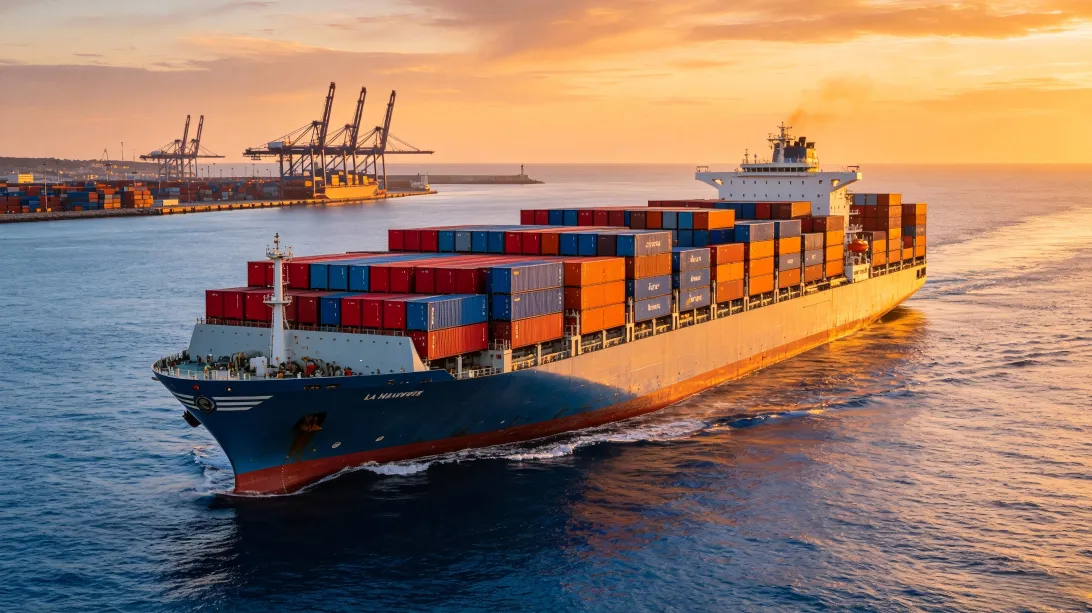
FCL vs LCL: Choosing the Right Container Option for Your Shipment
Before you book anything, you need to decide between FCL (Full Container Load) and LCL (Less than Container Load). This single choice affects your cost, transit time, cargo security, and customs complexity more than any other decision in the booking process.
FCL means you reserve an entire shipping container exclusively for your cargo. The container is sealed at your supplier's facility (or a nearby warehouse) and remains sealed until it reaches your destination — minimizing handling, reducing damage risk, and typically delivering faster.
LCL means your cargo shares container space with shipments from other companies. A freight forwarder consolidates multiple loads at a Container Freight Station (CFS) in China, ships the full container to France, and then deconsolidates each shipment at a destination CFS. You pay only for the space you use, making LCL attractive for smaller volumes.
In our experience: We regularly see importers default to LCL for shipments around 18–20 CBM because "it feels smaller." But once you factor in destination CFS fees, deconsolidation, and the longer transit, FCL is almost always the smarter choice at that volume. The sealed container alone is worth the peace of mind for high-value electronics or fragile goods.
Container Capacity Guide
| Container Type | Internal Capacity | Typical Payload | Best For |
|---|---|---|---|
| 20ft (20GP) | ~28 CBM | ~21,000 kg | Dense, heavy cargo; machinery; small-batch goods |
| 40ft (40GP) | ~56 CBM | ~26,000 kg | General cargo; mixed palletized goods |
| 40ft High Cube (40HQ) | ~68 CBM | ~26,000 kg | Lightweight, voluminous cargo; furniture; textiles |
| 45ft High Cube (45HQ) | ~78 CBM | ~29,000 kg | Maximum volume; bulky e-commerce inventory |
When Does FCL Become Cheaper Than LCL?
The industry breakeven point is roughly 15–20 CBM. Below that, LCL is usually more economical. Above it, FCL wins on per-unit cost. But the math isn't just about volume — it's about total landed cost.
Consider a 20 CBM shipment of electronics from Shenzhen to Le Havre:
- LCL option: 20 CBM × $75/CBM = $1,500. Add destination CFS handling ($150–$300), deconsolidation ($100–$200), and higher customs complexity. Total: ~$1,900–$2,200.
- FCL option: One 20ft container at $1,400. No sharing, no CFS fees, simpler customs. Total: ~$1,600–$1,800 after THC and documentation.
At 20 CBM, FCL is already cheaper — and your cargo travels in a sealed box with zero handling by strangers.
FCL vs LCL Decision Framework
| Factor | FCL | LCL |
|---|---|---|
| Cargo Volume | >15–20 CBM | <15 CBM |
| Cost Structure | Per container (lower per-unit at scale) | Per CBM (higher per-unit, no minimum) |
| Transit Time | Faster (no consolidation/deconsolidation) | Slower (+3–7 days) |
| Damage Risk | Low (sealed from origin) | Higher (multiple handling points) |
| Customs Complexity | Simpler (single consignee) | More complex (shared container) |
| Flexibility | Lower (commit to full box) | Higher (ship any volume) |
Our recommendation: If your shipment is close to 15 CBM, get quotes for both. If your cargo is fragile, high-value, or time-sensitive, lean toward FCL even at slightly higher cost. The reduced handling and faster transit often justify the premium.
Major Ports & Routes: Where Your Cargo Leaves and Lands
China Ports: Choosing Your Origin
Your supplier's location should drive your port selection. Working with the nearest major port reduces inland trucking costs, shortens pre-shipment lead time, and gives you access to more direct sailings.
| China Port | Best For | Key Advantage |
|---|---|---|
| Shanghai | Nationwide suppliers; Yangtze River basin | Largest throughput in China; broadest carrier choice; competitive rates |
| Shenzhen / Yantian | South China suppliers (Guangdong, Fujian) | Proximity to manufacturing hubs; fastest export customs; strong Europe sailings |
| Ningbo | East China; Zhejiang suppliers | Second-largest volume for Europe; excellent feeder connections |
| Qingdao | Northern China; Shandong, Hebei | Strong for bulk and refrigerated cargo; direct Europe services |
| Guangzhou (Nansha) | Pearl River Delta alternatives | Cost-effective for South China; growing carrier roster |
Pro tip from our Shenzhen office: If your supplier is in Guangdong province, shipping through Yantian or Shekou can save 1–2 days of inland trucking versus routing everything to Shanghai. For time-sensitive FBA restocking or pre-holiday inventory, that margin matters.
France Ports: Matching Port to Destination
France has three primary container gateways. Choosing the right one depends on where your cargo ultimately needs to go.
| France Port | Serves | Inland Connectivity | Carrier Frequency |
|---|---|---|---|
| Le Havre | Paris, Northern France, Île-de-France, Lyon (via rail) | Excellent rail and barge links to Paris; A13 motorway | Highest; most direct sailings from China |
| Marseille-Fos | Southern France, Mediterranean region, Monaco | Rail to Lyon/Paris; strong trucking network | Moderate; good for South China origins |
| Dunkirk | Northern France, Benelux border regions | Road to Belgium/Netherlands; rail to France interior | Lower; often feeder from larger hubs |
Port selection by region: - Paris / Île-de-France / Lyon: Le Havre is your default. Rail connections from Le Havre to Lyon take 1–2 days, making it efficient even for central France. - Southern France (Nice, Toulouse, Montpellier): Marseille-Fos cuts inland delivery time by 2–3 days compared to Le Havre. - Benelux-adjacent or Northern EU: Dunkirk can work, but Le Havre usually offers better sailing frequency and cost.
Routes: Suez, Cape of Good Hope, and Transshipment
The standard routing from China to France runs: South China Sea → Indian Ocean → Suez Canal → Mediterranean → French port. Under normal conditions, this delivers 28–38 days port-to-port.
Since 2024, Red Sea security concerns have forced many carriers to reroute via the Cape of Good Hope. This adds 10–14 days to transit and can trigger surcharges up to $1,500/TEU. The major carrier alliances — Ocean Alliance (COSCO, CMA CGM, Evergreen), 2M (Maersk, MSC), and THE Alliance (Hapag-Lloyd, ONE, Yang Ming) — have all adjusted schedules, with some maintaining Suez transits under enhanced security protocols while others have shifted entirely to Cape routing.
What we saw in Q1 2026: During the January post-holiday rush, carriers operating Cape of Good Hope routes were running 5–7 days behind schedule due to port congestion at the Cape. Importers who had buffered their inventory by an extra week avoided stockouts. Those who planned for "normal" 30-day transit found themselves scrambling.
Transshipment via Singapore, Colombo, or Mediterranean hubs (Malta, Italy) can reduce direct sailing costs but adds 3–7 days and increases handling risk. For high-value or fragile cargo, direct sailings are worth the premium.
Transit Times: How Long Sea Freight Really Takes (Door-to-Door Breakdown)
If you're searching for a straight answer to "how long does sea freight take from China to France?" — here it is: 45–55 days door-to-door is the industry standard for most shipments in 2026. Port-to-port under normal routing is 28–40 days, but the full journey includes booking, port handling, customs, and inland delivery.
Phase-by-Phase Timeline
| Phase | Duration | What's Happening |
|---|---|---|
| Pre-shipment & Booking | 2–5 days | Supplier confirmation, container allocation, documentation prep |
| Ocean Transit (Direct) | 28–38 days | Vessel sailing from China to France |
| Port Handling & Dwell | 3–7 days | Berthing, unloading, yard placement, doc verification |
| French Customs Clearance | 1–5 days | Declaration submission, duty/VAT assessment, inspection (if triggered) |
| Inland Delivery | 2–5 days | Trucking or rail from port to your warehouse |
| Total Door-to-Door | 45–55 days | Industry standard for typical conditions |
Port-to-Port Transit Times by Route (2026)
| Origin Port | Destination Port | Direct (Suez) | Via Cape of Good Hope |
|---|---|---|---|
| Shanghai | Le Havre | 28–32 days | 38–42 days |
| Ningbo | Le Havre | 30–34 days | 40–44 days |
| Shenzhen | Le Havre | 32–36 days | 42–46 days |
| Shanghai | Marseille-Fos | 30–34 days | 40–44 days |
| Shenzhen | Marseille-Fos | 25–32 days | 38–42 days |
LCL adds 3–7 days due to consolidation at origin CFS and deconsolidation at destination CFS. If you're restocking for Q4 sales, plan accordingly.
How to Land at the Lower End of the Range
- Book direct sailings — transshipment saves money but costs time.
- Prepare complete documentation before cargo arrives in France — incomplete paperwork is the #1 cause of customs delays.
- Use an experienced customs broker familiar with French Douane procedures.
- Avoid peak seasons — pre-Chinese New Year (January–February) and Q4 holiday rush (October–November) stretch every phase.
- Maintain a valid EORI number — without it, your shipment cannot clear EU customs.
2026 Cost Breakdown: What You'll Actually Pay
Understanding sea freight from China to France cost requires looking beyond the ocean freight rate. The total landed cost includes origin charges, destination charges, duties, VAT, and optional services. Here's what we're seeing in the market as of mid-2026.
FCL Rate Benchmarks
| Route | Container | 2026 Rate Range (USD) | Notes |
|---|---|---|---|
| Shanghai → Le Havre | 20ft | $1,100–$1,600 | Most competitive lane; high frequency |
| Shanghai → Le Havre | 40HQ | $1,800–$2,500 | Best for voluminous cargo |
| Shenzhen → Marseille-Fos | 20ft | $1,200–$1,700 | Strong for South China exports |
| Ningbo → Marseille-Fos | 40HQ | $2,000–$2,800 | Good alternative to Shanghai |
LCL Rate Benchmarks
| Route | Rate (USD/CBM) | Minimum Charge | Notes |
|---|---|---|---|
| Major China ports → Le Havre | $35–$70 | 1 CBM | Lower end for dense cargo; higher for light freight |
| Major China ports → Marseille-Fos | $40–$80 | 1 CBM | Slightly higher due to lower volume |
Line-Item Cost Components
Breaking down every dollar helps you compare quotes apples-to-apples and avoid the "hidden fee" surprises that derail budgets.
China Side (Origin)
| Charge | Typical Cost (USD) | Notes |
|---|---|---|
| Pickup / Inland trucking | $50–$200 | Depends on distance from supplier to port |
| Export customs clearance | $50–$100 | Forwarder usually handles this |
| Documentation (B/L, commercial invoice, packing list) | $25–$50 | Per shipment |
| Terminal Handling Charges (THC) — origin | $50–$90 | Per container; varies by port |
| Port security fee | $8–$12 | Per container |
| Booking fee | $30–$50 | Per container |
International Transport
| Charge | Typical Cost (USD) | Notes |
|---|---|---|
| Ocean freight | $1,100–$2,800 | Depends on route, container size, and market conditions |
| Bunker Adjustment Factor (BAF) | $100–$400 | Fuel surcharge; fluctuates with oil prices |
| Currency Adjustment Factor (CAF) | 2–5% of freight | Hedge against USD/EUR volatility |
| Peak Season Surcharge (PSS) | $100–$300 | Active Aug–Nov and pre-Chinese New Year |
| War risk / rerouting surcharge | $50–$1,500 | Applied during Cape of Good Hope rerouting |
France Side (Destination)
| Charge | Typical Cost (USD) | Notes |
|---|---|---|
| Terminal Handling Charges (THC) — destination | $100–$150 | Per container; higher than China side |
| Delivery Order (DO) fee | $50–$75 | Required for cargo release |
| Customs clearance agency fee | $100–$250 | Depends on complexity; DDP shipments include this |
| Demurrage / Detention | $50–$150/day | If you exceed free time (typically 7 days) |
| Inland delivery | $200–$600 | Depends on distance from port to warehouse |
Duties & VAT
| Charge | Rate | Applied To |
|---|---|---|
| Import duty | 0–4.5% (average) | CIF value; varies by HS code |
| VAT (TVA) | 20% | CIF value + duty |
Optional
| Charge | Typical Cost | Notes |
|---|---|---|
| Cargo insurance | 0.12–0.25% of cargo value | Highly recommended for all shipments |
| Warehouse consolidation | $50–$150 | Combine multiple suppliers before shipping |
| Cargo inspection / pre-shipment check | $100–$300 | Quality control before export |
Real Cost Calculation Example
Let's walk through a realistic scenario: a 40HQ container of electronics shipped from Shenzhen to Le Havre, CIF value $10,000, HS code classified at 3% duty.
| Cost Component | Amount (USD) |
|---|---|
| Ocean freight (40HQ, Shenzhen → Le Havre) | $1,800 |
| Origin THC + documentation | $120 |
| BAF + CAF | $250 |
| Destination THC + DO fee | $175 |
| Customs clearance agency fee | $150 |
| Import duty ($10,000 × 3%) | $300 |
| VAT (($10,000 + $300) × 20%) | $2,060 |
| Inland delivery (Le Havre → Paris area) | $350 |
| Cargo insurance ($10,000 × 0.2%) | $20 |
| Total Estimated Landed Cost | $5,225 |
This is a door-to-door estimate under CIF terms. If you choose DDP, your forwarder wraps all of this into a single quote — but you'll pay a premium for the convenience.
Hidden Cost Traps to Avoid
- LCL destination handling fees: These can add $200–$500 to your bill and are often omitted from initial quotes. Always ask for an itemized door-to-door LCL quote.
- Demurrage from delayed customs: If your documentation is incomplete and customs holds your container beyond the 7-day free period, demurrage racks up fast.
- Incorrect HS code penalties: Misclassification can trigger fines, re-inspection, and weeks of delay. Verify your HS code with your forwarder before shipping.
- Remote delivery surcharges: Delivering to Corsica, overseas territories, or rural areas incurs extra fees not reflected in standard port-to-city pricing.
Cost-Saving Tips
- Book 3–4 weeks ahead of peak season to lock in lower rates and secure space.
- Consolidate multiple suppliers into one FCL shipment when possible.
- Optimize container fill — shipping a half-empty 40HQ is like paying for two hotel rooms and using one.
- Negotiate contract rates if you ship regularly; forwarders and carriers offer 10–20% discounts for committed volume.
- Choose the right port pair — Shanghai to Le Havre is usually the most cost-effective due to high frequency and competition.
French Customs Clearance: Navigating Douane, EORI, VAT & Compliance
French customs is where the most expensive delays happen. Not at sea — at the port, when your container sits waiting for paperwork. Understanding the process before you ship eliminates 90% of these headaches.
EORI Number: Your Passport to EU Imports
The EORI (Economic Operators Registration and Identification) number is mandatory for any business importing into the EU, including France. Without it, your customs declaration cannot be submitted.
- What it is: A unique identifier assigned by EU customs authorities to track imports and exports.
- How to get one: Non-EU businesses apply through the French Customs (Douane) website. The process typically takes 4–8 weeks, so start before your first shipment.
- Format: French EORI numbers start with "FR" followed by a 9-digit SIRET number. If you don't have a French SIRET, you can still obtain an EORI as a non-resident operator.
Critical 2026 update: From January 2026, all non-EU importers using Regime 42 (the standard import VAT regime) must register for French VAT. This means your EORI and VAT registration must both be active before your cargo arrives — otherwise, customs will hold your shipment.
The French Customs Declaration Process
France uses the Delta electronic customs system for submitting declarations. Here's how a typical import flows:
- Pre-arrival declaration: Your customs broker (or forwarder) submits the SAD (Single Administrative Document) electronically before the vessel arrives.
- Risk assessment: French customs algorithms assign your shipment to one of three channels.
- Channel assignment and clearance: - Green channel: No inspection. Cleared in 1–2 days. Assigned to low-risk, regular importers with complete documentation. - Yellow channel: Document review. Takes 2–3 days. Customs verifies invoice values, HS codes, or certificates. - Red channel: Physical inspection. Takes 3–5+ days. Your container is opened and goods examined. Triggers include first-time importer status, high-value shipments, sensitive HS codes, or random selection.
- Duty and VAT payment: Once cleared, duties and VAT are assessed and must be paid before release (unless you're using a deferred payment account).
- Cargo release: Your container is released for inland delivery.
Duties & VAT: The Real Math
France applies import duties based on your product's HS Code classification. For goods from China, duties typically range from 0% (many industrial goods) to around 4.5% (textiles, electronics, consumer goods). VAT is a flat 20% applied to the CIF value plus duty.
A note on accuracy: These duty ranges reflect the EU's standard tariff schedule for Chinese-origin goods under the current Most Favoured Nation (MFN) regime. Always verify your specific HS code in the EU TARIC database before budgeting, as anti-dumping duties or sector-specific tariffs can push rates significantly higher for certain product categories.
Example calculation:
| Step | Calculation | Result |
|---|---|---|
| CIF value | $10,000 | $10,000 |
| Import duty (3%) | $10,000 × 3% | $300 |
| VAT base | $10,000 + $300 | $10,300 |
| VAT (20%) | $10,300 × 20% | $2,060 |
| Total duties & taxes | $300 + $2,060 | $2,360 |
This $2,360 is on top of your freight and logistics costs. If you're not prepared for it, cash flow can take a hit. This is why many SMEs choose DDP terms — the forwarder pre-pays duties and VAT, and you settle one all-inclusive invoice.
Transparency note: The $5,225 total landed cost example above is an estimate based on mid-2026 market conditions. Ocean freight rates fluctuate weekly due to fuel prices, carrier capacity, and seasonal demand. Always request an updated, itemized quote from your forwarder before finalizing your budget. At AllBestShipping, we provide transparent, line-item quotes with no hidden fees — what we quote is what you pay.
Product Compliance: CE Marking, REACH, and RoHS
The EU does not let non-compliant products through the door. Depending on your product category, you may need:
- CE marking: Mandatory for electronics, machinery, toys, medical devices, and construction products. Indicates conformity with EU safety standards.
- REACH: Required for chemicals and products containing chemical substances. Restricts hazardous substances in the EU market.
- RoHS: Specific to electrical and electronic equipment. Limits the use of lead, mercury, cadmium, and other hazardous substances.
If your shipment arrives without proper certification, French customs can refuse entry, destroy the goods, or return them to China — at your expense. Always verify compliance with your supplier before production, and request certificates as part of your shipping documentation.
Common Customs Delays (And How to Avoid Them)
| Delay Cause | Why It Happens | Prevention |
|---|---|---|
| Missing EORI | Importer didn't register in time | Apply 4–8 weeks before first shipment |
| Incorrect HS code | Misclassification by supplier or forwarder | Verify with forwarder; use EU TARIC database |
| Incomplete commercial invoice | Missing details (value, currency, Incoterms) | Use forwarder's template; double-check before submission |
| Missing certificates of conformity | CE/REACH/RoHS not provided | Request from supplier before shipping |
| Valuation disputes | Customs suspects under-invoicing | Declare accurate market value; keep supporting docs |
Incoterms 2020: Which Trade Term Should You Use for France?
Incoterms define who pays for what, and where risk transfers from seller to buyer. For France-bound shipments, choosing the wrong term can mean unexpected costs, customs headaches, or delayed delivery.
France-Specific Incoterms Comparison
| Incoterm | Seller Pays For | Buyer Handles | Best For | France Considerations |
|---|---|---|---|---|
| EXW | Nothing beyond factory gate | Everything: pickup, export customs, freight, import customs, delivery | Experienced importers with full logistics teams | Lowest supplier price, but maximum buyer responsibility. You need your own China agent and French customs broker. |
| FOB | Goods to port of loading | Ocean freight, insurance, import customs, inland delivery | Buyers with French customs brokers | Good balance. You control the ocean leg and can choose your forwarder. |
| CIF | Goods + freight + insurance to destination port | Import customs, unloading, inland delivery | First-time importers wanting cost clarity | Seller chooses the carrier — may not be optimal for your timeline. Insurance coverage may be minimal. |
| DDP | Everything to buyer's door, including duties and VAT | Nothing — just receive the goods | SMEs, e-commerce sellers, first-time importers | Most hassle-free for France. But from 2026, the forwarder must have a valid French VAT number to offer DDP. |
Cost Implication Example: Same Shipment, Three Terms
Scenario: 40HQ electronics, Shenzhen to Paris warehouse, CIF value $10,000.
| Incoterm | What You Pay | Estimated Total | Control Level |
|---|---|---|---|
| FOB | Ocean freight + insurance + import customs + inland delivery | $4,500–$5,500 | High |
| CIF | Import customs + inland delivery | $3,800–$4,800 | Medium |
| DDP | Single all-inclusive quote | $5,800–$6,800 | Low (but hassle-free) |
FOB gives you the most control and often the lowest total cost — if you know what you're doing. DDP costs more upfront but eliminates surprises, which is why we recommend it for most SMEs and first-time importers. CIF is a middle ground, but be aware that the seller's chosen carrier may not offer the best transit time or route.
When to Choose Which: A Decision Framework
- Choose EXW if: You have a dedicated logistics team, a China-based agent, and a French customs broker. You want maximum control and lowest supplier price.
- Choose FOB if: You have a French customs broker but want to control the ocean freight and choose your own forwarder.
- Choose CIF if: You want cost clarity from the supplier but are comfortable handling French customs and inland delivery yourself.
- Choose DDP if: You want one invoice, zero customs headaches, and predictable total cost. Ideal for SMEs, Amazon FBA sellers, and anyone without EU import experience.
Our recommendation: For most importers shipping to France, DDP or FOB are the sweet spots. DDP removes complexity; FOB gives you control. Avoid CIF unless you fully understand the carrier and insurance limitations the seller has chosen.
Honest advice: While DDP is the most hassle-free option for most SMEs and first-time importers, it is not always the cheapest. If you have an established French customs broker and are comfortable managing inland delivery, FOB can save you 10–15% on total landed cost. We evaluate each client's situation individually — some benefit from DDP's simplicity, others from FOB's control. There is no one-size-fits-all answer, and any forwarder who tells you otherwise is selling, not advising.
Choosing a Freight Forwarder for China–France Sea Freight
Not all freight forwarders are created equal — especially on a specialized lane like China to France. A forwarder with deep experience on this route can save you days of transit time, hundreds of dollars in hidden fees, and countless hours of customs stress.
Why Your Forwarder's Location Matters
China-based forwarders — particularly those headquartered in Shenzhen, Shanghai, or Ningbo — have distinct advantages:
- Direct carrier relationships: They negotiate space allocations and rates with COSCO, MSC, Maersk, CMA CGM, and other carriers operating China–Europe services.
- On-the-ground oversight: When a container is delayed at Yantian or a supplier misses a booking cutoff, a local forwarder can physically intervene.
- Faster response to changes: Chinese holidays, sudden blank sailings, or port congestion require real-time local knowledge.
- Export customs expertise: Chinese export customs is complex. A forwarder with local staff knows the inspectors, the documentation quirks, and how to expedite clearance.
France-based forwarders offer strong destination customs support but may lack the origin-side agility and carrier access that China-based forwarders enjoy. For most importers, a China-based forwarder with French customs brokerage partners delivers the best of both worlds. At AllBestShipping, we provide comprehensive Sea Freight from China solutions that include origin handling, ocean transit, and destination customs clearance.
What to Look For
| Capability | Why It Matters | Question to Ask |
|---|---|---|
| France customs brokerage | French customs is complex; you need local expertise | "Do you have your own customs broker in France, or do you subcontract?" |
| Direct sailing partnerships | Direct routes are faster and more reliable | "Which carriers do you have direct contracts with on the China–France lane?" |
| Real-time tracking | Visibility reduces anxiety and helps you plan inventory | "Can I track my container in real time, and will you alert me to delays?" |
| Transparent itemized quotes | Prevents hidden fee surprises | "Can you provide an itemized door-to-door quote with every line item listed?" |
| DDP experience | DDP requires French VAT expertise | "How many DDP shipments to France do you handle per month?" |
| Cargo insurance offerings | Protects against loss or damage | "What insurance options do you offer, and what's the claims process?" |
| Warehouse consolidation | Combine multiple suppliers into one shipment | "Can you consolidate cargo from multiple suppliers before shipping?" |
Red Flags to Avoid
- Vague quotes: If a forwarder gives you a single number without line items, expect surprises.
- No France customs support: A forwarder who says "you handle customs yourself" is not equipped for France.
- Hidden fees discovered after arrival: The classic "oh, there's also a destination handling fee" conversation.
- No local office in China: If they subcontract everything in China, they have no control over your origin process.
- Poor communication during Chinese holidays: Chinese New Year and Golden Week are when things go wrong. You need a forwarder who responds even when factories are closed.
Why AllBestShipping?
At AllBestShipping, we've spent over a decade moving cargo from Shenzhen, Shanghai, and Ningbo to Le Havre, Marseille-Fos, and beyond. We're headquartered in Shenzhen — minutes from Yantian and Shekou ports — which means we can respond to same-day booking changes, supplier delays, and customs issues that a remote forwarder simply cannot.
Our China–France service portfolio includes: - FCL and LCL sea freight with direct sailing partnerships across all major carrier alliances - DDP door-to-door delivery, including French customs clearance and VAT handling - Amazon FBA head-haul to French fulfillment centers, with pallet labeling and compliance checks - Warehouse consolidation — combine multiple suppliers into one cost-efficient shipment - Real-time tracking and proactive delay notifications - Transparent, itemized quotes with no hidden fees
We've served 1,000+ clients across 50+ countries, and the China–France lane is one of our most active corridors. Whether you're shipping your first LCL trial or a monthly 40HQ restocking program, we tailor the solution to your volume, budget, and timeline.
Disclaimer: The information in this guide reflects our understanding of French customs regulations and market conditions as of June 2026. Import duties, VAT rules, and carrier routing are subject to change. Always consult with a licensed customs broker or tax advisor for decisions affecting your specific business situation. The cost examples provided are estimates for illustration purposes and may vary based on actual shipment details, market fluctuations, and carrier policies.
Ready to get started? Contact AllBestShipping for a free, itemized door-to-door quote — no obligation, no hidden fees.
FAQ: Sea Freight from China to France
How long does sea freight take from China to France?
45–55 days door-to-door is the industry standard in 2026. Port-to-port is 28–40 days under normal routing, but add 10–14 days if vessels are rerouted via the Cape of Good Hope. LCL shipments take 3–7 days longer than FCL due to consolidation and deconsolidation.
What is the cheapest sea freight option from China to France?
For shipments under 15 CBM, LCL is usually cheapest. For 15–28 CBM, a 20ft FCL container is more economical. For 55+ CBM, a 40HQ FCL delivers the lowest per-unit cost. Booking in off-peak months (March–April, July–August) and consolidating multiple suppliers can reduce costs by 15–25%.
Do I need a French VAT number to import?
Yes — from January 2026, all non-EU importers using Regime 42 must register for French VAT. If you're using DDP terms, your forwarder must also have a valid French VAT number to clear customs on your behalf. Apply for your EORI and VAT registration 4–8 weeks before your first shipment.
What documents do I need for French customs?
At minimum: commercial invoice, packing list, bill of lading (B/L), and your EORI number. Depending on your product, you may also need CE certificates, REACH/RoHS compliance documents, or a Certificate of Origin. Incomplete documentation is the #1 cause of customs delays.
Can I ship Amazon FBA to France by sea?
Yes. Use DDP terms to simplify customs, ensure pallets are labeled to Amazon's specifications, and plan for 45–55 days door-to-door. Book 6–8 weeks before your desired inventory arrival date to buffer against delays.
What's the difference between Le Havre and Marseille for my shipment?
Le Havre is France's largest container port and the best choice for Northern France, Paris, and Lyon (via rail). It has the most direct sailings from China. Marseille-Fos is ideal for Southern France and Mediterranean destinations, with shorter inland delivery times from that region.
Is cargo insurance mandatory?
Not legally, but highly recommended. Marine insurance rates are 0.12–0.25% of cargo value. For a $10,000 shipment, that's $12–$25 — a small price for protection against total loss during a 30+ day ocean voyage.
How do I avoid hidden charges?
Request an itemized door-to-door quote before booking. Clarify what's included in THC, delivery order fees, and demurrage/detention terms. Confirm your Incoterms in writing so there's no ambiguity about who pays for what.
What happens if my shipment is inspected by French customs?
Red channel inspections add 3–5+ days and may involve opening your container. Minimize risk by ensuring complete documentation, correct HS codes, and all required certificates. First-time importers and high-value shipments are more likely to be selected.
Should I choose FOB, CIF, or DDP for my first shipment?
DDP is the safest choice for first-time importers without a French customs broker — one quote, one invoice, zero surprises. CIF is a good middle ground if you want cost clarity but can handle French customs yourself. FOB offers the most control but requires more logistics expertise.