How Long to Ship from China to Australia: The Ultimate Guide (2026)
At AllBestShipping, our team manages hundreds of shipments from China to Australia every month. A reality we constantly emphasize to our clients is this: Transit time is not just the time spent at sea. While a vessel might physically travel from Shanghai to Sydney in 14 days, the "real" timeline—the one that affects your inventory—is defined by customs precision, biosecurity compliance, and local handling.
So, how long does it really take to ship from China to Australia in 2026?
In short, sea freight from China to Australia typically takes 12 to 30 days, air freight takes 3 to 7 days, and express courier services can deliver in as little as 2 to 5 days. However, these are just port-to-port or airport-to-airport estimates. The real-world "door-to-door" timeline involves customs clearance, local handling, and potential seasonal delays. In Q3 2026, typhoon-driven congestion at Shanghai and Ningbo plus heavy pressure at Australian East Coast ports (especially Brisbane) are pushing many shipments toward the upper end of these ranges.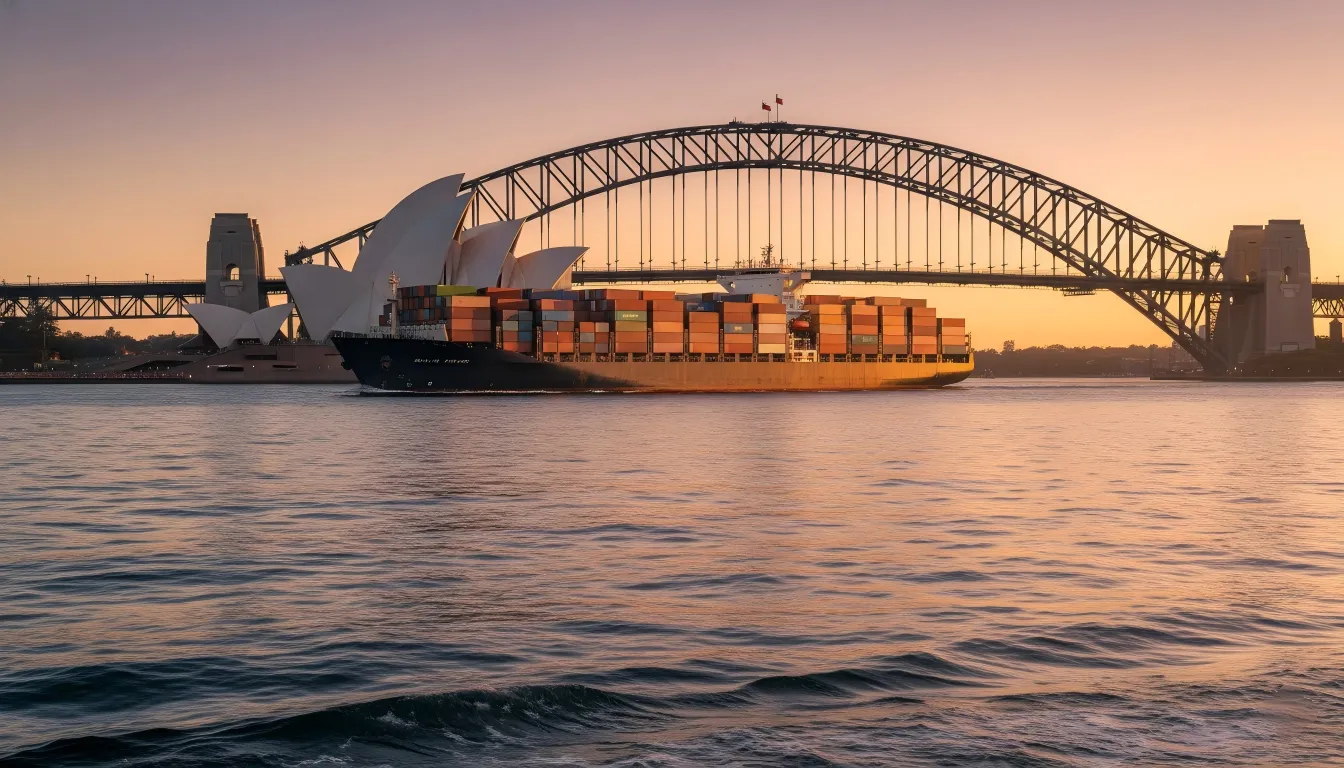
This guide covers not just the "theoretical" times but the real-world durations, factoring in ChAFTA benefits, biosecurity regulations, and expert tips to speed up your cargo. At AllBestShipping, we specialize in optimizing these timelines to ensure your goods arrive on time, every time.
1. Shipping Modes Breakdown: Speed vs. Cost
Choosing the right shipping mode is a balancing act between budget and urgency. Here is a breakdown of the three main options.
1.1 Sea Freight (Ocean Freight)
Sea freight is the most popular method for shipping large volumes of goods due to its cost-effectiveness.
- FCL (Full Container Load): This is the fastest sea freight option. Your goods are loaded into a dedicated 20ft or 40ft container. Direct vessels from ports like Shenzhen or Shanghai to Sydney can be surprisingly fast.
- LCL (Less than Container Load): If you don't have enough cargo to fill a container, LCL allows you to share space. However, it is slower (usually adds 5-7 days) due to the consolidation processing at the origin CFS (Container Freight Station) and deconsolidation at the destination.
- Port-to-Port vs. Door-to-Door: Always remember that the sea voyage is just one part of the journey. You typically need to add 7-10 days for pickup, export declaration, Australian customs clearance, and final truck delivery.
1.2 Air Freight
Air freight is ideal for high-value electronics, fashion items, or urgent restocks.
- Standard Air Cargo: Shipped via commercial or cargo airlines. While the flight itself is only about 10-12 hours, the total transit time is usually 3-7 days to account for cargo handling and security screening.
- Direct vs. Deferred: Direct flights (e.g., from Guangzhou to Melbourne) are faster but more expensive. Deferred services may transit through hubs like Singapore or Hong Kong, adding a few days to the timeline.
1.3 Express Courier
For samples, documents, or small parcels under 100kg, express couriers like DHL, FedEx, UPS, and TNT offer the fastest "door-to-door" speeds.
- Speed: Typically 2-5 days.
- Convenience: Customs clearance is often handled automatically by the courier (for low-value goods), making it a "set and forget" option.
2. Estimated Transit Times from Key China Ports to Australia
To help you plan your logistics, we have compiled the estimated transit times for the most common routes. Please note these are port-to-port estimates and can vary based on the carrier and weather conditions.
2.1 Sea Freight Port-to-Port Estimates
| Origin Port (China) | Destination Port (Australia) | Estimated Transit Time |
|---|---|---|
| Shenzhen (Shekou/Yantian) | Sydney | 11 - 15 Days |
| Shenzhen (Shekou/Yantian) | Melbourne | 14 - 18 Days |
| Shanghai | Sydney | 14 - 18 Days |
| Shanghai | Melbourne | 16 - 20 Days |
| Ningbo | Sydney | 15 - 19 Days |
| Ningbo | Brisbane | 18 - 22 Days |
| Guangzhou (Nansha) | Sydney | 12 - 16 Days |
| Qingdao | Fremantle | 20 - 25 Days |
| Xiamen | Sydney/Melbourne | 14 - 19 Days |
| Hong Kong | Sydney | 11 - 14 Days |
Q3 2026 reality check: the figures above are proforma port-to-port times under normal conditions. In September 2026, typhoon activity has produced severe vessel bunching and berth queues at Shanghai and Ningbo (up to 8 days waiting before a berth is available), and two Australia-bound services have temporarily dropped China port calls (ANL's A3N at Shanghai and ACX at Qingdao). Plan on 20-27 days for regular services, and add 3-7 days for typhoon season (September-October) or for cargo routing to congested Brisbane.
2.2 Air Freight Airport-to-Airport Estimates
| Origin Airport (China) | Destination Airport (Australia) | Service Type | Est. Time |
|---|---|---|---|
| PVG (Shanghai) | SYD (Sydney) | Direct | 1 - 2 Days |
| SZX (Shenzhen) | MEL (Melbourne) | Direct | 1 - 2 Days |
| CAN (Guangzhou) | BNE (Brisbane) | Direct | 1 - 2 Days |
| HKG (Hong Kong) | SYD/MEL | Direct | 1 Day |
| Any Major Airport | Any Major Airport | Connecting/Deferred | 3 - 5 Days |
3. Key Factors Influencing Shipping Time
Even if the vessel sails on time, other factors can cause significant delays. Being aware of these can help you mitigate risks.
3.1 Route & Distance
Direct routes are always faster. Transshipment hubs (where cargo is unloaded from one ship and loaded onto another) like Singapore or Port Klang can add 5-10 days to your shipment. Additionally, shipping to the West Coast (Fremantle) generally takes longer from North China ports compared to the East Coast (Sydney/Melbourne).
3.2 Customs Clearance & ChAFTA (Expert Insight)
Navigating Australian customs requires precision.
- ChAFTA Advantage: Under the China-Australia Free Trade Agreement, most goods enter duty-free. However, we often see delays because the Certificate of Origin (COO) doesn't strictly match the commercial invoice. Pro Tip: Always draft your COO for approval before the vessel departs China.
- AUD 1,000 Formal Entry Threshold: goods valued above AUD 1,000 require a formal import declaration lodged with the Australian Border Force (usually via your customs broker), plus 10% GST applied to the customs value, duty and freight. The standard duty rate is 5% for goods without preference - but with a valid ChAFTA Certificate of Origin, most Chinese-made goods enter at 0%. Consignments at or below AUD 1,000 skip border GST and duty (overseas e-commerce vendors collect GST at the point of sale instead).
- Biosecurity (DAFF) - The #1 Delay Factor: Australia's Department of Agriculture, Fisheries and Forestry (DAFF) is incredibly strict. We have seen shipments held for weeks simply because of a dirty container floor. Ensure your supplier provides a Container Cleanliness Declaration.
- BMSB Season (Sept 1 - April 30): During the Brown Marmorated Stink Bug season, goods classified as "Target High Risk" (e.g., machinery, tools, glass, vehicle parts) shipped from risk countries must be treated (fumigated or heat treated) before arrival. China remains classified as an "emerging risk" country, which means increased random inspections. 2026-27 rule changes: DAFF has approved Ethyl Formate as a new onshore treatment option, removed the Rolled Goods Policy (breakbulk cargo must now be loaded within 120 hours of treatment) and discontinued the Safeguarding Arrangement Scheme - previous-season approvals are no longer valid. Non-compliant cargo arriving in Australia can be denied discharge, re-exported or destroyed, so confirm your treatment documentation before the vessel departs China.
3.3 Peak Seasons & Holidays
Shipping during peak times can lead to "rolled cargo" (where your container is left behind due to lack of space).
- Chinese New Year (CNY): Factories close for weeks. Rush shipments before CNY cause massive congestion.
- Golden Week (October): Another major Chinese holiday affecting logistics.
- Australian Peak (Oct-Dec): The pre-Christmas retail rush fills up vessels and warehouses quickly. Goods typically need to arrive by October to make the November-December trading window - the booking window for Christmas stock effectively closes in mid-September.
- Typhoon Season (Sep-Oct): Typhoons routinely disrupt Shanghai and Ningbo terminals, causing berth queues, blank sailings and port call omissions that add 3-7 days (sometimes more) to transit times.
4. Door-to-Door Shipping: The Real Timeline
When you ask "how long," you usually mean "when will I get my goods?" Here is a realistic breakdown of the entire Door-to-Door process for a standard sea shipment (our door-to-door shipping from China to Australia guide covers the full process in more detail):
- Pickup in China: 1-2 Days (From factory to port/warehouse).
- Export Customs & Loading: 2-3 Days (Cut-off times apply).
- Main Transit (Sea): 12-20 Days (Depending on route).
- Import Customs & Quarantine (AU): 2-5 Days (Can be longer if inspection is required).
- Final Delivery: 1-3 Days (Trucking to your warehouse).
Total Estimated Duration:
- Sea Freight: 20 - 40 Days (in Q3 2026 congestion, budget 25 - 45 Days)
- Air Freight: 5 - 10 Days
5. How to Reduce Shipping Delays: Expert Tips
Time is money. Here is how you can speed up your supply chain:
- Book in Advance (The 3-Week Rule): In 2026, capacity remains tight. We recommend booking space 3 weeks before your "Cargo Ready Date".
- Control Your Costs with FOB: We strongly advise buying FOB (Free on Board) rather than CIF. With CIF, your supplier controls the freight, often using cheaper, slower lines with hidden destination fees. With FOB, you (and your forwarder) control the speed and cost.
- Avoid Detention Charges: Request 14 or 21 days of free time (detention/demurrage) at the destination port when booking. Standard free time is often only 7 days, which is risky if customs holds your cargo.
- ISPM-15 Compliance: Any wood packaging (pallets, crates) must be stamped with ISPM-15. We have seen entire shipments destroyed because of a single unstamped pallet.
- Confirm 2026/27 BMSB compliance before departure: The 2026-27 season (September 1 - April 30) has new rules - a 120-hour loading window for treated breakbulk, no Rolled Goods Policy, and no Safeguarding Scheme. Verify your treatment provider and documentation are aligned before your cargo leaves origin.
- Book Christmas stock now: With transit times of 20-27 days on regular services and carrier roll pools of more than 2,000 TEU, cargo not confirmed on a named vessel by mid-September risks missing the Australian Christmas season entirely.
6. FAQ: Common Questions about Shipping to Australia
Q: How long does sea freight take from Shenzhen to Sydney? A: Direct sea freight typically takes 11 to 15 days port-to-port.
Q: What is the fastest shipping method from China to Australia? A: Express courier (DHL/FedEx) is the fastest, taking 2-5 days door-to-door. For larger freight, direct air cargo is the fastest option.
Q: Why is my shipment stuck in Australian customs? A: In our experience, the top three reasons are: 1) Missing/Incorrect COO for ChAFTA claims, 2) Biosecurity concerns (soil on tires, seeds in packaging), or 3) Random compliance audits. We handle "Pre-Clearance" while the goods are on the water to minimize this risk.
Q: Does the "Stink Bug" season affect my shipping time? A: Yes. If your goods are "target high risk" (e.g., machinery, vehicles, metal goods), they must be treated under the 2026-27 seasonal measures (September 1 - April 30). China is an "emerging risk" country, so random inspections are more frequent, and the rules have changed (no more Safeguarding Scheme or Rolled Goods Policy). Failure to comply can lead to re-export or destruction of the cargo.
Q: Why is my China-Australia shipment running slower than usual right now? A: In Q3 2026, typhoon-driven congestion at Shanghai and Ningbo has created berth queues of up to 8 days, and several carriers have temporarily dropped China port calls on Australia services. Brisbane is also congested on the destination side. Plan for 20-27 days on regular services - and add a buffer for anything time-sensitive.
Q: Do I need to pay GST or import duty on goods from China? A: Consignments valued at AUD 1,000 or less are generally free of GST and duty at the border (e-commerce vendors collect GST at the point of sale). Above AUD 1,000, a formal import declaration is required and 10% GST applies. Most Chinese-made goods enter duty-free under ChAFTA with a valid Certificate of Origin.
7. Conclusion
Shipping from China to Australia can be fast and efficient if planned correctly. While sea freight offers an economical 12-30 day transit (with Q3 2026 congestion pushing many shipments to 20-27+ days), air freight delivers speed when you need it most. The key to avoiding delays lies in understanding the customs, biosecurity and seasonal requirements unique to Australia - and booking early enough to ride out typhoon and peak-season disruptions.
At AllBestShipping, we help businesses navigate these complexities every day. Whether you need a quick air shipment or a cost-effective ocean solution, our experts are ready to optimize your logistics.
Ready to ship? Contact AllBestShipping today for a precise transit time quote and a tailored logistics plan.